
Iga Swiatek vs Elena Rybakina Prediction
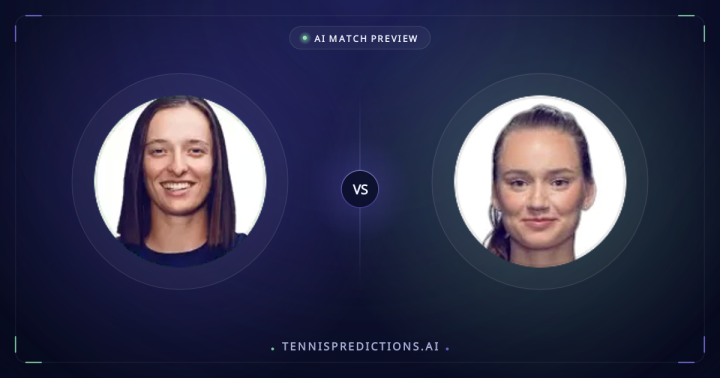
Swiatek vs Rybakina Betting Preview
A heavyweight WTA Cincinnati clash between Iga Swiatek and Elena Rybakina has all the ingredients of a premium betting matchup: elite shot-making, contrasting styles, major-title pedigree, and enough tactical tension to make every service game feel important. This quarterfinal in Cincinnati, USA, is scheduled for 2026-08-21 at 00:00:00 UTC, and it brings together two players who have often looked like the standard-setters of modern women’s tennis when their games are firing.
From a betting perspective, this is not just a “who is the better player?” question. Swiatek’s overall résumé, consistency, and intensity make her a deserved favorite in many markets, but Rybakina’s matchup profile is one of the most dangerous possible for the Pole. The Kazakhstani’s clean power, flat backhand, high first-serve efficiency, and calm baseline execution can all disrupt Swiatek’s preferred rhythm.
The available odds list Iga Swiatek at 1.72, while Elena Rybakina is priced at 2.45. Our AI model at TennisPredictions.ai identifies the value side as the second player to win, meaning Rybakina at 2.45, with a confidence level of 2.3 out of 10. That is not a strong-confidence selection, but it is an interesting value position because the price compensates for the risk. The total games market also points toward U28.5 at odds of 1.26, suggesting the expectation is for the match to stay below an extended three-set battle with multiple long tiebreak-like stretches.
For bettors who like combining market price, player profile, and tactical analysis, this is exactly the kind of match where the favorite is obvious, but the underdog may still be the sharper betting angle.
Match Context and Stakes
The Cincinnati Open is one of the most important hard-court events in the WTA calendar, often acting as a key form indicator before the US Open. Players who go deep here usually prove they can handle fast hard courts, humid conditions, quick turnarounds, and high-quality opposition. A quarterfinal between Swiatek and Rybakina is not simply another round; it has the feeling of a final-level matchup placed early in the draw.
Swiatek enters as one of the defining players of her generation. Her movement, forehand acceleration, return pressure, and ability to dominate long rallies have made her one of the most difficult players to beat across surfaces. She can turn defensive positions into attacking opportunities with one heavy forehand, and when her return game clicks, opponents feel pressure from the very first point.
Rybakina, meanwhile, is one of the few players with the weapons to take the racquet out of Swiatek’s hands. Her serve can earn free points, her groundstrokes travel through the court with minimal backswing, and she is comfortable playing first-strike tennis. Against Swiatek, that matters. The longer rallies go, the more the Polish star generally likes her chances. But if Rybakina is consistently landing first serves and striking early from the baseline, Swiatek may not get the time she needs to build patterns.
Some online previews have framed this as a blockbuster Cincinnati quarterfinal, with Swiatek described as a defending champion figure and Rybakina presented as a world-class challenger. That type of storyline fits the matchup perfectly: Swiatek brings aura and control, while Rybakina brings the disruption factor.
Odds Analysis: Is the Favorite Too Short?
At 1.72, Swiatek is priced as the favorite, but not as an overwhelming one. In implied probability terms, 1.72 suggests a win chance of roughly 58.1%. That feels reasonable when you account for her overall level, big-match experience, and ability to maintain elite standards under pressure.
Rybakina at 2.45 carries an implied probability of around 40.8%. That is the key number. If a bettor believes Rybakina wins this matchup more than roughly 41 times out of 100, then the underdog price becomes attractive. The TennisPredictions.ai model leans toward Rybakina as the best bet, though with a modest confidence score of 2.3 out of 10. That confidence rating is important. It tells us this is not a “max stake” type of recommendation. Instead, it is a value-based underdog position where the price is better than the perceived gap between the players.
This is often where betting discipline matters. Swiatek can absolutely win this match, and she may even do it convincingly if Rybakina’s first-serve percentage drops or if the Kazakhstani begins leaking errors. But at 2.45, Rybakina does not need to be the more likely winner overall to be a smart play. She only needs to be underrated by the market.
The interesting part is that Rybakina’s skill set tends to shorten the gap against top-tier opponents. She does not have to grind through Swiatek in 20-shot rallies. She can serve her way out of trouble, attack second serves, and use flat power to rush Swiatek’s preparation. Against most players, Swiatek’s defensive coverage eventually draws errors. Against Rybakina, those balls may simply come back harder and earlier.
Best Bet and AI Prediction
The AI prediction points toward the second player winning, with odds of 2.45. In this matchup, that means Elena Rybakina to win. While the confidence level is only 2.3 out of 10, the selection makes sense from a value perspective because her weapons match up well against Swiatek’s style.
Best tip: Elena Rybakina to win at 2.45
This is not a prediction built on hype or simple underdog chasing. It is built on matchup logic. Rybakina has a serve that can protect her from constant return pressure. She also has enough baseline power to stop Swiatek from taking control of rallies too early. If Rybakina lands a high percentage of first serves and keeps her backhand clean, she can dictate enough points to make this match uncomfortable for the favorite.
The key for Rybakina is controlled aggression. She cannot afford to go into reckless ball-striking mode, because Swiatek is too good at turning rushed errors into scoreboard pressure. But if Rybakina plays with controlled depth, targets the corners, and attacks short second balls, she can force Swiatek into a lower-margin match than the Pole prefers.
For those looking for more model-based insight across the tour, Data-Driven Tennis Predictions can be a useful resource when comparing market odds, probability ratings, and betting angles.
Player Analysis: Iga Swiatek
Swiatek’s greatest strength is that she does not need everything to be perfect to win. She has so many layers to her game that she can solve problems mid-match. If her forehand is not landing as cleanly as usual, she can extend rallies. If her serve is under pressure, she can respond with return aggression. If an opponent starts fast, she often adjusts the height, spin, and direction of her shots to slowly take control.
Her forehand remains one of the most dominant shots in the women’s game. The combination of heavy topspin, explosive footwork, and sharp angles allows her to move opponents outside the doubles alley and then finish into open court. On hard courts, especially when she has time to set up, her forehand can be devastating.
The return game is another major weapon. Swiatek puts pressure on second serves and often starts return games with immediate intent. That can create scoreboard tension for big servers because even a slight drop in first-serve percentage can quickly become a break point. Against Rybakina, this will be one of the biggest tactical battlegrounds. If Swiatek gets frequent looks at second serves, she can break rhythm and turn the match in her favor.
However, Swiatek is not unbeatable in fast-court power matchups. When opponents can rush her forehand side, flatten out the ball, and take time away, she can become more vulnerable. Rybakina is exactly the type of player who can do that. Swiatek prefers to build pressure through repetition and court position. Rybakina prefers to end patterns early. That contrast creates the betting intrigue.
Player Analysis: Elena Rybakina
Rybakina’s game is built around efficiency. She does not waste motion, she does not overreact emotionally, and she does not need spectacular athletic defending to win matches. Her best tennis comes when she is serving with precision and striking cleanly through both wings.
Her serve is the obvious starting point. On a quick hard court, it can be one of the most valuable weapons in the WTA. She can hit spots, produce cheap points, and open the court for the first forehand. Against Swiatek, the serve is not just about aces. It is about stopping Swiatek from immediately entering return games with pressure and momentum.
The backhand is another crucial weapon. Rybakina’s backhand can absorb pace and redirect down the line with very little warning. That shot is important against Swiatek because it prevents the Pole from comfortably pinning her into one corner. If Rybakina can change direction early and force Swiatek to defend on the move, she can create opportunities to step inside the court.
Mentally, Rybakina’s calmness is valuable. Some players show visible stress when Swiatek increases intensity. Rybakina often keeps the same expression and tempo. That can help in a match where momentum swings are likely. If she gets broken, she is unlikely to panic. If she gets ahead, she is unlikely to over-celebrate. In betting terms, that emotional stability reduces the risk of collapse, even if her level can fluctuate due to unforced errors.
Tactical Breakdown
This match may be decided by three key tactical areas: Rybakina’s first-serve percentage, Swiatek’s return depth, and who controls the first two shots after the serve.
If Rybakina serves above her usual quality threshold, she becomes extremely dangerous. Swiatek is one of the best returners in the sport, but even elite returners can struggle when a tall, clean ball-striker is hitting corners and backing the serve up with immediate aggression. Rybakina does not need to ace Swiatek repeatedly. She simply needs enough short returns to control the next ball.
Swiatek’s best path is to make Rybakina move laterally and defend awkward balls. Rybakina is not a poor mover, but she is at her most dangerous when standing tall and hitting through the court. Swiatek will want to use angles, high-bouncing forehands, and sudden changes of direction to prevent Rybakina from establishing a hitting rhythm.
The second-serve exchanges could be decisive. Swiatek will attack Rybakina’s second serve if it sits up. Rybakina must avoid predictable placement and keep enough pace and depth to stop Swiatek from stepping in. On the other side, Rybakina should look to punish Swiatek’s second serve whenever possible. If she can create immediate pressure in Swiatek’s service games, she can make the favorite play tighter.
Rally length also matters. In neutral rallies beyond five or six shots, Swiatek usually gains an edge because of her movement, spin variation, and ability to construct points. Rybakina’s ideal rally is shorter: serve, first strike, court position, finish. If the match becomes a rhythm battle, Swiatek is favored. If it becomes a first-strike contest, Rybakina’s price at 2.45 looks attractive.
Total Games Prediction: Under 28.5
The total games market points to U28.5 at odds of 1.26. That is a low-return selection, but it is understandable. For a women’s best-of-three match to go over 28.5 games, it generally requires either three long sets, multiple tiebreaks, or very tight scorelines across the board. Even a competitive three-set match can stay under this number if one set is decided by a wider margin.
For example, a 6-4, 3-6, 6-3 scoreline totals 28 games exactly and still lands under 28.5. A 6-3, 4-6, 6-4 result totals 29 and goes over, but there is little margin. That means the under is still live even if the match goes the distance, provided one of the sets is not overly extended.
Why does under 28.5 make sense here? Because both players have the ability to create momentum runs. Swiatek can win clusters of games through return pressure and relentless baseline intensity. Rybakina can produce quick holds and sudden breaks if her return aggression lands. This may not be a match where every set crawls to 7-6. It could feature swings, especially if one player’s first-serve level rises or drops at the wrong moment.
The odds of 1.26 are short, so bettors should be careful with staking. It may work better as an accumulator piece rather than a standalone value play. Still, the logic is sound: the market expects quality, but not necessarily a marathon.
Why Rybakina Is a Live Underdog
Rybakina’s case is based on matchup pressure. Many players lose to Swiatek because they cannot hold serve often enough and cannot hit through her court coverage. Rybakina can do both. She can protect service games with first-strike tennis, and she can take time away from Swiatek in baseline exchanges.
The Cincinnati conditions can also reward power. Hard courts in this part of the season often favor players who serve well, take the ball early, and keep points short. That does not mean Swiatek is disadvantaged; she is excellent on hard courts. But it does mean Rybakina’s best weapons are relevant.
Another factor is psychological familiarity. Rybakina has not been the type of opponent to look overwhelmed by Swiatek’s reputation. She has the game to believe she can win, and that matters in top-level tennis. Against elite players, belief is not just an abstract idea. It affects shot selection, second-serve aggression, and willingness to attack on break points.
At 2.45, Rybakina is not priced like a coin-flip opponent. She is priced as a clear underdog. But stylistically, she may be closer than the odds suggest. That is the foundation of the bet.
Risks Behind the Rybakina Pick
Every value underdog comes with risk, and this one is no exception. The main concern is Rybakina’s consistency. When her timing is slightly off, errors can arrive quickly. Against Swiatek, those errors are punished because the Pole constantly forces opponents to play one extra ball.
Rybakina’s movement under pressure is another area to watch. If Swiatek drags her wide and makes her defend low, spinning balls, Rybakina may struggle to stay balanced. Swiatek is brilliant at changing the shape of rallies, and she can make even powerful opponents look uncomfortable by mixing height, depth, and angle.
Swiatek’s ability to return serve also reduces Rybakina’s usual advantage. Some players get few looks at Rybakina’s service games. Swiatek can create chances even against strong servers because of her anticipation and footwork. If she starts reading the serve early, Rybakina will need to find different patterns quickly.
The AI confidence level of 2.3 out of 10 reflects these concerns. This is a value play, not a lock. Bettors should treat it with measured staking.
Suggested Betting Approach
For a match like this, the cleanest betting angle is the moneyline value on Rybakina at 2.45. The price is attractive enough to consider, but the low confidence rating suggests a conservative stake. This is not the spot for aggressive bankroll exposure.
The under 28.5 games market at 1.26 is safer on paper but offers limited return. It may appeal to bettors who prefer lower-risk positions or who are building a multiple. However, because the price is short, the margin for value is not huge. A single extended final set could threaten the bet.
A more advanced bettor might consider live betting. If Rybakina starts well on serve and shows a high first-serve percentage, her live price may shorten quickly. If Swiatek starts slowly but appears to be reading rallies well, waiting for a better Swiatek entry could make sense. Pre-match, though, the best value remains the underdog.
Final Prediction
This quarterfinal has the feel of a tactical chess match played at high speed. Swiatek brings consistency, athleticism, and relentless pressure. Rybakina brings power, serve dominance, and the ability to finish points before Swiatek can impose her structure.
The market favors Swiatek at 1.72, and that is understandable. She is one of the most reliable players in the sport and has the tools to win this match if she controls return games. But betting is about price, not just probability. At 2.45, Rybakina offers the more attractive value because her style directly challenges Swiatek’s strengths.
The AI prediction selects the second player to win with a confidence level of 2.3 out of 10. That low confidence means bettors should stay disciplined, but the reasoning behind the pick is clear: Rybakina has the serve, power, and composure to trouble Swiatek in Cincinnati conditions.
Best tip: Elena Rybakina to win at 2.45
For the total games market, U28.5 at 1.26 is a logical secondary angle. Even if the match is competitive, it does not necessarily need to become a long three-set marathon. Both players are capable of producing decisive runs, and that supports the under.
Final betting view: Rybakina is the value moneyline selection, while under 28.5 games is the safer but shorter-priced total games option.