
Katie Boulter vs Katie Volynets Prediction
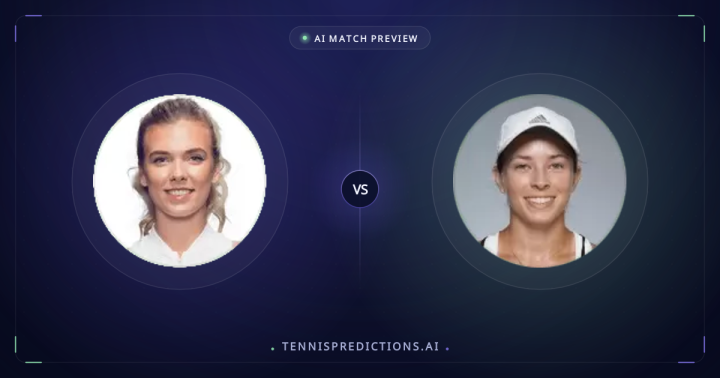
Boulter vs Volynets Prediction: Cincinnati’s First-Round Puzzle
Katie Boulter and Katie Volynets meet in a first-round match at the WTA Cincinnati Open, and while it may not be the loudest blockbuster on the draw sheet, it has all the ingredients bettors love: contrasting styles, uncertain form, home-court energy, a fast hard-court surface, and a market that does not appear completely settled.
The match is scheduled for 2026-08-14 at 00:00:00 UTC, placing it in that tense North American summer window where every match feels connected to the bigger story of the US Open build-up. Cincinnati is not just another stop. It is a WTA 1000 event, played at the Lindner Family Tennis Center, where the courts usually reward players who strike first, serve with intent, and do not hesitate when the ball sits up.
That matters because Boulter’s game is built for exactly those moments. The British No. 1 is at her best when she can step inside the baseline, flatten out her forehand, and turn service games into quick, efficient holds. Volynets, meanwhile, brings a very different energy. The American is a mover, a retriever, a problem-solver. She does not need to hit through opponents to beat them. She can make them play one more ball, then another, until impatience becomes a weapon in her favor.
From a betting perspective, this is a fascinating matchup. The odds list Boulter at 2.0, while the other side of the market is around 1.84. Based on the pricing, Volynets is being treated as the slight favorite or near-favorite, but TennisPredictions.ai’s AI model still suggests “1” — meaning Boulter to win — as the top pick, with odds of 2.0 and a low confidence score of 2.2/10. That confidence rating is important. It tells us this is not a strong, high-conviction selection. It is more of a value-lean than a hammer play.
For the totals market, the highlighted prediction is Over 17.5 games at odds of 1.27. That is a low price, but it also reflects the expectation that this match should produce enough competitive tennis to clear a modest line.
Best tip: Over 17.5 games at 1.27
Match Context: Two Katies, Two Very Different Stories
There is something neat about the symmetry here: Katie Boulter vs Katie Volynets, one representing Britain’s leading women’s tennis hopes, the other an American trying to make a serious impression on home soil. But beneath the shared first name, their tennis identities could hardly be more different.
Boulter arrives in Cincinnati trying to stop the bleeding. Reports around her recent form point to a difficult mid-summer spell, including a five-match losing streak. That is not just a number on a page. In tennis, losses stack up psychologically. A player can look technically sound in practice and still feel tension when break point arrives. They can serve beautifully for three games and then double fault when the set gets tight. Confidence is not abstract in tennis; it shows up in footwork, decision-making, and whether a player chooses the right shot under pressure.
Earlier in the season, Boulter’s campaign looked far brighter. She reportedly captured the title in Ostrava and produced deep runs at Queen’s Club, Merida, and Rouen. That version of Boulter had rhythm, belief, and the kind of first-strike tennis that can make her dangerous against almost anyone. But the tour is long, and momentum can disappear quickly. Cincinnati becomes a reset button. A win here would not just move her into the second round; it would give her something more valuable before New York: evidence that the losing run is not permanent.
Volynets, by contrast, enters with a little more positive momentum. She recently reached the quarterfinals in Memphis, which was her second tour-level quarterfinal of the year. That is meaningful for a player whose career has often been about grinding, learning, and taking chances when the draw opens up. She has not been flawless against higher-ranked opponents, with an 11-15 record against that category in 2026, but she has enough recent match wins to feel that her game is alive.
And unlike Boulter, Volynets will also have the boost of playing in the United States. Home conditions do not guarantee anything, of course, but they can help. Familiar atmosphere, supportive crowd energy, and comfort with the North American hard-court rhythm can all matter, especially in the tight passages of a first-round WTA 1000 match.
AI Prediction and Betting Odds: What the Market Is Saying
The betting odds for this match create an interesting discussion. Boulter is available at 2.0, while the opposing price is listed around 1.84. In simple terms, the market is not separating the players by much. This is priced like a coin-flip match with a slight lean toward Volynets, depending on the bookmaker and market movement.
TennisPredictions.ai’s AI selection, however, points toward Boulter as the top moneyline pick at 2.0. The model labels the pick as “1” — first player to win — but attaches a confidence score of only 2.2/10. That low confidence is a flashing yellow light for bettors. It does not say “avoid entirely,” but it does suggest caution. A prediction can identify value without calling a match likely. There is a difference between “this price may be slightly too high” and “this player should win comfortably.”
That distinction is crucial in sports betting. If Boulter’s true chance is slightly higher than the market implies, then 2.0 could be a value price. But the small confidence score tells us that the edge is thin, and thin edges require disciplined staking.
The over/under market looks more straightforward. The total games prediction is Over 17.5 at 1.27. Because 17.5 is a relatively low line for a women’s best-of-three match, it can land in many common scorelines. A 6-4, 6-4 result gives 20 games. A 6-3, 6-4 result gives 19. Even a fairly routine 6-3, 6-3 score pushes to 18. For Under 17.5 to cash, one player usually needs to win very comfortably, such as 6-2, 6-3 or easier.
Given the styles and the uncertainty around Boulter’s form, a total above 17.5 games makes sense. Volynets is not typically the kind of player who disappears quickly if she is physically right. She makes opponents earn points. Boulter, even if she wins, may have to manage some service-game pressure and baseline exchanges that extend the match.
Why Boulter Can Win
The case for Boulter starts with the surface. Cincinnati hard courts are known for being quick enough to reward aggressive serving and clean ball-striking. When conditions are lively, players who take the first swing in rallies often get paid.
Boulter’s best tennis is direct. She uses her first serve to set the tone, then looks to attack with flat, penetrating groundstrokes. Her forehand can do damage when she is balanced, and she has the ability to rush defensive players before they settle into patterns. Against Volynets, that is extremely important. The longer the rallies become, the more the American can turn the match into a physical and mental test.
So Boulter’s path is clear: serve well, attack early, and avoid allowing Volynets to turn defense into neutral rallies. She needs to hit through the court, especially behind the first serve, and punish short balls without overplaying. If she can control the center of the court and dictate with her forehand, she can make Volynets defend from uncomfortable positions.
There is also the motivation angle. A losing streak can be damaging, but it can also sharpen urgency. Boulter knows she needs a performance. She knows Cincinnati has not been a happy hunting ground in the past, with no main-draw wins in three previous appearances, but that also gives her a chance to change the story. Sometimes one tough first-round win is enough to restore belief.
At odds of 2.0, the Boulter moneyline is not without appeal. She has the higher ceiling in these conditions, and if she gets into a serving rhythm, she can win clusters of games quickly. The question is not whether Boulter has the tools. She does. The question is whether those tools show up reliably enough after a difficult run.
Why Volynets Can Win
Volynets has a very believable route to victory, and it starts with patience. She is the kind of player who can make a struggling opponent feel every bit of pressure. She covers the court well, absorbs pace, and does not panic when forced behind the baseline. Her game is built around asking questions: Can you hit one more winner? Can you keep your depth? Can you stay calm when the easy point does not come?
Against a player on a losing streak, that style can be dangerous. If Boulter is not confident, she may try to end points too quickly. That is exactly where Volynets can thrive. She does not need to dominate the highlight reel. She needs to extend rallies, make Boulter hit on the move, and force errors from aggressive positions.
Volynets’ recent quarterfinal run in Memphis should also help her belief. Even if she has had mixed results against higher-ranked players, recent wins matter. Match sharpness matters. When a player has been closing matches and handling scoreboard pressure, she walks onto court with a different kind of calm.
The home factor is another small but real advantage. American players often feed off the energy at US events, especially when facing international opponents. The crowd may not decide the match, but if Volynets breaks back late in a set or saves break points with long defensive rallies, the atmosphere can tilt toward her.
From a betting standpoint, Volynets at around 1.84 is understandable. She appears to have steadier recent form, and her style matches up well with a player who may be searching for confidence. If Boulter’s error count rises, Volynets can absolutely turn this into a frustrating night for the Brit.
Tactical Breakdown: Aggressor vs Counterpuncher
This match is likely to be decided by one big tactical question: can Boulter hit through Volynets before Volynets drags her into uncomfortable rallies?
Boulter is the aggressor. She wants first serves, short replies, and immediate forehand opportunities. She wants to keep points short and prevent Volynets from settling into rhythm. If the Brit is striking cleanly, Cincinnati’s court speed helps her. Fast hard courts can make defensive recovery harder, and Boulter’s flat pace can skid through the surface.
Volynets is the counterpuncher. She wants depth, consistency, and movement. She will try to change the shape of rallies, test Boulter’s patience, and use her defensive skills to draw errors. She does not need to overpower Boulter. She needs to make Boulter uncomfortable.
The serve will be especially important. If Boulter’s first-serve percentage is high, she can protect her service games and apply scoreboard pressure. If she has to rely too often on second serves, Volynets can step in, extend return games, and make every hold feel complicated.
The first four games could tell bettors a lot. If Boulter opens with confident holds and clean winners, the underdog price may begin to look very attractive. If Volynets is immediately getting into return games and forcing Boulter into extended exchanges, the match could swing toward the American’s preferred pattern.
Total Games Prediction: Why Over 17.5 Appeals
The Over 17.5 games line at 1.27 is not glamorous, but it is logical. The price is short, meaning the market sees it as likely, but the matchup supports that view.
There are several reasons. First, both players have credible win conditions. This does not look like a mismatch where one player should cruise without resistance. Boulter has the power and surface fit. Volynets has the steadiness and recent confidence. That alone makes a one-sided score less certain.
Second, Volynets’ defensive style tends to increase the chance of competitive games. Even when she is not dominating, she can make service games longer and force opponents to win points multiple times. That often helps overs, because holds become harder, breaks can be exchanged, and sets land in the 6-4 or 7-5 range.
Third, Boulter’s current form creates volatility. She may produce brilliant stretches and messy ones in the same match. That kind of up-and-down performance can be useful for a low over line. A player who wins 6-3, 6-4 still covers. A player who starts strong, dips, and recovers can cover even more comfortably.
Of course, the risk is a lopsided result. If Boulter’s confidence collapses or Volynets struggles to handle the pace, Under 17.5 can happen. But based on the available information, the over is the safer betting angle than choosing a side.
Moneyline Verdict: Is Boulter Value at 2.0?
Boulter at 2.0 is tempting because her upside is higher in these conditions. If you are betting purely on ceiling, the British player makes sense. Fast hard court, first-strike game, strong serve, aggressive forehand — those are all relevant assets in Cincinnati.
But the low AI confidence score of 2.2/10 should not be ignored. It suggests the model sees Boulter as the preferred selection but not by a meaningful margin. That aligns with the human read of the matchup. Boulter can win, but her losing streak and poor Cincinnati history are genuine concerns.
Volynets is not an easy opponent for someone trying to rebuild confidence. She will not hand over cheap points for long stretches. She will make Boulter execute. That is exactly why the match feels dangerous for a moneyline bettor.
If you like Boulter, the argument is value rather than certainty. At even money, you are betting that her weapons finally click and that the court helps her impose herself. If you prefer Volynets, you are betting on stability, defense, recent momentum, and Boulter’s current fragility.
For many bettors, the best approach may be to keep the moneyline stake smaller and focus on the total games market.
Responsible Betting Angle
It is worth saying clearly: this is not a match for reckless staking. The betting market is tight, the AI confidence score is low, and both players have realistic paths to victory. That makes it interesting, but also unpredictable.
A sensible betting strategy would be to treat the Over 17.5 games as the primary angle and the Boulter moneyline as a smaller value play only for those comfortable with risk. Avoid chasing if the early games go against your read. Tennis momentum can change quickly, especially in WTA matches where return pressure and emotional swings often create sudden breaks.
Also, always compare odds across bookmakers. A price of 2.0 on Boulter is much more attractive than a shorter number. Likewise, Over 17.5 at 1.27 is playable only if it fits your staking plan, because short odds require consistency over time to be profitable.
Final Prediction: Boulter vs Volynets
This first-round Cincinnati meeting feels like a story about control. Boulter wants to control the rally from the first strike. Volynets wants to control the rhythm by refusing to go away. Boulter wants a quick, clean match that restores belief. Volynets wants a messy, physical battle that exposes the doubts created by Boulter’s losing streak.
The AI leans toward Boulter to win at 2.0, but with only 2.2/10 confidence, the side market should be treated carefully. The more reliable betting narrative sits with the games total. A competitive match, even in straight sets, can clear 17.5 without needing a thriller.
Boulter’s serve and forehand may eventually be enough, especially on Cincinnati’s fast hard courts. But Volynets’ defensive discipline and home-soil confidence should make her work for it. Expect patches of momentum for both players, some pressure-filled service games, and enough resistance from the underdog or favorite — depending on your market view — to avoid a quick blowout.
Best tip: Over 17.5 games at 1.27
Predicted score lean: Katie Boulter to win 7-5, 6-4, though the confidence on the outright result remains low. For bettors, the smarter play is not necessarily picking the winner, but trusting that both players bring enough to push the match beyond a modest games line.