
AI Tennis Predictions: Korda vs McDonald Tips
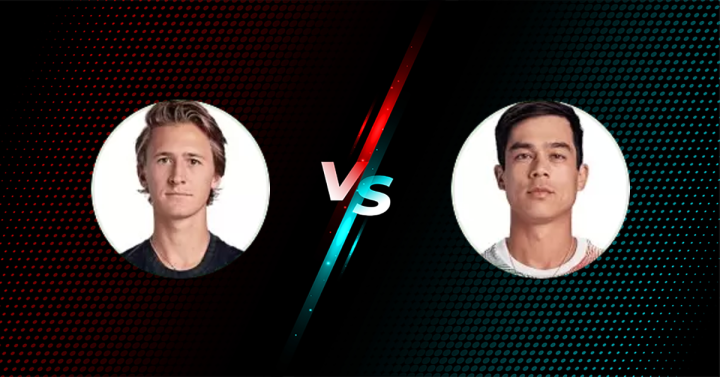
Match overview: an all-American clash in Delray
Sebastian Korda and Mackenzie McDonald meeting in Delray Beach feels like a perfect snapshot of modern American men’s tennis: one player built to take the racquet out of your hand with clean, early ball-striking, the other engineered to absorb pace, extend rallies, and make every service game feel like work. This ATP Delray Beach matchup is scheduled to begin at 16:00:00 UTC, and it carries extra weight because it’s not just a “home-soil” match—it’s a guaranteed American moving forward in a tournament that often helps set the tone for the Sunshine State swing.
From a betting perspective, the market is making a clear statement. Korda is priced at 1.25 to win, while McDonald sits at 4.1. That’s a sizable gap for two players who know each other well and have shared plenty of courts over the years. Still, stylistically and conditionally, it’s not hard to see why Korda is favored.
Odds, AI picks, and best bets
Main market (Match Winner)
Our AI at TennisPredictions.ai points firmly to the favorite: Best Tip: 1 (Sebastian Korda to win) with a confidence level of 10.0/10. The odds for this selection are 1.25, which aligns with the broader market expectation that Korda’s first-strike tennis should control the majority of patterns.
Total games (Over/Under)
The model also leans toward a shorter match: Under 29.5 total games (U29.5) at 1.24. This is an important angle because it suggests not only a Korda win, but a win where he avoids a long, messy three-set grind.
Recent form and momentum: power vs persistence
Korda’s early-season narrative is familiar to anyone who’s followed him closely: the ceiling looks elite. When his timing is locked in, he can take the ball early, flatten out exchanges, and make even strong defenders feel rushed. The key question has often been week-to-week consistency—whether he can keep his aggressive margins under control when conditions, nerves, or an opponent’s resistance start to test his patience.
McDonald arrives with a different type of momentum. He’s the kind of player bettors learn to respect because he rarely gives away matches with wild stretches of errors. His game is built on court coverage, disciplined shot selection, and a willingness to play the “one more ball” game for as long as it takes. In recent hard-court stretches, his profile tends to look the same: a solid first-serve percentage, clean rally tolerance, and a knack for dragging higher-powered opponents into uncomfortable extra shots.
Playing styles and the tactical matchup
This is the classic offense-versus-defense script, but with a few modern twists.
How Korda wins
Korda’s biggest edge is his ability to take time away. His backhand is a genuine weapon—compact, repeatable, and capable of changing direction without a big tell. Add in his height and leverage on serve, and you get a player who can earn cheap points and then step inside the baseline to finish. If Korda is serving accurately and landing his first forehand after the serve, he can keep points short and prevent McDonald from settling into rhythm.
How McDonald makes it competitive
McDonald’s path is about disruption. He doesn’t need to outhit Korda—he needs to neutralize. That means blocking returns deep, redirecting pace, and stretching rallies just long enough to tempt Korda into pressing. If Korda’s timing is even slightly off, McDonald’s consistency can turn aggressive intent into unforced errors, especially in extended baseline exchanges.
The key battleground: Korda’s patience
The match likely swings on whether Korda can stay aggressive without getting reckless. Against a defender like McDonald, the “right” play is often the second or third aggressive shot—not the first. Bettors should watch the early games: if Korda is constructing points (serve +1, controlled backhand patterns, selective net approaches), the favorite price looks justified.
Surface and conditions: why Delray matters
Delray Beach is an outdoor hard-court event that often plays on the quicker side, but Florida humidity can subtly change the feel of the match. As the air gets heavier, balls can sit up a touch more, and rallies can become more physical than the surface speed suggests.
That said, Korda has a meaningful comfort factor here. He’s long been associated with Florida training blocks, and familiarity with the humidity, bounce, and day-to-day conditions can be a real edge—especially for a player whose game depends on clean timing and early contact.
McDonald, on the other hand, is no stranger to winning ugly in heat and wind. If conditions turn gritty, he’s one of the more reliable grinders in the American contingent, and he’s comfortable turning matches into fitness and discipline tests.
Head-to-head familiarity and what it means for betting
When two players have seen each other multiple times, surprises are rare. That usually shifts the edge toward execution: serving patterns, return depth, and who holds their nerve on the big points. Historically, the blueprint tends to be consistent—Korda thrives when his serve and first-strike patterns land, while McDonald’s best results come when he successfully drags Korda into longer exchanges and forces him to hit extra balls under pressure.
This familiarity also supports the Under 29.5 angle if Korda starts well. If the favorite gets an early break and holds comfortably, the match can move quickly because McDonald’s style—while resilient—doesn’t always generate rapid momentum swings without help from the opponent.
Stakes and motivation: Sunshine State positioning
Delray is more than a 250 for players like these. It’s a springboard into Indian Wells and Miami, where seeding, confidence, and match toughness matter. For Korda, a strong week helps stabilize his early-season trajectory and reinforces his status as one of the most dangerous American hard-court players when healthy. For McDonald, it’s a prime chance to bank ATP points on home soil and prove—again—that his game can frustrate bigger names.
Final betting verdict
With the odds at 1.25, you’re not being paid for drama—you’re being paid for probability. The matchup, the conditions, and the AI confidence all point in the same direction: Korda has more ways to control the scoreboard, especially if his serve sets the tone and he avoids overplaying in neutral rallies.
Best Tip: Sebastian Korda to win (1) @ 1.25
Secondary lean: Under 29.5 total games (U29.5) @ 1.24
As always, manage your bankroll responsibly: even strong favorites can wobble if they start slowly. But on balance, this is a spot where the favorite’s weapons, familiarity with conditions, and higher “point-ending” capacity make him the most logical side.