
AI Tennis Tips: Lazaro Garcia vs Leonard
Match Overview
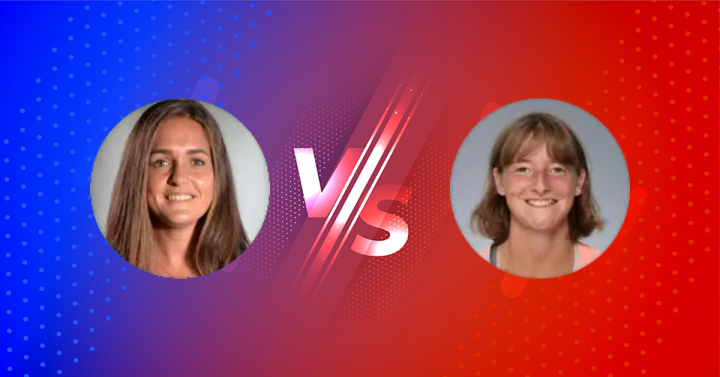
Andrea Lazaro Garcia and Manon Leonard square off in a fascinating Round of 16 matchup at the Open Arena Les Sables d’Olonne, the first WTA 125 event staged in France’s Vendée region. The match is scheduled for 2026-02-19 at 11:00:00 UTC, with the indoor hard courts at the ARENA Stadium expected to play quick—conditions that often reward clean ball-striking, sharp returning, and players who can take time away.
From a betting perspective, the market is tight: Lazaro Garcia is priced at 1.81 to win, while Leonard sits at 2.05. That narrow gap reflects what this contest looks like on paper: a proven, battle-hardened Spaniard who just produced a major opening-round surprise versus a French player whose trajectory has been trending upward and who now gets the boost of home support on a surface she enjoys.
TennisPredictions.ai leans toward the first player, projecting a Lazaro Garcia win (pick: 1) with a confidence score of 3.2/10 at odds of 1.81. That low confidence rating is important for bettors: it suggests an edge, but not a massive one—more “value lean” than “lock.”
Odds, Implied Probability, and What the Market Says
Let’s translate the odds into implied probability (before bookmaker margin):
– Lazaro Garcia 1.81 implies roughly a 55% chance (1 / 1.81).
– Leonard 2.05 implies roughly a 49% chance (1 / 2.05).
Those numbers tell you the market expects a competitive match, likely decided by a few key moments: break-point conversion, second-serve performance, and who controls the tempo in the mid-court exchanges.
For totals bettors, the model’s lean is Over 19.5 games at 1.52. That price indicates the book expects a reasonably long match—often meaning either a three-set possibility or at least one tight set (7-5 or 7-6).
Recent Form and Momentum
Andrea Lazaro Garcia arrives with a serious confidence injection after knocking out the 7th seed Lucia Bronzetti in the first round. For a player who has spent recent seasons grinding through ITF events and chasing a return toward her career-best ranking (previously around the mid-170s), that kind of win can be a turning point. It’s not just the result—it’s what it signals: she can still translate her patterns to higher-tier opponents when conditions suit her and when her timing is dialed in.
Her early 2026 form has been described as mixed—some gritty stretches on the ITF circuit and a close loss in Australian Open qualifying—but the key takeaway for bettors is that she looked comfortable on these faster indoor courts immediately. That matters because quick indoor conditions can exaggerate small advantages: a slightly better return position, a cleaner backhand line, or a more reliable first ball after serve.
Manon Leonard, meanwhile, continues a steady rise that has been building for over a year. She opened her campaign here with a solid win over Raluca Georgiana Serban, and her confidence has been supported by a strong 2025 season that included a title run in Andrézieux-Bouthéon and a career-high ranking in the same general range as Lazaro Garcia’s peak (around the mid-170s). While her Australia swing brought some early exits, the return to French indoor hard courts—where she has historically done some of her best work—has a “reset button” feel.
Momentum is real, but it’s also fragile. Lazaro Garcia must avoid the classic post-upset dip, while Leonard must manage the emotional energy of playing at home without letting it turn into rushed decision-making.
Playing Styles: Consistency vs Variety
This is where the matchup becomes especially interesting for a tennis tips platform, because the clash is stylistic.
Lazaro Garcia is the more traditional baseliner: right-handed, steady off both wings, with a dependable two-handed backhand. Her identity is built on absorbing pace, extending rallies, and forcing opponents to hit one more ball. Indoors, that counterpunching style can become even more effective if she reads serve patterns well and blocks returns deep, immediately neutralizing the first strike.
Leonard is the opposite archetype. She has described her tennis as “atypical” and built around variety. Rather than trying to blast through opponents, she changes speeds, uses drop shots, and looks to move forward to finish points at the net. The danger for Lazaro Garcia is getting pulled into a cat-and-mouse dynamic—short angles, sudden drop shots, and awkward transition balls that break a baseliner’s rhythm.
The tactical question is simple:
– Can Lazaro Garcia keep Leonard pinned deep and make her hit extra passes and defensive lobs?
– Or can Leonard disrupt the Spaniard’s timing with constant changes of height, spin, and court position?
Surface and Conditions: Fast Indoor Hard
Tournament organizers have characterized the indoor hard courts as fast, and that aligns with what players typically experience in controlled indoor arenas: no wind, consistent bounce, and a premium on first-strike patterns.
This surface profile arguably helps both:
– Leonard benefits because her precision game—drop shots, short angles, and net approaches—becomes more reliable without weather variables.
– Lazaro Garcia benefits because her flatter, compact strokes can skid through the court, and her ability to redirect pace becomes more punishing when the ball stays low.
One subtle betting angle: fast indoor courts can create “scoreboard pressure.” A single loose service game can decide a set, which often pushes totals upward because sets stay close even when one player is slightly better overall.
Head-to-Head: A Small but Relevant Data Point
They have met once before on the pro circuit:
– 2025 ITF W50 La Marsa (outdoor hard): Lazaro Garcia won 6-4, 6-4.
For bettors, that result provides two takeaways. First, Lazaro Garcia has already shown she can solve Leonard’s variety over a full match. Second, the context has changed: Leonard has developed since then and now plays at home, indoors, with crowd energy that can lift her in tight moments.
So the head-to-head is a lean, not a guarantee—useful for framing the matchup, not for blindly copying.
Fitness, Availability, and Intangibles
No injury concerns are reported for either player heading into this Round of 16. Leonard has previously spoken about a significant shoulder operation earlier in her career, but by late 2025 she indicated she was finally competing without ongoing physical worries—an important note for anyone assessing her ability to serve consistently and finish points at net.
Another intangible: tournament importance. WTA 125 events are crucial stepping stones, offering ranking points that can swing a season—especially for players hovering outside the top 200 who are fighting for direct entry into Grand Slam main draws. Expect intensity, momentum swings, and a match where mental composure is as valuable as shot-making.
Best Bets: Predictions and Betting Tips
Based on the available information, the market prices, and the AI model lean:
Main Match Winner Tip
The slight edge goes to the Spaniard due to her recent statement win, her ability to handle pace on fast courts, and the psychological benefit of having beaten Leonard previously.
Best tip: Andrea Lazaro Garcia to win (1.81)
Total Games Tip
The Over 19.5 games recommendation fits the matchup logic: close odds, indoor conditions that protect serve, and two styles that can trade momentum. Even if Lazaro Garcia wins, a 7-5 6-4 type scoreline gets there, and a three-set match clears it comfortably.
Lean: Over 19.5 games (1.52)
How This Match Could Play Out
If Lazaro Garcia starts well on return and keeps rallies deep, Leonard may be forced into lower-percentage creativity—drop shots from uncomfortable positions, rushed approaches, and riskier second-serve patterns. That’s the script for a Lazaro Garcia win in two competitive sets.
If Leonard, backed by the home crowd, lands a high first-serve percentage and successfully drags Lazaro Garcia forward with variation, the match can flip quickly. In that scenario, the Over becomes even more attractive, because momentum swings often produce split sets.
Either way, bettors should treat this as a measured edge rather than a high-confidence spot—exactly what the AI confidence score (3.2/10) implies.