
AI Tennis Tips: Rajaonah vs Grabher Predictions
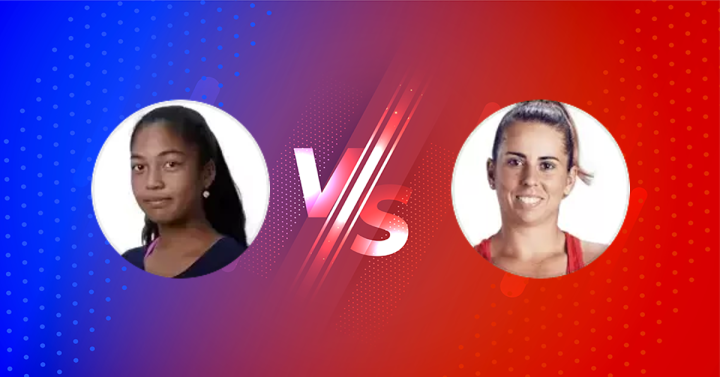
Match context: WTA Hobart qualifying stakes
The WTA Hobart International qualifying rounds in Australia are often where early-season storylines begin, and this matchup fits that pattern perfectly. Tiantsoa Rakotomanga Rajaonah and Julia Grabher meet in a high-leverage qualifying contest with a main-draw place on the line at a WTA 250 event that traditionally serves as a key tune-up for the Australian Open. The scheduled start time is 2026-01-10 at 05:00:00 UTC, and while this is “only” qualifying, the incentives are huge: ranking points, confidence for the Australian swing, and the practical benefit of getting hard-court reps under pressure.
From a betting perspective, this is also a classic cross-generational handicap: a rising talent with momentum versus a proven tour professional working her way back toward her best ranking level after an injury-affected period. That contrast is exactly why the market has installed Rajaonah as the favorite, but not at an overwhelming price.
Betting odds and market snapshot
The pre-match odds frame the expectations clearly:
Tiantsoa Rakotomanga Rajaonah to win: 1.61
Julia Grabher to win: 2.3
Those prices imply Rajaonah is viewed as the more likely winner, with Grabher positioned as a live underdog—especially if the match turns into a physical, tactical grind. For bettors looking for tennis tips built on probability rather than hype, the key is deciding whether the favorite’s upside (and current trajectory) outweighs the veteran’s experience edge.
Our platform’s AI model has flagged the best side as 1 (first player will win) with a confidence rating of 4.9 at odds of 1.61. The total games lean is Under 26.5 at odds of 1.29.
Player profile: Tiantsoa Rakotomanga Rajaonah’s rise
Rajaonah enters this match with the kind of profile bettors often look for in qualifying: a young player trending upward, coming off a strong developmental stretch, and increasingly comfortable transitioning from ITF-level success into WTA qualifying intensity.
A key data-driven angle here is momentum. Her recent seasons have been defined by tangible progress—multiple ITF titles and competitive matches against higher-ranked opponents, including several three-set battles that suggest she can hang physically and mentally when the level rises. That matters in Hobart qualifying, where the margins are thin and the ability to win “ugly” points often decides sets.
Stylistically, Rajaonah plays modern first-strike tennis. She’s built to take time away: a strong first serve, a heavy forehand that can dictate crosscourt patterns, and a willingness to step in and shorten rallies. In betting terms, that profile tends to translate well to outdoor hard courts, where clean ball-striking and proactive court positioning can create quick holds and scoreboard pressure.
The main risk factor—again, relevant for wagering—is that aggressive shot selection can fluctuate under stress. When a young attacker gets dragged into extra balls, the unforced error count can rise quickly. That’s where this matchup becomes interesting, because Grabher’s game is designed to test patience.
Player profile: Julia Grabher’s experience and comeback arc
Julia Grabher brings a very different kind of value to the court: tour-level experience, tactical discipline, and the ability to turn matches into endurance tests. She has previously been ranked inside the top 60, which is a meaningful benchmark when evaluating her ceiling. Even if she’s not currently at that peak, the fact she has competed regularly against high-level opposition gives her a problem-solving toolkit that many qualifiers don’t have.
Her recent form has been shaped by recovery and rebuilding. After a 2024 season disrupted by a wrist injury, she spent much of 2025 trying to regain match rhythm and ranking traction. For bettors, this matters because “returning from injury” isn’t just about being cleared to play—it’s about trusting strokes under pressure, especially on serve and in defensive positions. The encouraging note is that she has looked physically robust in more recent outings, with no obvious signs of the fatigue or discomfort that can linger after surgery.
Grabher is often labeled a clay-court specialist, but she’s shown she can adapt to hard courts by leaning into her strengths: heavy topspin, strong court coverage, and a counterpunching style that forces opponents to hit extra shots. She can also mix in variety—like a slice—to disrupt timing. In a qualifying match where nerves can spike, that ability to change pace can be a real edge.
Tactical matchup: power vs persistence
This match is likely to be decided by court position and rally length.
Rajaonah’s clearest path is to keep points short: serve + forehand patterns, early ball-striking, and controlled aggression to prevent Grabher from settling into long exchanges. If Rajaonah consistently wins the first 2–4 shots of rallies, she can make this look like a straightforward favorite win.
Grabher’s path is the opposite: extend rallies, absorb pace, and turn the match into a decision-making test. The longer the points go, the more likely the younger player is to press. From a betting lens, that dynamic often shows up in set flow: if Grabher can force a tight first set, the match can become more volatile; if Rajaonah gets an early break and plays front-running tennis, the underdog’s comeback chances shrink.
Surface and Hobart conditions: why they matter
Hobart’s outdoor hard courts generally reward players who can hit through the court, which on paper supports Rajaonah’s aggressive baseline style. But Hobart is also known for tricky conditions—cooler temperatures and swirling winds compared to other Australian stops. Wind is a hidden variable that can tilt matchups toward players who use spin and margin.
That’s one reason Grabher remains a credible underdog: her topspin-heavy patterns and controlled rally tolerance can be more stable when timing is disrupted. Meanwhile, flatter, more direct ball-striking can become error-prone if the wind forces late adjustments. For totals betting, wind can also reduce clean winners and increase breaks of serve, which sometimes supports an Under if one player gains separation and the other struggles to hold consistently.
Head-to-head and experience gap
This is the first professional meeting between Rajaonah and Grabher, so there’s no direct head-to-head data to lean on. In these cases, bettors typically weigh two substitutes: (1) level of opposition faced and (2) style compatibility.
Grabher clearly owns the experience edge, having played more matches at WTA level and against elite opponents. Rajaonah brings the “X-factor” of being less familiar to tour regulars—an underrated advantage in qualifying, where scouting is limited and early reads matter.
Statistical betting picks: best tip and total games
Based on the odds, matchup logic, and the AI model’s output, the recommended approach is to align with the favorite while respecting the conditions that could make it scrappy.
Best bet (moneyline): 1 (Tiantsoa Rakotomanga Rajaonah to win) at 1.61
AI confidence rating: 4.9
This pick is supported by the typical hard-court advantage for first-strike players, Rajaonah’s upward momentum from the ITF-to-WTA transition, and the possibility that Grabher—still in her comeback phase—may struggle to consistently neutralize pace if she falls behind.
Total games: Under 26.5 at 1.29
The Under is consistent with a scenario where the favorite’s power creates scoreboard gaps (for example, a straight-sets win with one lopsided set, or two sets with a single tiebreak at most). Under 26.5 can still cash in many two-set scorelines, including 6-4 6-4 (20 games), 6-3 6-4 (19), or even 7-5 6-4 (22). The main threat to the Under is a three-set match, which becomes more likely if Grabher successfully drags the contest into extended rallies and forces dips in Rajaonah’s consistency.
For more matchup-driven tennis tips and model-based breakdowns, you can compare additional angles at Tennis Analyses.
Final betting takeaway
If you’re building a simple betting card for WTA Hobart qualifying, the cleanest play is backing the favorite: Rajaonah to win (1) at 1.61. The matchup leans toward her hard-court aggression and current momentum, while Grabher’s best route requires turning this into a long, tactical battle under potentially awkward conditions. The Under 26.5 is a conservative totals angle that fits a favorite-win script, especially if Rajaonah starts fast and keeps points on her terms.