
AI Tennis Tips: Sawangkaew vs Prozorova
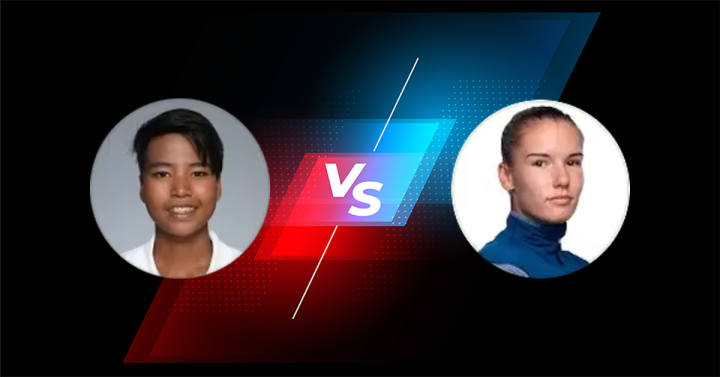
Match snapshot: WTA Mumbai quarterfinal stakes
The WTA Mumbai event (a WTA 125 stop that often acts like a “gateway tournament” between the ITF grind and the main-tour spotlight) sets up a fascinating quarterfinal: Thailand’s Mananchaya Sawangkaew vs Russia’s Tatiana Prozorova. Scheduled for 2026-02-06 at 09:30:00 UTC, it’s the kind of matchup bettors love—two rising players with contrasting styles, meaningful ranking points on the line, and conditions that can quietly swing the edge.
This isn’t just “who hits harder.” It’s a test of identity. Sawangkaew is trying to prove her problem-solving, endurance-based tennis can frustrate bigger hitters at a higher tier. Prozorova is trying to show her first-strike patterns translate outdoors in heavy air, not only on faster, cleaner conditions. With a semifinal berth available, the winner doesn’t just advance in Mumbai—they take a tangible step toward better draws, better entry lists, and a more stable 2026 schedule.
Betting odds and what the market is saying
Let’s start with the numbers, because they frame the story:
– Sawangkaew to win: 2.34
– Prozorova to win: 1.62
Those odds position Prozorova as the favorite, implying the market expects her power and efficiency to land more often than not. In plain betting terms, Prozorova is priced like the player more likely to control the match on her racket—serve, return aggression, and shorter points.
But the underdog price on Sawangkaew is exactly why this match is drawing attention. When a player with elite movement and counterpunching instincts is priced above 2.30 on a hard court that can reward defense in humid conditions, bettors naturally ask: is the favorite’s style stable enough if the match becomes physical?
AI predictions: how to interpret the signals responsibly
TennisPredictions.ai points to “1” (first player) as the top pick—Sawangkaew—at the same 2.34 odds, but with a very low confidence score of 1.5/10. That combination matters.
A low confidence rating is essentially a warning label: the model sees a path to the upset, but it’s not calling it a high-certainty spot. In betting language, this is closer to a “value lean” than a “lock.” It suggests the price might be a touch generous on Sawangkaew given the matchup variables, even if Prozorova remains the most likely winner on paper.
If you want more model-driven context and similar writeups, the AI tennis news hub is a useful reference point—but for this match, the key is balancing the AI’s underdog lean with the market’s favorite stance.
Recent form and momentum: grit vs efficiency
Sawangkaew arrives in Mumbai with the kind of momentum that doesn’t always show up in highlight reels but wins tournaments: resilience, composure in three-set scenarios, and a steady ability to raise her level on big points. Her early-2026 run has leaned on consistency—absorbing pace, extending rallies, and forcing opponents to hit “one more” ball under stress. That’s a real weapon in WTA 125 environments, where rhythm and patience often decide tight matches.
Prozorova’s route has looked more clinical. When she’s on, she compresses matches: heavy baseline strikes, a flatter serve that penetrates, and return games built around taking time away. She’s also shown she can carry aggressive form from indoor hard courts into outdoor settings—something that doesn’t always translate smoothly for power-first players. The big question is whether she can keep that efficiency if the match drifts into longer exchanges under Mumbai’s humidity.
Styles make fights: Sword vs Shield tactics
This is a classic “Sword vs Shield” matchup.
Sawangkaew’s identity is built around:
– elite court coverage and retrieval
– high-percentage patterns that reduce cheap errors
– the ability to flip defense into offense, especially with a backhand down the line that can change direction suddenly
Prozorova’s identity is built around:
– first-strike tennis: serve + forehand, return + forehand
– flattening out the ball to rush opponents
– stepping inside the baseline to finish quickly, occasionally following into the net when the court opens
The tactical collision is simple to describe and hard to execute: can Prozorova keep the risk-managed aggression required to hit through a fast mover, or does Sawangkaew’s depth and variety drag her into a rising unforced-error count? If Prozorova’s timing is even slightly off, Sawangkaew’s legs and discipline can turn “comfortable favorite” into “frustrated favorite” in a hurry.
Surface and Mumbai conditions: the hidden handicap
Mumbai’s outdoor hard courts can play fairly quick, but the coastal heat and humidity often become the real opponent. Heavy air can slightly slow the ball, extend rallies, and punish players who rely on instant winners.
That’s why conditions subtly point toward Sawangkaew’s strengths. Training and competing in Southeast Asian climates tends to build comfort in long, sweaty matches—breathing, recovery between points, and staying mentally locked in when the court feels sticky.
For Prozorova, the conditions are a test of patience and physical management. Her best version is ruthless and direct; the humidity can force her to hit extra shots to finish points. If she’s fresh and striking cleanly, she can still dictate. If she’s forced into repeated “two or three more balls” sequences, the match can tilt toward the defender.
Head-to-head context and psychological edge
Their head-to-head history is limited and largely rooted in the developmental circuit, where matches between them have tended to be baseline-heavy and physically demanding. With no dominant psychological edge established, the more relevant angle is environment: Sawangkaew has often looked more comfortable in Asian conditions, while Prozorova’s advantages have tended to show more clearly in faster, lower-bounce settings.
That doesn’t decide the match—but it supports why an underdog price on Sawangkaew can be tempting for bettors hunting situational value.
Fitness and availability notes
Both players appear healthy entering this quarterfinal. Sawangkaew has moved freely in Mumbai after previously showing minor thigh strapping earlier in the season, and her movement is central to her upset chances. Prozorova has benefited from shorter early-round matches, which could matter if this turns into a physical third-set scenario. In other words: Sawangkaew may handle the climate better, but Prozorova may arrive with more fuel in the tank.
Best betting tips: main angles to consider
The totals market is especially interesting here. The AI leans to Under 23.5 games at 1.49. That suggests a match script where one player wins in straight sets or at least avoids extended 7-5/7-6 type sets.
Given the stylistic clash, there are two realistic “Under” pathways:
1) Prozorova starts fast, serves well, and keeps points short—straight-sets favorite win.
2) Sawangkaew’s defense forces a mental dip from Prozorova, leading to a lopsided set or two in the underdog’s favor rather than a tight, game-heavy battle.
Meanwhile, the moneyline is the higher-variance play: Sawangkaew at 2.34 is attractive if you believe the humidity and rally tolerance will steadily erode Prozorova’s margins.
Best tip: Under 23.5 games (1.49)
Secondary lean (higher risk): Sawangkaew to win (2.34), but only if you’re comfortable with the AI’s low confidence and the reality that Prozorova’s power can run away with sets quickly.
Final word: what decides Sawangkaew vs Prozorova
Expect the match to be decided by two things: Prozorova’s error control under physical pressure, and Sawangkaew’s ability to turn defense into targeted offense (especially changing direction to Prozorova’s backhand side and making her hit on the run). If Prozorova keeps her first-strike patterns clean, the favorite price makes sense. If Sawangkaew drags this into uncomfortable, humid rally patterns, the upset is absolutely live—and that’s why this quarterfinal feels like a genuine tipping-point match for both careers in early 2026.