
AI Tennis Tips: Van de Zandschulp vs Carreño Busta
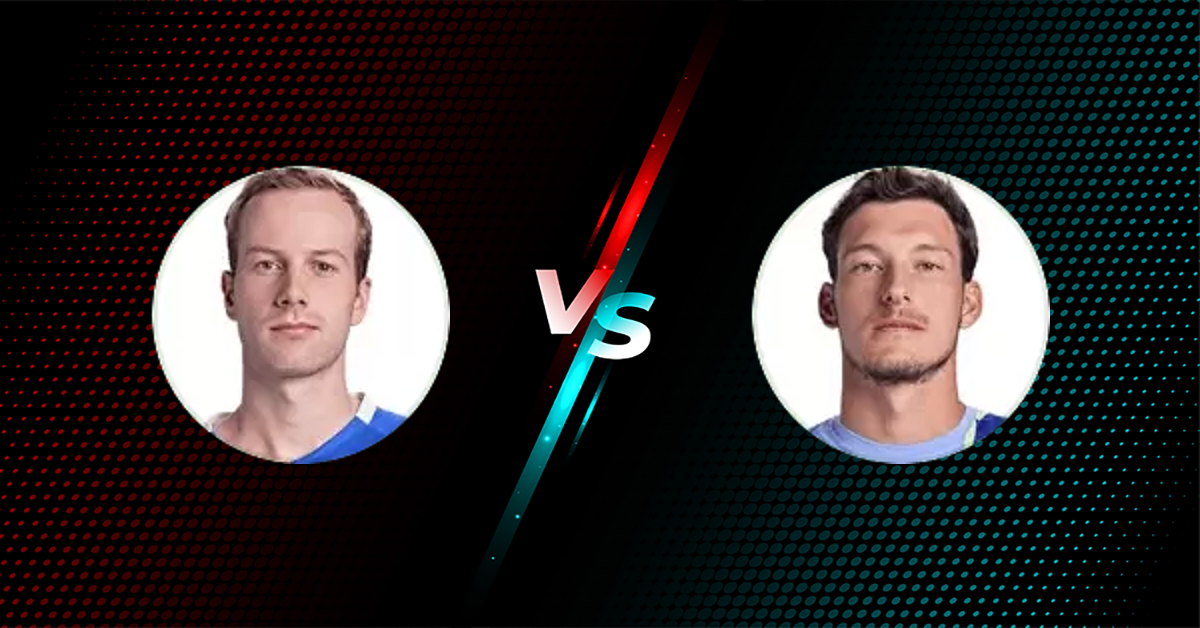
Match Snapshot (ATP Dubai Qualifying)
The ATP Dubai Duty Free Tennis Championships is an ATP 500 event that regularly attracts elite talent, and the 2026 qualifying draw has delivered a surprisingly “main-draw level” contest: Botic van de Zandschulp vs Pablo Carreño Busta. The match is scheduled for 2026-02-21 at 08:10:00 UTC, and it’s the kind of qualifier that feels like a litmus test for where each player truly stands in the early-season hard-court swing.
From a betting perspective, the market leans toward the Dutchman. Current odds list Van de Zandschulp at 1.57 and Carreño Busta at 2.37. Our referenced model at TennisPredictions.ai aligns with those numbers, rating the best bet as the first player to win with maximum confidence (10/10), and also pointing to a total-games angle: Under 25.5 games at 1.46.
This preview is built as a statistical and tactical breakdown—less hype, more “why the numbers and conditions point in a specific direction.”
Odds & Market Read
Let’s translate the odds into implied probabilities (before bookmaker margin):
– Van de Zandschulp 1.57 ≈ 63.7% implied win probability
– Carreño Busta 2.37 ≈ 42.2% implied win probability
Those percentages overlap because of margin, but the message is clear: bookmakers see Van de Zandschulp as the more likely winner, with Carreño Busta priced as a live underdog rather than a long shot.
Two betting angles stand out:
– Match winner: Dutchman favored due to surface fit and first-strike patterns.
– Totals: Under 25.5 suggests the market expects either a straight-sets outcome or at least one set with a break advantage rather than multiple tie-break sets.
If you want a broader view of model-driven picks across tours, one useful reference point is Best AI Tennis Predictions, which frames match probabilities in a bettor-friendly way.
Player Profiles: What the Data Typically Says
Botic van de Zandschulp: Power-first, hard-court oriented
Van de Zandschulp’s established identity is built around a heavy first serve, a direct backhand that travels through the court, and a preference for taking time away rather than defending meters behind the baseline. Historically, his best stretches have come when he’s landing a high percentage of first serves and keeping his backhand error count controlled—because his “A-pattern” is straightforward: serve + first aggressive groundstroke, then finish with depth or a net approach.
A key reason he’s often favored on quicker hard courts is that his flatter ball trajectory is rewarded. When courts play fast, his backhand becomes a genuine point-ender rather than merely a rally shot. In qualifying matches—where rhythm and initiative matter—his ability to start points on offense is a major edge.
Pablo Carreño Busta: Elite competitor, counterpunching backbone
Carreño Busta’s reputation is built on resilience, clean technique, and the ability to absorb pace. Even when he’s not dominating with raw power, he wins by making opponents hit “one more ball” repeatedly, then flipping defense into offense with excellent timing. His movement and point construction have long been his calling cards.
He’s also proven on hard courts at the highest level—his résumé includes deep runs at majors and a notable hard-court peak highlighted by his 2022 Montreal title. That matters in Dubai because fast conditions don’t automatically eliminate counterpunchers; they just demand sharper first-contact precision and better return positioning.
The big contextual note in recent seasons has been his recovery arc after injury-affected years. When Carreño Busta is fully fit, he’s one of the tour’s most frustrating matchups. When he’s slightly off physically, fast courts can expose him because opponents can finish points earlier, reducing his ability to grind.
Surface & Conditions: Why Dubai Matters
Dubai’s outdoor hard courts are often described as quick, and the dry air can make the ball travel faster through the court. In practical betting terms, that usually means:
– More reward for first-strike tennis (serve + 1 patterns)
– Shorter average rally length
– A premium on first-serve effectiveness and return depth
That combination generally tilts toward Van de Zandschulp’s strengths: he can win “cheap points” with serve placement and follow with a flat backhand that skids through the court. Carreño Busta can absolutely compete here—he has the experience and timing—but his clearest path is to extend rallies, force extra shots, and make Botic hit under pressure.
The tactical question becomes: can Carreño Busta consistently drag this into the kind of longer exchanges that neutralize a faster court? If not, the surface subtly amplifies the favorite’s edge.
Tactical Matchup: How Each Man Wins
Van de Zandschulp’s winning script
1. High first-serve percentage to avoid extended second-serve rallies
2. Backhand down the line or through the middle to rush Carreño Busta
3. Selective net approaches to finish points before the Spaniard resets defense
4. Keep errors low in neutral rallies—because Carreño Busta thrives on “free points”
If Botic keeps his unforced errors in check, he tends to look a tier stronger on fast hard courts because he can dictate without needing 15-shot patterns.
Carreño Busta’s winning script
1. Make returns deep and central to prevent immediate angles
2. Extend rallies and test Botic’s patience (especially on the backhand wing)
3. Vary height and pace to disrupt the Dutchman’s flat timing
4. Target second serves and look for early breaks rather than tie-break roulette
Carreño Busta’s best chance is to turn this into a mental and physical exam. If he can force “extra decisions” per point, he increases the odds that Van de Zandschulp overpresses.
Head-to-Head Context (What It Suggests, Not What It Guarantees)
Their most referenced prior meeting came on clay in Bastad (2022), where Carreño Busta’s steadiness and structure were decisive. Clay naturally magnifies the Spaniard’s strengths: longer points, more time to defend, and more opportunities to expose impatience.
Dubai is a different environment. On a faster hard court, the balance shifts toward the player who can take time away and finish earlier—traits more aligned with Van de Zandschulp. So while past meetings can hint at stylistic friction, surface context is crucial when translating that history into a betting angle.
Statistical Betting Angles: Why the Picks Make Sense
Because this is a qualifying match, bettors often see higher volatility—but the matchup dynamics still point to a fairly logical shape:
– If Van de Zandschulp serves efficiently, he can hold comfortably and apply steady pressure on Carreño Busta’s service games.
– If Carreño Busta can’t consistently extend rallies, he may struggle to generate enough break chances to offset the Dutchman’s quicker holds.
– The Under 25.5 games leans on the idea that one player gets separation—either via a straight-sets win or a match with at least one set that doesn’t reach 6-6.
In other words, the total is consistent with the favorite winning in a relatively controlled way, rather than a marathon with multiple tie-breaks.
Best Bets (Based on Given Odds)
– Best tip: Van de Zandschulp to win (1) @ 1.57
Model confidence: 10/10 (as provided)
– Total games lean: Under 25.5 @ 1.46
This fits a likely match script where the faster conditions help the more aggressive player create scoreboard gaps.
Responsible Betting Note
These are pre-match, data-driven tennis tips—not guarantees. Qualifying rounds can swing on small margins like early break chances, a brief dip in first-serve percentage, or a short patch of errors. Consider staking proportionally (flat staking is popular) and avoid chasing if the match doesn’t start as expected.
Final Verdict
On a quick Dubai hard court, the matchup subtly favors the player who can win points earlier and protect serve with authority. Van de Zandschulp’s serve-plus-backhand patterns are well-suited to these conditions, while Carreño Busta’s path is narrower: he likely needs extended rallies and sustained physical pressure to pull the upset. With the market, the model, and the surface all pointing the same way, the most logical betting position is the Dutchman to advance, with the under on total games as a secondary angle.