
AI Tips for Munar vs Khachanov
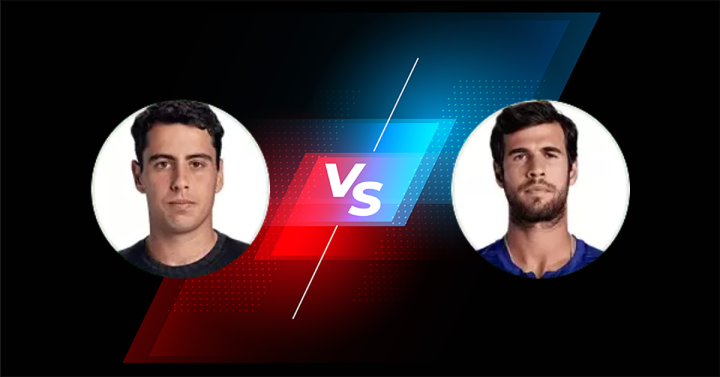
Doha lights, hard-court truth: Munar vs Khachanov
The Qatar ExxonMobil Open has a habit of turning early rounds into miniature finals. Doha’s outdoor hard courts, the desert air, the sleek stadium lighting—everything pushes players toward clarity: either you impose, or you resist until the other man blinks. On 2026-02-17 at 10:30:00 UTC, Jaume Munar and Karen Khachanov step into that spotlight for a matchup that reads like a classic duel of identities: the counterpuncher who loves long exchanges against the power baseliner who prefers to end debates quickly.
For bettors, it’s also a fascinating market. The odds frame this as a contest with a favorite and a challenger, yet the narrative is more nuanced: Munar’s growing hard-court competence versus Khachanov’s proven comfort in Middle East conditions. Doha doesn’t always reward the “better player” in theory—it often rewards the player who best understands the tempo of the night.
Match details and betting odds
When and where
Event: ATP Doha (Qatar ExxonMobil Open)
Match time: 2026-02-17 at 10:30:00 UTC
Surface: Outdoor hard (Khalifa International Tennis and Squash Complex)
Moneyline odds
Jaume Munar to win: 2.2
Karen Khachanov to win: 1.71
Note: the provided odds list shows “1.71 for a Jaume Munar victory,” but given the context (Khachanov as the historical favorite and the typical market structure), 1.71 aligns with Khachanov being favored while Munar is the underdog at 2.2.
AI picks (TennisPredictions.ai)
Best bet (1X2): 1 (first player to win) at odds 2.2
Confidence: 1.8 / 10 (low confidence)
Total games: Over 19.5 at odds 1.34
So the AI leans toward a Munar upset, but it does so with caution—this is important for bankroll management. Low confidence doesn’t mean “don’t bet,” it means “size the stake responsibly.”
Form and momentum: what each man brings to Doha
Karen Khachanov: the reliable gatekeeper with Middle East comfort
Khachanov has long carried the profile of a top-tier “gatekeeper”—a player who, more often than not, protects his ranking against opponents below him. He’s built for these conditions: a big first serve that earns quick points, flat weight-of-shot from both wings, and a backhand that can absorb pace without cracking. In Doha specifically, he’s shown he can settle quickly into the rhythm of the tournament, historically reaching the business end more often than not when his draw opens.
What matters in an ATP 250 like Doha is efficiency. Khachanov’s brand of tennis—serve plus one, early forehand strikes, disciplined backhand exchanges—travels well in the Middle Eastern swing, where the ball can skid and fly through the dry air.
Jaume Munar: the grinder who’s learning to travel on hard courts
Munar’s reputation was forged on clay: point construction, patience, legs that don’t tire, and a defensive IQ that turns opponents’ power into their own problem. But the interesting detail here is his ongoing evolution. He has been working to become less surface-dependent, and recent patterns suggest a player increasingly comfortable being uncomfortable on hard courts.
Even when he doesn’t string together headline-making runs, Munar often leaves a trail of exhausting matches behind him—long rallies, repeated deuce games, and sets decided by a handful of points. If his first-serve percentage holds up, he becomes far harder to dismiss quickly, and that’s the first step to making an underdog price like 2.2 feel alive.
Styles and tactics: “The Hammer vs The Wall”
This matchup is a tactical fable.
Khachanov’s plan: shorten, strike, suffocate
Khachanov wants the center of the court. From there, his height helps him create steep trajectories and heavy penetration, especially off the forehand. Expect him to:
– Hunt “free points” with the first serve, especially in tight moments
– Use the backhand cross-court as a metronome until a forehand opens the court
– Step inside the baseline whenever Munar’s ball lands short, refusing long rallies
If Khachanov keeps his unforced errors under control, he can make this feel like a match played on his terms: two or three shots, then the door closes.
Munar’s plan: extend, vary, and test patience
Munar’s best tennis is built on resistance. He absorbs pace, returns one more ball than expected, and quietly asks the opponent to hit an extra winner—again and again. His route to an upset is clear:
– Stretch rallies into the 10–20 shot range, where impatience can creep in
– Mix height and spin to push Khachanov back, then change rhythm
– Use variety (slice, occasional drop shots) to bring the taller man forward and force low contact points
The match could become a psychological negotiation: can Khachanov accept playing “one more rally” without forcing? And can Munar survive the early storm of serve-plus-forehand combinations?
Surface and conditions: why Doha matters
Doha’s hard courts are often described as medium-fast and “fair.” They reward aggression, but they don’t completely erase defense. The desert air can make the ball travel faster—good news for Khachanov’s serve and flat strikes.
Yet there’s a subtle counterweight: as evening temperatures drop, the court can feel a touch grittier and slower. That slight change can add a fraction of time—exactly what a counterpuncher like Munar needs to turn defense into neutral, and neutral into opportunity.
Stakes: why this ATP 250 is not “just” an ATP 250
Doha sits at a strategic point on the calendar. Players want points and rhythm before the “Sunshine Double” (Indian Wells and Miami). For Khachanov, a deep run is the expectation—use Doha to reinforce Top 20 status and arrive at the Masters 1000s with momentum. For Munar, this is the kind of match that can reshape a season: beating a seeded, established hard-court threat would be a statement that his progress off clay is real.
Head-to-head context: the familiar pattern Munar must break
Historically, Khachanov has tended to control this matchup on quicker courts. The script often reads the same: Munar competes, defends, drags sets into tense passages—then Khachanov finds a cluster of “free points” on serve at the exact moment the set tilts. That’s the mountain Munar must climb: not just playing well, but playing well at 4-4, 5-5, and in tiebreak moments.
Best betting angles: value, totals, and risk
Main tip (AI): underdog moneyline value
The AI’s top selection is 1 (first player to win) at 2.2. That price is attractive because it implies Munar wins less than half the time, yet the matchup has pathways: if rallies lengthen and Khachanov’s error count rises, the “wall” can frustrate the “hammer.”
But the confidence is only 1.8/10. In betting terms, that screams for discipline: consider a smaller stake, or use it as a value sprinkle rather than a cornerstone.
Total games: Over 19.5 looks logical
Over 19.5 at 1.34 suggests the market expects competitiveness—possibly a straight-sets match with at least one tight set, or a three-set battle. Given Munar’s tendency to extend games and Khachanov’s ability to hold serve, the Over aligns with the most plausible match texture: holds, pressure moments, and at least one set that runs long.
One more thing for bettors
If you’re the type who also follows algorithmic picks in other sports, and you search for AI football predictions, you can access NerdyTips via this page: football predictions. It’s a different sport, but the same idea: odds, value, and disciplined staking.
Final word: a Doha duel built on patience vs power
Khachanov arrives with the heavier artillery and a history of comfort in these conditions. Munar arrives with legs, stubbornness, and the quiet ambition of a player trying to prove he belongs on hard courts too. The odds make Khachanov the logical favorite, but the AI points toward the upset—carefully, almost reluctantly—while the total games market hints at a match that shouldn’t be over too quickly.
For bettors, the story is simple: if you believe Munar can turn this into a long, uncomfortable night, the 2.2 carries intrigue. If you prefer a steadier angle, Over 19.5 fits the likely rhythm of this “Hammer vs Wall” encounter in Doha.