
AI Tips: Gentzsch vs Hijikata Predictions
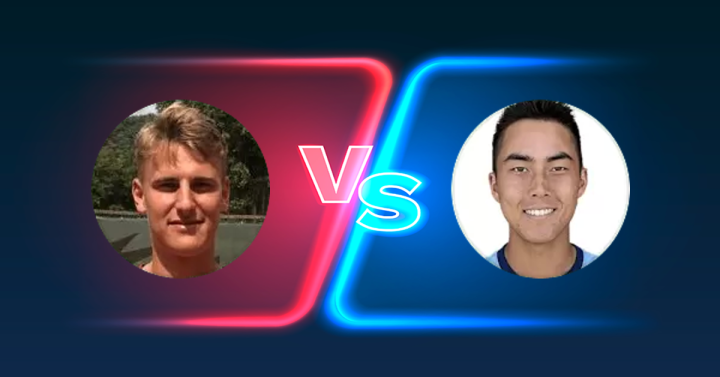
Match Preview: Gentzsch vs Hijikata (ATP Stuttgart)
The grass-court season in Europe always brings a different kind of tension—short points, quick momentum swings, and the feeling that one loose service game can decide everything. That’s exactly the backdrop for the first-round meeting between Germany’s Tom Gentzsch and Australia’s Rinky Hijikata at the BOSS Open in Stuttgart. The match is scheduled for 2026-06-08 at 10:00:00 UTC at Tennis Club Weissenhof, a venue known for rewarding aggressive, first-strike tennis.
This is also a classic “local wildcard vs established tour regular” storyline. Gentzsch is in the draw thanks to a wildcard from the organizers, while Hijikata benefits from an opening created by Alex Michelsen’s withdrawal. For bettors, that context matters: one player is chasing a breakthrough moment in front of a home crowd, and the other is trying to avoid an early upset in a week where grass specialists can quickly separate themselves.
Betting Odds Snapshot
Markets are clearly leaning toward the Australian:
– Tom Gentzsch to win: 3.6
– Rinky Hijikata to win: 1.28
Those odds suggest Hijikata is expected to control the matchup more often than not, but grass can compress margins—especially if Gentzsch serves big and keeps sets tight.
AI Betting Tips (TennisPredictions.ai)
Our AI at TennisPredictions.ai points to the favorite, but with measured confidence:
– Best bet (Match Winner): 2 (Rinky Hijikata to win) — Confidence: 3.0/10 — Odds: 1.28
– Total Games: Under 29.5 — Odds: 1.28
The confidence score is important. A 3/10 isn’t a “lock” signal—it’s more like the model saying, “Hijikata is the right side, but don’t overexpose your bankroll.”
Player Form and Momentum
Tom Gentzsch: home wildcard with rising trajectory
Gentzsch is a 22-year-old German who has been steadily pushing upward on the Challenger circuit. He’s been hovering around the low-200s in the rankings in 2026 and even touched a new career-high in the spring. Results-wise, he’s shown he can string wins together, including a notable run to his first Challenger final indoors in Koblenz and another final on clay in Split. That mix of surfaces hints at a player building a more complete game, not just a one-surface specialist.
Still, the key question is adaptation. Much of his recent match volume has come away from grass, and the jump from Challenger rhythm to ATP main-draw pressure—especially on a fast court—can be a real test of timing.
Rinky Hijikata: proven competitor with fresh grass reps
Hijikata, 25, is the more established name here and has been a top-100 level player. His 2026 season has had ups and downs, but the timing of this tournament suits him: he arrives with immediate grass-court momentum after a strong run at the Surbiton Challenger, where he reached the semifinals and was edged out by Arthur Fery. That matters because grass rewards players who are already comfortable with the footwork patterns and the low, skidding bounce.
He also brings high-level doubles pedigree—an Australian Open doubles title (2023) and a Wimbledon doubles final run (2025). Even for singles betting, that’s not trivia: it speaks to his net instincts, reflexes, and ability to finish points efficiently on quick surfaces.
Style Matchup: Power vs Speed
Gentzsch (191 cm / 6’3) is built for serve-first tennis. His height helps him create a steep serving angle, and he tends to look for short points—big first serve, aggressive forehand, and quick control of the rally. On grass, that profile can be dangerous because even slightly mistimed returns can float and sit up.
Hijikata (178 cm / 5’10) wins differently. He’s quick, balanced, and comfortable turning defense into offense. On grass, his lower center of gravity helps him stay stable on the slick surface, and his all-court skills allow him to mix in net approaches and pressure second serves. Tactically, he’ll likely try to:
– neutralize Gentzsch’s first strike by blocking returns low,
– extend rallies just enough to draw errors,
– and step forward to finish at the net when Gentzsch’s ball drops short.
Surface and Conditions: Why Stuttgart Grass Matters
Weissenhof’s outdoor grass courts traditionally play fast, which can help servers and first-ball attackers. That’s the “upset pathway” for Gentzsch: if he serves at a high percentage and keeps return games close, he can drag sets into tiebreak territory.
But fast grass also rewards clean transition tennis, and that’s where Hijikata’s doubles-honed skills can show up. If he reads Gentzsch’s patterns early, he can turn the match into a steady stream of pressured service games for the German—especially on second serves.
Best Betting Angles (Simple and Practical)
1) Hijikata to win (2) at 1.28
This aligns with the market and the AI model. Hijikata’s recent grass reps and all-court toolkit make him the more reliable side.
2) Under 29.5 games at 1.28
This total suggests the market expects a relatively controlled match—something like a straight-sets win or a match without multiple long tiebreak sets. If Hijikata gets early breaks or consistently pressures Gentzsch’s second serve, the under can land comfortably. The main risk is Gentzsch serving well enough to force at least one tiebreak and push the total upward.
Final Prediction
Expect an entertaining contrast: Gentzsch trying to ride the home energy and serve-plus-forehand patterns, while Hijikata uses speed, low returns, and smart net play to take time away. If Hijikata starts well and reads the serve, he should be able to keep this from becoming a coin-flip grass match.
Best Bet: 2 (Rinky Hijikata to win) (Odds: 1.28)
Lean: Under 29.5 games (Odds: 1.28)
Responsible Betting Note
Because the AI confidence is only 3/10, consider smaller staking (for example, a low flat stake) rather than treating the favorite price as “free money.” Grass can be unpredictable—especially when a big server is involved.