
AI Tips: Noskova vs Joint Predictions
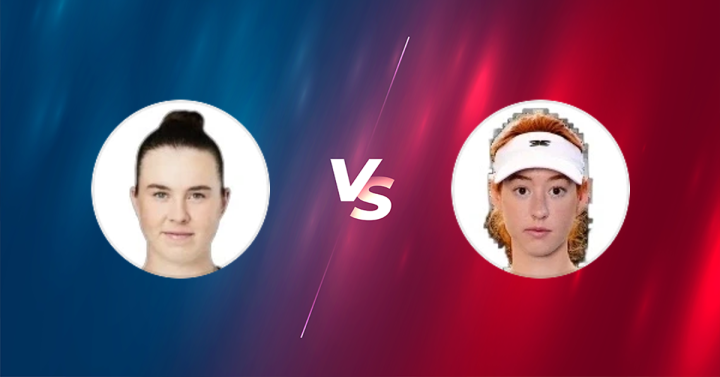
Noskova vs Joint: WTA Doha Match Preview
Linda Noskova and Maya Joint meet in a must-watch first-round matchup at the WTA Doha, Qatar, with the match scheduled for February 8, 2026 at 07:00:00 UTC. Even though it’s “only” a Round of 64 contest, it feels bigger than that because it puts two of the tour’s most exciting young players on the same court early in the week. For bettors, it’s also a fascinating handicap: a proven power hitter with a higher ranking and seeding versus a fast, creative all-court athlete who can turn defense into offense.
This match will be played at the Khalifa International Tennis and Squash Complex, where outdoor hard courts typically reward first-strike tennis. Doha can also bring swirling wind, which sometimes turns clean ball-striking into a test of patience and margin. That mix of speed and conditions is a major part of the betting story here.
Market Odds and AI Betting Picks
Sportsbooks have installed Linda Noskova as the clear favorite:
– Linda Noskova to win: 1.4
– Maya Joint to win: 3.1
From a betting perspective, that pricing implies Noskova is expected to win far more often than not, while Joint is positioned as the underdog with upset potential if she can drag the match into uncomfortable patterns.
Our model at TennisPredictions.ai points to the same direction:
– Best bet (match winner): 1 (Linda Noskova to win)
– Confidence: 4.7/10
– Tip odds: 1.4
– Total games lean: Over 18.5 games (O18.5) at 1.4
That confidence score is important. It’s not a “lock” rating. It suggests Noskova is the correct side more often than not, but there’s enough volatility—youth, early-round dynamics, and Joint’s athletic problem-solving—that bettors should still manage stake sizing responsibly.
Player Snapshot: Linda Noskova
Noskova arrives in Doha as a 21-year-old Czech standout who has already built a reputation as a high-ceiling aggressor. She’s being discussed as a near-future Top 10 player, and this tournament matters because Doha is the first WTA 1000 event of the season—exactly the kind of stage where a deep run can accelerate ranking goals.
Her profile is straightforward for bettors to understand: she wins by imposing. Noskova’s game is built around a heavy first serve and flat, penetrating groundstrokes that rush opponents. When she’s timing the ball well, she can shorten points quickly and rack up holds, which is a key reason she’s often priced as a favorite on quicker hard courts.
Form-wise, her start to 2026 has been steady rather than spectacular (a 3–2 record). There have been bumps—like an early Australian Open exit to Xinyu Wang—but also signs of grit, including a demanding three-set win over Magdalena Frech in Brisbane. Bettors tend to like that combination: a player with clear weapons who can also survive when Plan A isn’t perfect.
Another angle that matters in handicapping: Noskova has spoken in recent months about chasing consistency and learning to trust her patterns under pressure. That’s a typical development step for a power player—knowing when to pull the trigger and when to build the point. In windy Doha conditions, that decision-making becomes even more valuable.
Player Snapshot: Maya Joint
Maya Joint is 19, Australian, and already looks like a long-term tour fixture. She’s climbed quickly into the Top 30, reaching a career-high ranking around No. 29, which signals that her “breakout” is not just hype—it’s backed by results.
Joint’s identity is different from Noskova’s. She’s known for speed, court coverage, and the ability to make opponents hit extra balls. That’s why she’s earned the “Ginger Ninja” nickname in tennis circles: she can defend wide, reset points, and turn rallies into physical tests. She also brings variety—slices, changes of height, and the occasional drop shot—to disrupt rhythm. Against a flat hitter like Noskova, that variety can be a real tactical lever.
However, the timing coming into Doha is not ideal. Joint enters on a three-match losing streak, and her early 2026 schedule was disrupted by an illness that forced her out of the United Cup. Recent losses (including at the Australian Open and in Abu Dhabi) suggest she’s still searching for her best competitive rhythm. Even if she’s “fine” physically now, match sharpness is a separate issue—and it’s one of the biggest reasons markets have her as a 3.1 underdog.
One more betting-relevant detail: her team has reportedly been working on stabilizing her second serve. That’s not a small thing against Noskova, who likes to step in and take time away. If Joint’s second serve sits up, Noskova can generate immediate scoreboard pressure via aggressive returns.
Tactical Matchup: Power vs Speed
This matchup is a classic offense-versus-defense setup, but with modern nuance.
Noskova’s win condition is to control the center, land a strong first-serve percentage, and keep rallies in the “first four shots” zone. If she’s consistently getting the first strike, Joint’s speed becomes less relevant because she won’t have time to turn defense into counterpunching.
Joint’s win condition is to absorb the first wave, extend points, and test Noskova’s patience. The longer the rallies go, the more likely Noskova is to press for too much—especially if wind makes clean timing harder. Joint will also want to mix in variety to break Noskova’s hitting rhythm, using slices to keep the ball low and occasional drop shots to pull her forward.
Because this is their first professional meeting, the opening games matter more than usual. With no head-to-head history, both players will be gathering live data: return positioning, serve patterns under pressure, and which cross-court exchanges are safe.
Surface and Conditions: Why Doha Matters
Doha’s outdoor hard courts often play relatively quick, which generally favors Noskova’s flatter ball and bigger serve. The ball can stay low and reward clean, aggressive contact—exactly what she wants.
But bettors should also keep the wind factor in mind. Wind can increase double faults, reduce first-serve accuracy, and punish low-margin ball-striking. That’s where Joint’s athleticism and willingness to rally can become more valuable than the odds suggest. If conditions are calm, Noskova’s edge grows. If conditions are messy, the match can tighten.
Best Bets and Betting Angles
Based on the odds, matchup dynamics, and the TennisPredictions.ai model output, the top betting angle is the match winner.
Main Pick
– Best tip: Linda Noskova to win (1) at 1.4
This aligns with the market, the ranking gap, and the surface fit. It also reflects Joint’s current form uncertainty and the possibility that she’s still rebuilding match rhythm after illness.
Total Games Lean
– Over 18.5 games (O18.5) at 1.4
This is a logical companion angle because Joint’s speed and defensive skills can keep sets competitive even if Noskova is the more likely winner. A 6–4, 6–4 type of scoreline clears 18.5, as does any three-set match. The risk, of course, is a one-sided Noskova performance if she’s serving well and striking cleanly.
Final Thoughts for Bettors
This is a “future of the WTA” matchup happening earlier than many fans expected in Doha. Noskova has the bigger weapons and the clearer hard-court advantage, while Joint has the movement, variety, and problem-solving to make the favorite work for it—especially if conditions get tricky.
From a betting standpoint, the value is mostly in staying disciplined: Noskova is the correct favorite, but the moderate AI confidence (4.7/10) suggests you should treat it as a solid, not spectacular, edge. If you’re looking for an additional angle, the Over 18.5 games fits the idea that Joint can compete on effort and defense even in a loss.