
Alexander Zverev vs Quentin Halys Prediction
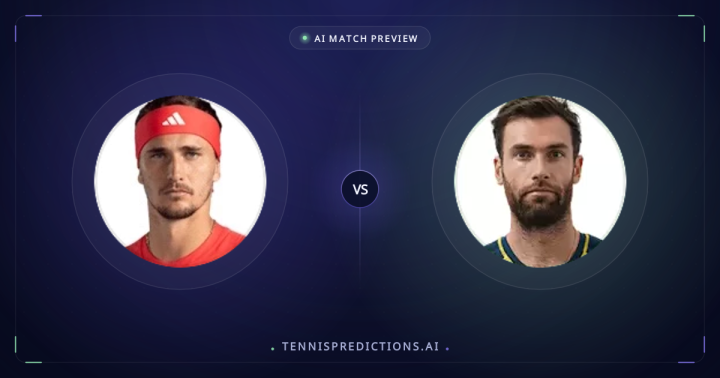
Alexander Zverev vs Quentin Halys Match Preview
The ATP US Open in New York gives us a fascinating second-round clash as Alexander Zverev meets Quentin Halys in what should be a high-intensity battle between elite consistency and explosive underdog power. The match is scheduled for 2026-09-04 at 01:10:00 UTC, and from a betting perspective, this is exactly the kind of matchup that deserves a closer look.
Zverev arrives as the clear market favorite, with odds of 1.18 for the German to win. Halys, listed at 5.4, is the outsider, but not the kind of player bettors should dismiss casually. The Frenchman has been enjoying one of the strongest phases of his career and has the serve-heavy game to make life uncomfortable for even the best returners on tour.
Still, our platform’s AI model has made its position very clear: Best tip: 1 Alexander Zverev to win. The confidence rating is an emphatic 10.0, with the available odd at 1.18. That is not a glamorous long-shot price, but in betting terms, it points toward a strong probability selection, especially for bettors building accumulators or looking for a reliable favorite in the US Open card.
The total games market is also worth noting. The prediction for the over/under line is O31.5 at odds of 1.3, suggesting that while Zverev is expected to progress, Halys may have enough weapons to extend sets, force tight service games, and potentially push the match beyond a straightforward short contest.
Match Context: US Open Round of 64
This second-round meeting has a lot more intrigue than the odds might initially suggest. Zverev, one of the most established names in men’s tennis, is expected to advance deep into the tournament. Halys, meanwhile, represents the dangerous early-round opponent nobody really wants to face: experienced, confident, big-serving, and playing with the freedom of a man who has already exceeded many expectations this season.
The setting also matters. The US Open is played on outdoor hard courts, a surface that rewards both serving power and baseline aggression. Zverev has long been comfortable on hard courts because his serve and backhand translate extremely well to the surface. Halys also benefits from the conditions, particularly if he finds rhythm on first serve and earns cheap points.
In New York, momentum can swing quickly. Crowd energy, night-session intensity, and fast court conditions often create matches where underdogs can hang around longer than expected. That makes the over 31.5 games market an interesting angle, even if the match winner market strongly favors Zverev.
Alexander Zverev Form and Betting Profile
Alexander Zverev comes into this US Open as one of the biggest names in the draw and, according to the current setup, the tournament’s top seed after Jannik Sinner’s withdrawal due to a knee issue. That brings pressure, but Zverev is no stranger to carrying expectations.
His 2026 season has been described as outstanding, and for good reason. The German captured his maiden Grand Slam title at Roland Garros, a breakthrough achievement that changed the tone of his career narrative. For years, Zverev had been seen as a player with all the tools to win majors: a huge serve, elite two-handed backhand, improved physicality, and the ability to compete deep into best-of-five matches. Winning the French Open gave him the final confirmation at the very highest level.
He then backed that up by reaching the Wimbledon final, showing that his confidence was not limited to clay. That kind of consistency across surfaces is important for bettors, because it suggests Zverev is not just in good form but in a sustained elite phase.
However, his first-round match in New York was anything but comfortable. Zverev survived a brutal five-set battle against Lorenzo Sonego, winning 6-4, 3-6, 6-7(7), 7-5, 6-4 after nearly five hours on court. From a betting angle, that match offers two interpretations.
On one hand, it raises a physical red flag. Best-of-five tennis is demanding, and spending close to five hours in round one is never ideal. Zverev will need to recover well, especially against an opponent who can make sets tense with strong serving.
On the other hand, surviving that kind of match can sharpen a contender. Zverev was pushed to the edge, had to problem-solve under pressure, and still found a way through. For a favorite, that kind of survival win can sometimes be more valuable than a routine straight-sets victory because it confirms competitive resilience.
Quentin Halys Form and Underdog Appeal
Quentin Halys is not a household name in the same way as Zverev, but bettors who follow the tour closely know he is a dangerous player when his serve is clicking. The Frenchman, ranked around No. 52, is in the middle of a career-best season and has finally started converting his raw weapons into meaningful results.
One of the standout moments of his year came in July, when he captured his first ATP Tour title at the Generali Open in Kitzbühel. That was a major milestone for Halys, and beating Alexander Bublik in the final showed he could handle big moments against unpredictable, high-level opposition. Winning a first title can be transformative, especially for a player who has spent years hovering between dangerous outsider and established tour-level competitor.
His US Open campaign began with a solid four-set victory over Facundo Díaz Acosta: 6-4, 7-5, 6-7, 6-1. The scoreline is useful for bettors because it shows a few things. Halys was strong enough to control large parts of the match, but he also dropped a tight third-set tiebreak. Importantly, he responded with authority in the fourth set, losing just one game. That kind of reaction indicates confidence and physical freshness.
Halys’s betting appeal comes from his ability to hold serve under pressure. Against a heavy favorite, that can be enough to cover game handicaps or push totals over the line. Even if he does not win the match, he has the type of game that can produce a 7-6 set, a 7-5 set, or at least several extended service holds.
Playing Styles and Tactical Matchup
This match has a clear tactical identity. Zverev wants rhythm. Halys wants disruption.
Zverev stands at 6’6” and plays as an aggressive baseliner with one of the most reliable and damaging two-handed backhands in men’s tennis. His first serve gives him free points, but his biggest advantage often comes once the rally starts. When he is locked in, he can absorb pace, redirect down the line, and force opponents into low-percentage attacks.
His backhand wing is especially important in this matchup. Halys will try to attack with the forehand and finish points early, but Zverev’s backhand is good enough to neutralize power and turn defense into offense. The longer the rallies become, the more the matchup tilts toward Zverev.
Halys, by contrast, is a first-strike player. His game is built around a big serve and a punishing forehand. He does not want to grind through long exchanges from neutral positions. He wants quick points, short rallies, and scoreboard pressure. If he serves at a high first-serve percentage, he can make Zverev wait for opportunities and potentially frustrate the favorite.
The key for Halys will be attacking Zverev’s second serve. Zverev’s second serve has improved over the years, but under pressure it can still become a talking point. If Halys steps inside the baseline and takes aggressive cuts, he may create break chances. However, that approach is risky. Miss too often, and Zverev will cruise through service games and slowly take control.
For Zverev, the tactical plan should be simple: extend rallies, move Halys laterally, target the Frenchman’s backhand side, and make him hit one extra ball. Over best-of-five sets, that formula tends to favor the more complete player.
Betting Odds and Market Interpretation
The match winner market is heavily weighted toward Zverev. Odds of 1.18 imply that bookmakers see him as a strong favorite. Halys at 5.4 represents the upset price, and while it may attract recreational bettors looking for value, the matchup data and overall player profile support the favorite.
For those checking broader betting cards, resources offering today AI tennis predictions can be useful for comparing model-driven selections with market prices, especially during Grand Slam weeks when schedules are packed and conditions can shift quickly.
In this particular match, the AI tip is strongly aligned with the market: Best tip: 1 Alexander Zverev to win. The confidence rating of 10.0 is notable. In practical terms, this suggests the model does not see enough upset probability to oppose the German, even with his physically demanding first-round battle.
The price of 1.18 will not suit every bettor. Some may consider it too short for a single bet, especially in best-of-five tennis where momentum swings, injuries, and tiebreak variance can complicate even strong favorites. However, as a banker selection, Zverev makes sense. He has the ranking, Grand Slam experience, recent major-winning form, and a more complete all-court game.
Total Games Prediction: Over 31.5
The total games prediction is O31.5, priced at 1.3. This is one of the more interesting markets because it captures the likely shape of the match better than the moneyline alone.
Zverev is expected to win, but Halys has enough serve power to avoid being completely overwhelmed. If the Frenchman can hold regularly, even a straight-sets Zverev win could approach or pass this line. For example, scorelines such as 7-6, 6-4, 6-4 or 7-5, 6-4, 6-3 would put the total in a competitive range. If Halys wins a set, the over becomes even more likely.
The risk with the over is that Zverev breaks early in multiple sets and Halys’s level drops. If the German reads the serve well and dominates second-serve return points, the match could move quickly. Still, Halys’s profile supports the idea of a respectable game count. Big servers often keep sets closer than the overall matchup suggests.
Zverev’s long first-round match also adds a subtle angle. If he is not at peak physical sharpness from the first point, Halys may have chances to stay close early. That does not necessarily mean an upset, but it can contribute to longer sets and more total games.
Key Factors for Bettors
There are several betting factors worth highlighting before placing a wager.
First, Zverev’s recovery is important. Nearly five hours on court in round one is a serious workload. If he starts slowly, Halys could be dangerous in the opening set.
Second, Halys must serve well. His upset chances and his ability to push the total over both depend on first-serve percentage, ace count, and efficiency behind the first delivery.
Third, Zverev’s return position could decide the match. If he gets enough balls back and forces Halys into rallies, the Frenchman will struggle to maintain his aggression over multiple sets.
Fourth, tiebreak probability should not be ignored. Halys has the serve to force at least one set into a tight finish. Tiebreaks are valuable for over bettors but introduce variance for set handicap markets.
Finally, Zverev’s Grand Slam pedigree matters. He has been deep in majors, won Roland Garros, reached the Wimbledon final, and understands how to navigate difficult best-of-five situations. That is a major edge over an opponent still building his profile at this level.
Final Prediction and Best Bet
This is a classic favorite-versus-dangerous-underdog matchup. Quentin Halys has the weapons to make the contest competitive, especially if his first serve lands consistently and he keeps points short. His recent ATP title in Kitzbühel and confident opening-round performance show that he is not simply here to make up the numbers.
But Alexander Zverev is the superior player in almost every major category: baseline quality, return consistency, Grand Slam experience, physical durability, and tactical adaptability. Even after a draining first-round battle, he should have enough quality to control the match over best-of-five sets.
The market price is short, but it is justified. Halys can test him, maybe even stretch a set or grab one if Zverev dips, but the most logical betting position remains with the favorite.
Best tip: 1 Alexander Zverev to win
For bettors looking beyond the match winner, Over 31.5 games at 1.3 is also a reasonable supporting angle. It fits the matchup dynamics: Zverev to win, but Halys to contribute enough service holds to keep the total ticking upward.
Expected outcome: Alexander Zverev wins, with Halys producing enough resistance to make the match more competitive than the odds might suggest.