Alexei Popyrin vs Casper Ruud: Forecasts
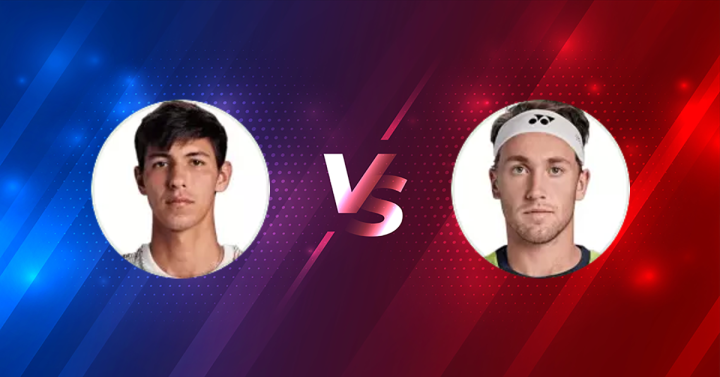
Match overview: Popyrin vs Ruud in Monte Carlo
The Rolex Monte-Carlo Masters is where clay-season narratives begin to feel real: slower courts, heavier balls, longer rallies, and a premium on patience. On 2026-04-07 at 10:00:00 UTC, Alexei Popyrin meets Casper Ruud in a Round of 64 matchup that looks straightforward on paper, but still carries betting angles worth breaking down. Monte Carlo is one of the most surface-specific stops on the ATP calendar—players who defend well, construct points with topspin, and manage risk tend to separate themselves quickly.
Sportsbooks reflect that dynamic here. The market lists Popyrin at 3.2 to win, while Ruud is priced at 1.37—clear favorite territory. Meanwhile, TennisPredictions.ai’s model aligns with the market: the top pick is “2” (second player to win), with a confidence score of 4.1/10 and odds of 1.37. That confidence rating is important for bettors: it suggests the favorite is logical, but not a “lock,” and it invites a closer look at totals and game spreads rather than only the moneyline.
Player profile: Alexei Popyrin’s weapons and volatility
Popyrin’s game has long been built around first-strike tennis. He’s at his best when he can earn short points: a big first serve, a heavy forehand, and quick transitions that prevent opponents from settling into rhythm. That style can translate on clay in bursts—especially if he’s landing a high percentage of first serves and finishing with forehand winners—but it’s also the kind of approach that can leak errors when the court slows down.
Historically, the Monte Carlo clay tends to expose players who rely on low-margin aggression. The bounce is higher, the ball sits up, and defenders get extra time to retrieve. That means Popyrin often has to hit one more attacking shot than he would on hard courts, and that “one more ball” can be the difference between holding comfortably and getting dragged into extended deuce games.
From a betting perspective, Popyrin’s path to an upset usually requires two things:
1) A strong serving day (free points and quick holds).
2) Efficient conversion on the few break chances he gets (because clay specialists don’t donate many).
If either piece is missing, he can look competitive for stretches but still lose in routine-looking sets.
Player profile: Casper Ruud’s clay-court edge
Ruud is widely regarded as one of the tour’s most reliable clay-court performers of his era. His identity is clear: heavy topspin forehand, disciplined rally tolerance, and a comfort level in constructing points patiently until the opponent blinks. On clay, that profile is gold—especially in Monte Carlo, where the conditions reward height over the net, depth through the middle, and controlled aggression to the corners.
Ruud’s biggest advantage in matchups like this is how he turns defense into offense without rushing. Against a hitter like Popyrin, Ruud can absorb pace, send back a high, deep ball, and invite the extra swing. Over time, that tends to inflate the underdog’s unforced error count, particularly off the backhand wing when rallies extend.
The betting market’s 1.37 price implies a strong win probability for Ruud, and stylistically it makes sense: clay is the surface where his strengths are amplified and Popyrin’s risk profile is more likely to be punished.
Odds, implied probability, and what the market is saying
Let’s translate the moneyline into implied probability (before accounting for bookmaker margin):
– Popyrin at 3.2 implies roughly 31.3% (1 / 3.2).
– Ruud at 1.37 implies roughly 73.0% (1 / 1.37).
Those numbers don’t sum to 100% because of the overround, but the message is clear: Ruud is expected to win most of the time. For bettors looking for value, the key question becomes: is Ruud’s true win probability higher than the implied number? On clay, against a player whose primary edge is shortened points, it’s easy to argue Ruud’s baseline consistency and return pressure justify favoritism.
Still, TennisPredictions.ai’s confidence score of 4.1/10 is a subtle caution flag. It suggests the model sees Ruud as the correct side, but not with overwhelming certainty—often a sign that while the matchup leans one way, there are plausible scenarios (like a serving heater) where the underdog can keep it tight.
For bettors who want more context-driven analysis and market-friendly angles, one useful resource is Tennis Tips, especially when comparing moneyline confidence versus totals.
Total games market: why Under 28.5 stands out
The AI total recommendation is Under 28.5 games at 1.27. Totals on clay can be tricky because long rallies don’t always mean long matches—if one player is consistently better in neutral exchanges, sets can still end 6-3, 6-4 without ever feeling “quick.”
Under 28.5 is essentially betting that we avoid a three-set marathon or at least avoid two extended sets with tiebreaks. A few match scripts support the under:
– Ruud wins in straight sets with one break per set (a common clay pattern): 6-4, 6-4 = 20 games.
– Ruud wins with a more dominant return performance: 6-3, 6-4 = 19 games.
– Even a competitive straight-sets match with one tiebreak can still land under: 7-6, 6-4 = 23 games.
To lose an Under 28.5 in a best-of-three, you typically need either:
– Three sets, with at least one set going long (e.g., 6-4, 3-6, 6-4 = 29 games), or
– Two tiebreak sets (7-6, 7-6 = 26 games, still under), plus extra games elsewhere (not possible in straight sets), meaning the biggest danger is a three-setter.
So the under is basically a bet that Ruud’s clay stability prevents the match from turning into a momentum swing battle.
Best bet, lean, and risk notes for bettors
Given the odds and the surface context, the cleanest betting logic is:
– Ruud is the rightful favorite at 1.37, but the price is short.
– The total Under 28.5 aligns with a common clay outcome: the superior baseliner wins without needing a decider.
Best tip: Under 28.5 total games (1.27)
If you prefer a side, Ruud to win is consistent with both the market and the AI pick (second player), but the value is more limited at 1.37. The under provides a more “match-shape” angle: it profits even if Popyrin has moments, as long as Ruud avoids a third set.
Ethical betting note: no preview can guarantee results. Use bankroll management, consider staking smaller on low-odds plays, and avoid chasing. This breakdown is based on surface tendencies, player archetypes, and market pricing—not live updates or speculative rumors.