
Alycia Parks vs Mananchaya Sawangkaew Prediction
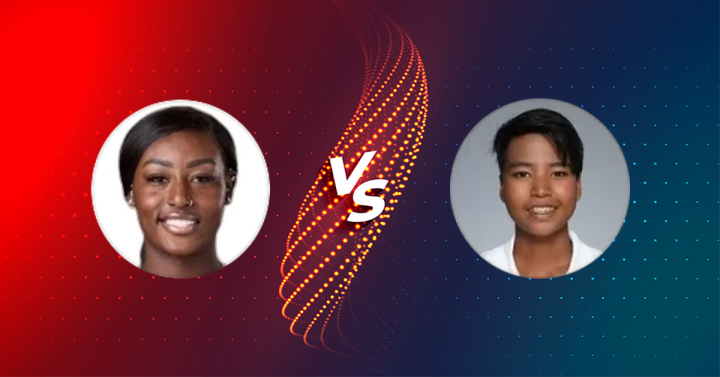
Alycia Parks vs Mananchaya Sawangkaew Preview
Alycia Parks against Mananchaya Sawangkaew at Wimbledon has all the ingredients of a sharp, high-contrast betting matchup: raw power versus speed, first-strike tennis versus court coverage, favorite status versus value hunting. The WTA Wimbledon setting in London, Great Britain, raises the stakes even further, because grass can magnify strengths, expose weaknesses, and turn a match quickly with only a few loose service games.
The scheduled start is 2026-07-01 at 11:00:00 UTC, and the market has already framed this second-round clash clearly. Alycia Parks is priced as the favorite at 1.63, while Mananchaya Sawangkaew is available at 2.43. On paper, that gives Parks the shorter price and the stronger market position, but the betting story is not quite that simple.
TennisPredictions.ai’s AI model points toward Mananchaya Sawangkaew to win as the top match prediction, listed as “2” at odds of 2.43. The confidence score is only 2.3/10, which is important. This is not a high-conviction upset call. Instead, it signals a value-oriented lean toward the underdog, likely based on matchup dynamics, pricing, and the possibility that Sawangkaew’s consistency and movement can frustrate a power-heavy opponent.
For bettors, this is exactly the kind of contest that demands discipline. Parks has the weaponry to take the match out of anyone’s hands when her serve and forehand are landing. Sawangkaew, however, has the kind of competitive profile that can punish inconsistency and extend rallies until errors appear. That tension makes the match fascinating from a tennis angle and tricky from a betting angle.
The main total games prediction is Under 28.5 games, priced at 1.29. That line suggests the market expects the match to avoid becoming an extremely long battle. On grass, this can make sense: sets can move quickly, service holds can pile up, and a single break may decide a set. But if one player runs away with momentum, the under becomes even more attractive.
Best Tip: Mananchaya Sawangkaew to win at 2.43
Betting Odds and Market Snapshot
The opening betting angle is straightforward:
Alycia Parks to win: 1.63
Mananchaya Sawangkaew to win: 2.43
Total games prediction: Under 28.5 at 1.29
AI top prediction: Mananchaya Sawangkaew to win
AI confidence score: 2.3/10
Parks being the favorite is not surprising. She has a huge serve, aggressive groundstrokes, and the kind of high-ceiling game that can look devastating on a faster surface. When she finds rhythm, she does not need many shots to win points. That profile often attracts market support, especially at Wimbledon, where first-strike tennis has historically been rewarded.
Sawangkaew’s price at 2.43 is where the intrigue begins. She is not being ignored by the market, but she is still clearly positioned as the outsider. That creates a potential value opportunity if bettors believe she can absorb Parks’ pace, redirect the ball, and expose any dip in the American’s shot selection.
The AI prediction is particularly interesting because it goes against the market favorite. However, the low confidence rating must be taken seriously. A 2.3/10 score does not suggest a banker. It suggests a cautious upset angle rather than a strong probability edge. In betting terms, this is more of a value play than a safe pick.
That distinction matters. A good price is not the same thing as a guaranteed result. The best approach is to understand why the underdog could win, where the favorite might still dominate, and how the total games market fits the expected match pattern.
For more data-driven tennis insights, bettors can compare model-based views through Tennis Forecasts, especially when markets disagree with algorithmic projections.
Why Alycia Parks Is Dangerous
Alycia Parks is one of the most explosive players on the WTA Tour when her game clicks. Her serve is the headline weapon. It is powerful, direct, and capable of producing quick holds, especially on grass. Wimbledon rewards players who can dictate with the first ball, and Parks is built for that style.
Her game is not based on long, patient construction. She wants to hit big, take time away, and rush opponents into defensive positions. On grass, where the ball stays lower and skids through the court, that power can become even more difficult to handle. If she is landing first serves and stepping inside the baseline, Sawangkaew may struggle to build rhythm.
Parks also carries the kind of shot-making ability that can flip momentum instantly. A big return winner, a clean forehand strike, or a dominant service game can change the emotional temperature of a set. That matters in women’s tennis betting because momentum swings often create rapid changes in live odds.
The favorite’s case is built around control. If Parks controls the first strike, controls service games, and avoids extended rallies, she is very capable of justifying her 1.63 price. Her best tennis is aggressive, fast, and intimidating. She can shorten points, reduce physical demands, and keep the match on her terms.
There is also the psychological element of facing a lower-ranked or less established opponent on a major stage. Parks may feel that this is a match she should win. That can be helpful if it produces confidence, but it can also create pressure if the first set becomes tight.
The key question is not whether Parks has the tools. She absolutely does. The key question is whether she can manage those tools efficiently over two or three sets.
Where Parks Can Be Vulnerable
The risk with Alycia Parks is that her attacking style can become high-error tennis when timing slips. Big hitters often live close to the margins. On grass, that can be both a blessing and a problem. The surface helps aggressive shots skid through, but it can also punish rushed footwork, poor balance, and late contact.
If Parks’ first-serve percentage drops, the match changes quickly. Second serves invite pressure. Sawangkaew is likely to look for chances to step in, extend points, and make Parks hit one extra ball. That is often the simplest tactical route against a powerful opponent: do not try to out-hit them immediately, make them repeat their best shots under pressure.
Another vulnerability is rhythm. Parks can dominate in bursts, but if those bursts are followed by loose service games, double faults, or impatient errors, the underdog becomes more dangerous. Grass-court matches can turn on narrow sequences: one poor service game, one tight tiebreak, one missed volley or rushed forehand.
Sawangkaew’s potential path is not necessarily to overpower Parks. It is to disrupt her. If she can vary ball height, defend well, redirect pace, and keep the American moving, Parks may be forced out of her preferred strike zone. That is where the upset argument grows stronger.
This is why the AI model’s lean toward Sawangkaew is not impossible to justify, even if the confidence rating is low. The match may come down to execution under pressure rather than pure talent or power.
Mananchaya Sawangkaew’s Upset Case
Mananchaya Sawangkaew enters this matchup with the underdog tag, but she has qualities that can trouble a player like Parks. She is generally associated with a more disciplined, rally-focused approach. She is not likely to win this match by blasting through Parks from the first ball. Instead, her route is based on resistance, placement, consistency, and making the favorite uncomfortable.
As a Thai player competing on a major stage, Sawangkaew also brings an important underdog storyline. Qualifiers and rising players at Grand Slams often arrive with match sharpness from earlier rounds. That can matter at Wimbledon, where confidence on grass is not automatic. Players who have already spent time adapting to the bounce, movement, and speed of the courts may begin matches with better rhythm.
Sawangkaew’s biggest strength in this matchup may be her ability to compete point by point. Against Parks, patience is a weapon. If she can stretch rallies beyond the first two or three shots, she can increase the chance of errors from the American’s racket. The longer the point, the more the balance may shift away from Parks’ preferred pattern.
She will also need to serve intelligently. Not necessarily with overwhelming pace, but with location and variation. Parks can be dangerous on return if she gets predictable looks. Sawangkaew must avoid giving her too many clean strike-zone balls. Body serves, wide angles, and change-ups can all help reduce Parks’ ability to attack immediately.
The underdog price of 2.43 is appealing because the match is not purely about rankings or reputation. It is about matchup. If Sawangkaew can neutralize the opening shot often enough, she has a real chance to turn this into a physical and mental contest. That is where favorites can become uncomfortable.
Tactical Battle: Power Against Control
This match can be understood through one central question: who decides the tempo?
If Parks decides the tempo, the match may move fast. She will serve big, hit hard, step forward, and look to finish points before Sawangkaew can organize defensively. In that version of the match, the favorite is dangerous, the scoreboard can move quickly, and Sawangkaew may spend too much time reacting.
If Sawangkaew decides the tempo, the match becomes more layered. She will look to extend rallies, use angles, test Parks’ movement, and avoid giving the American repeated opportunities to strike from comfortable positions. In that version, the underdog becomes live at 2.43.
Grass makes the tactical equation sharper. There is less time to defend, but there is also a premium on balance and decision-making. A player who is slightly rushed can mistime shots. A player who handles low bounces better can win valuable neutral exchanges. Short slices, deep returns, and smart positioning can all become crucial.
Parks will likely want free points. Sawangkaew will likely want earned points. Parks wants clean winners; Sawangkaew wants pressure errors. Parks wants short rallies; Sawangkaew wants one more shot. That contrast gives the match its betting appeal.
For bettors, the first few service games would normally be important indicators, though pre-match analysis must avoid assuming live details. The key pre-match point is that Parks’ serve performance and Sawangkaew’s return resistance are likely to define the match.
Total Games Prediction: Under 28.5
The total games prediction is Under 28.5 at odds of 1.29. This is a relatively conservative-looking total, because 28.5 is a high line for a women’s best-of-three match. Even a three-set match can sometimes stay under this number if one set is one-sided. For example, scorelines like 6-4, 3-6, 6-3 would land at 28 games, still under. A straight-sets result will usually cash under unless both sets are extremely extended.
That is why Under 28.5 makes sense as a lower-risk angle compared with the match-winner market. It allows for several different match scripts. Parks could win efficiently, Sawangkaew could spring the upset in two competitive sets, or even a three-set match could stay below the line if there are enough breaks or one set opens up.
Grass can support the under in two different ways. First, strong serving can produce quick sets if one player finds a single break and holds comfortably. Second, aggressive tennis can also create streaky scorelines, especially if errors accumulate. Parks’ high-risk style could lead to fast service holds, but also sudden breaks if her accuracy drops. Sawangkaew’s consistency could help her take advantage of those dips.
The main danger to the under is a match with multiple tiebreak-style sets or a full three-set grind with extended scorelines. Something like 7-6, 6-7, 6-4 would crush the under. But the odds of 1.29 reflect that the market sees Under 28.5 as the more likely outcome.
For bettors who prefer safer positions, Under 28.5 is easier to justify than the underdog moneyline. However, the shorter price means less upside. In betting portfolio terms, Sawangkaew at 2.43 is the value swing, while Under 28.5 is the steadier selection.
AI Prediction Explained Professionally
The AI pick is Mananchaya Sawangkaew to win, but the confidence score of 2.3/10 must be interpreted carefully. Many bettors make the mistake of treating every prediction as equally strong. That is not the case here.
A low confidence score suggests uncertainty. The model may see enough value in Sawangkaew’s price to list her as the top prediction, but not enough supporting strength to call it a high-confidence selection. This could happen when the favorite has obvious weapons but also volatility, while the underdog has a profile that could exploit those flaws.
In simple terms, the AI may be saying: Parks is favored for good reasons, but Sawangkaew’s odds may be too big relative to her actual chance of winning.
That is a classic value-betting situation. The goal is not to pick the winner every time. The goal is to identify prices that may be higher than they should be. If Sawangkaew’s true chance is better than the odds imply, then 2.43 becomes interesting even if she remains the less likely winner overall.
The implied probability of odds at 2.43 is roughly 41.2 percent before bookmaker margin. Parks at 1.63 implies roughly 61.3 percent. Those numbers include market overround, but they still show the basic expectation: Parks is more likely, Sawangkaew is the bigger return.
Because the AI confidence is low, staking should be responsible. This is not a spot for reckless betting or overexposure. A smaller stake on the underdog, paired with a more conservative totals angle, may be a balanced way to approach the market.
Key Betting Factors to Watch
First Serve Performance
Parks’ first serve is likely the single most important technical factor. If she lands it consistently, she can protect service games and create pressure on Sawangkaew. If she misses too often, Sawangkaew gets more return looks and more chances to lengthen rallies.
Rally Length
Short rallies favor Parks. Longer rallies may favor Sawangkaew. If the match becomes a repeated pattern of serve plus one, Parks is in business. If rallies regularly reach four, five, or six shots, Sawangkaew’s upset chances improve.
Error Count
Parks’ winners will attract attention, but her unforced errors may decide the betting outcome. A powerful game brings reward and risk. Sawangkaew needs to keep the ball in play without becoming passive.
Grass-Court Movement
Wimbledon grass demands precise movement. Slipping, late adjustment, and low contact points can affect timing. The player who adapts better to the surface will gain a major edge.
Pressure Points
Break points, tiebreak chances, and 30-30 service moments are crucial. Parks may have the bigger weapons, but Sawangkaew’s composure in key points could make the difference.
Recommended Betting Approach
The best betting angle from the provided predictions is Sawangkaew to win at 2.43, mainly because it offers value against a favorite who can be volatile. That does not mean Parks is a bad favorite. It means the underdog price is attractive enough to consider, especially when supported by the AI’s top prediction.
Best Tip: Mananchaya Sawangkaew to win at 2.43
For a more cautious option, Under 28.5 games at 1.29 is a logical selection. It covers many realistic scorelines and does not require picking the outright winner. It is also consistent with a match that could be decided in straight sets or a three-setter with one uneven set.
A practical bettor might see the market this way:
Value pick: Mananchaya Sawangkaew to win at 2.43
Safer angle: Under 28.5 games at 1.29
Risk level: Moderate for moneyline, lower for total games
Confidence note: AI confidence is low, so stake carefully
This is not a match to approach with blind confidence. Parks has enough firepower to dominate if her timing is right. Sawangkaew has enough defensive and tactical qualities to make the favorite uncomfortable. The betting edge comes from price, not certainty.
Final Prediction
Alycia Parks versus Mananchaya Sawangkaew is a compelling Wimbledon betting matchup because it is not just favorite against underdog. It is volatility against discipline, power against persistence, and market price against AI value.
Parks deserves respect at 1.63. Her serve can be a match-winning weapon, and grass should help her aggressive game. If she starts strongly, holds serve with authority, and keeps points short, she can control the contest from the front.
But Sawangkaew at 2.43 is the more interesting betting selection. Her path is clear: make Parks play extra balls, stay solid under pressure, serve with variety, and turn the match into a test of patience. If she succeeds, the favorite’s power may become less reliable, and the upset becomes very realistic.
The AI prediction supports Sawangkaew, although with only 2.3/10 confidence. That low score keeps the recommendation measured. This is a value-based underdog pick, not a lock. Bettors should treat it accordingly and use responsible staking.
The total games market also points toward Under 28.5 at 1.29, which looks reasonable given the scoring possibilities in a best-of-three grass-court match. Even if the contest reaches three sets, the under can still survive unless the scoreline becomes extremely tight throughout.
Best Tip: Mananchaya Sawangkaew to win at 2.43
Secondary Tip: Under 28.5 total games at 1.29
In a fast-paced Wimbledon clash where every service game can shift momentum, Sawangkaew offers the sharper value at underdog odds. Parks has the bigger weapons, but Sawangkaew may have the steadier route to an upset if she can absorb pressure and force the American into uncomfortable patterns. For bettors looking beyond the obvious favorite, the second player is the side worth considering.