
An 8-Point Tennis Betting Discipline Checklist
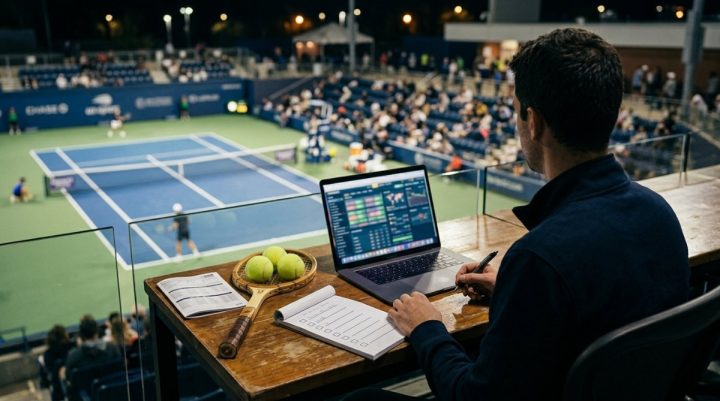
The most common mistake is placing a bet first and building the argument afterward, a habit that matters because emotion can turn a fair tennis price into an unnecessary wager within seconds.
1. Write down why the bet exists
Can you explain the bet in one sentence without mentioning instinct, confidence or a player’s reputation? A useful reason identifies a measurable edge: surface performance, recent service numbers, return strength, scheduling or a tactical matchup.
“Player A should win” is not enough. “Player A has held serve in 86% of hard-court service games, while Player B has broken only 14% against top-100 opponents on the same surface” gives you something testable. The second statement can still lead to a bad bet if the odds already reflect the advantage, but at least the decision has a foundation.
Use a 30-second test. Write one line beginning with I am betting because. Remove any reason that depends on liking the player, remembering a dramatic victory or wanting action during a televised match.
A strong line might read: “I am backing the underdog at 2.45 because my estimate gives them a 44% chance on slow clay, where the favorite’s serve produces fewer free points.” A weak line might read: “The underdog looked dangerous last week.” One links the surface and price; the other relies on a loose impression.
If the sentence takes a full paragraph to defend, the original idea may not be clear enough. Passing on an unclear wager costs nothing, while forcing it creates a result that will be difficult to evaluate honestly later.
2. Compare your probability with the offered odds
A correct prediction is not automatically a disciplined bet. The price must offer enough return for the estimated chance of winning, including room for ordinary estimation error.
Convert decimal odds into implied probability by dividing 1 by the odds. A player priced at 2.20 has an implied probability of 45.45% because 1 ÷ 2.20 = 0.4545. If your researched estimate is 49%, the apparent edge is 3.55 percentage points.
Expected value makes the comparison more concrete. At odds of 2.20 with a 49% estimated win probability, a £20 stake has a projected return of £21.56 from wins because £20 × 2.20 × 0.49 = £21.56. The stake costs £20, leaving expected profit of £1.56, or 7.8% of the amount risked.
The arithmetic does not prove that 49% is accurate. It forces you to reveal the assumption behind the wager. A bettor who cannot produce a probability is often reacting to the team of commentators, a green run of results or an appealing payout rather than assessing value.
Check the number in under a minute with a phone calculator. Convert the odds, compare them with your estimate and ask how much the estimate could be wrong. If a small change from 49% to 45% removes the edge, lower the stake or pass. Thin margins deserve more caution than obvious pricing errors.
For a useful second opinion, compare your reasoning with AI-powered tennis picks, but do not copy a forecast without checking whether its predicted probability and the available price still produce value.
3. Remove the previous match from your first reaction
One ugly loss can dominate memory because tennis scores make collapses look especially vivid. A player may lose 6-1, 6-2 after facing a strong returner, playing in heavy wind or converting none of six break points, yet none of those details guarantees another poor performance.
Run a quick counterfactual check: would you want the same bet if the player’s previous result were hidden? If the answer changes immediately, recent-match emotion may be doing more work than the underlying evidence.
Look beyond the score for one minute. Check the surface, opponent quality, service points won, break points faced and any unusual match conditions. A 6-2 set can contain four deuce games, while a 7-6 set can include almost no pressure on serve. Scores describe who won the games, not always how repeatable the performance was.
The same restraint applies after a brilliant victory. A player who served 15 aces and saved all seven break points may have produced an exceptional result that is difficult to repeat. Paying 1.55 in the next round because the performance looked dominant can be worse than taking 1.85 before it.
Use a sample that fits the question. For a hard-court match, clay results should not carry equal weight when serve effectiveness and movement differ sharply. Recent evidence matters, but one match should rarely erase several months of surface-relevant data.
4. Check whether the payout is creating the appeal
Large potential returns can make an outsider feel more attractive than the probability supports. Odds of 5.50 promise £110 back from a £20 stake, but they imply only an 18.18% chance before accounting for the bookmaker’s margin.
Ask a blunt question: would the player still interest you if the stake and possible return were hidden? Focus on the probability first. An underdog with a big serve may have a plausible path through two tiebreaks, yet plausibility is not the same as a 25% or 30% winning chance.
Favorites can trigger the opposite error. Odds of 1.20 look safe because the implied probability is 83.33%, but a single poor serving set or deciding-set tiebreak can defeat the bet. Risking £100 to make £20 requires the price to be accurate, not merely the player to be better.
Spend 45 seconds listing two realistic ways the selection loses. A short-priced favorite might struggle if the opponent attacks second serves or if slow clay neutralizes first-strike tennis. A longshot might lack the return game needed to break even once. Naming losing routes stops the potential payout from becoming the analysis.
Price attraction is especially dangerous in accumulators. Four favorites at 1.30 combine to approximately 2.86 because 1.30 × 1.30 × 1.30 × 1.30 = 2.8561. The return looks appealing, but every selection must win, and one deciding-set upset loses the whole ticket.
5. Separate today’s decision from today’s results
A previous win can create a false sense that later bets are funded by “house money,” while an early loss can make the next opportunity feel responsible for repairing the day. Your bankroll does not care which match produced the last £30.
Check your current emotional state before looking at another market. Use three labels: calm, excited or frustrated. Only calm decisions should proceed immediately. Excitement encourages extra selections; frustration encourages rushed stakes and weaker prices.
Suppose the first wager was £25 at 1.90 and lost. Increasing the next stake to £50 at 1.80 does not recover the money safely. A win earns £40 profit, leaving the two-bet sequence £15 ahead, but a loss creates a £75 deficit and makes another increase tempting.
A separate danger appears after winning. Two successful bets can lead to a speculative live wager on a deciding set because the bettor feels ahead. The market does not improve because earlier picks landed, and a player priced at 1.70 remains a 58.82% implied proposition regardless of your daily balance.
Use a 60-second reset after every settled bet. Close the sportsbook, record the result and return only if the next match met your criteria before the previous result arrived. If the new idea appeared because you won or lost, wait at least until the next scheduled review point.
6. Add up all exposure on the same match
Several small bets can hide one large opinion. A £20 match-winner bet, £15 on a player to win the first set and £15 on the same player at -2.5 games create £50 of closely related exposure.
All three wagers may lose if the player starts slowly and never recovers. Even if the match winner lands after a comeback, the first-set and handicap bets can still turn a correct broad prediction into an overall loss.
Check exposure by match rather than by betting line. Add every pre-match and live stake connected to the same contest, then compare the total with your normal risk limit. Five £10 bets are not automatically safer than one £50 bet when they depend on the same player serving well.
Correlation also appears across tournament conditions. Backing three powerful servers on a slow, windy day may create one shared assumption: that aggressive tennis will survive conditions that reduce ace rates and extend rallies. Each match is separate, but the reasoning is linked.
A one-minute exposure check needs only two figures: total amount at risk on the match and worst-case loss. If your maximum planned loss is £30 and three related bets create £60 of downside, remove the weakest selections rather than pretending each market stands alone.
Discipline often means choosing the best expression of an opinion. If you expect a close match but are uncertain about the winner, an underdog games handicap may fit better than stacking match-winner, first-set and total-games wagers.
7. Record the bet before the first point
Memory tends to preserve unlucky defeats and forget poorly reasoned wins. A written record prevents a 7-6, 6-7, 6-4 loss from becoming “basically the right bet” when the original price offered no value.
Record the selection, market, odds, stake, estimated probability and main reason before play starts. Add the closing price later. Six fields are enough to expose whether your process is stable.
For example, write: “Player B +3.5 games, 1.91, £20, estimated 56%, strong return numbers on clay.” If the market closes at 1.75, the earlier 1.91 was a stronger price even if Player B loses 6-4, 3-6, 6-2. One defeat does not invalidate a sensible wager.
The reverse also matters. A bet placed at 1.80 that closes at 2.05 may win, but the market movement should prompt a review. Perhaps late fitness information appeared, or perhaps the original estimate overweighted a recent result. Profit cannot erase a weak decision.
Keep notes short enough that recording never feels burdensome. A spreadsheet row or betting journal entry should take less than a minute. Include a bias tag such as recent loss, big payout, favorite felt safe or late impulse whenever one influenced the selection.
After 50 or 100 recorded bets, patterns become visible. You may discover that planned pre-match bets perform reasonably while unplanned deciding-set wagers lose heavily, or that underdogs above 4.00 attract stakes without producing competitive probabilities. Records turn vague discomfort into evidence.
8. Confirm the bet fits rules written in advance
A rule invented after seeing the odds is an excuse, not a safeguard. Personal betting rules should exist before the schedule, prices and possible payouts start influencing judgment.
Useful rules are specific. “Be careful with live betting” is vague. “No live bet unless I recorded a fair price before the match” can be checked. “Avoid too many bets” is subjective, while “Maximum four bets or five total units per day” creates a clear boundary.
Review four limits in under a minute: maximum stake per selection, maximum exposure per match, maximum daily loss and permitted markets. If the proposed wager breaks any one of them, rejecting it should be automatic.
Imagine your daily loss cap is £80 and settled losses already total £65. A new £25 wager would create a possible £90 loss, so it does not fit even if the price appears attractive. Reducing the stake to £15 may satisfy the numerical limit, although skipping it can be wiser if frustration is driving the decision.
Rules should also cover timing. A price moving from 2.05 to 1.80 may create urgency, but chasing it removes much of the original edge. If your fair probability is 52%, fair decimal odds are about 1.92 because 1 ÷ 0.52 = 1.923. The wager may have value at 2.05 and none at 1.80.
Keep the rule sheet visible beside the betting account. The tennis betting discipline checklist should take no more than five minutes once the routine becomes familiar, which is a small cost compared with researching serve statistics, weather and surface records for an hour before abandoning the plan at checkout.
Use the checklist before entering the stake, not after the bet has been confirmed. A failed item does not always prove the selection will lose; it shows that the decision is not ready, and another tennis market will always appear. Set a limit before the first match of the day and stop when you reach it.