
Aryna Sabalenka vs Elina Svitolina: Forecasts
Match overview: power meets problem-solving
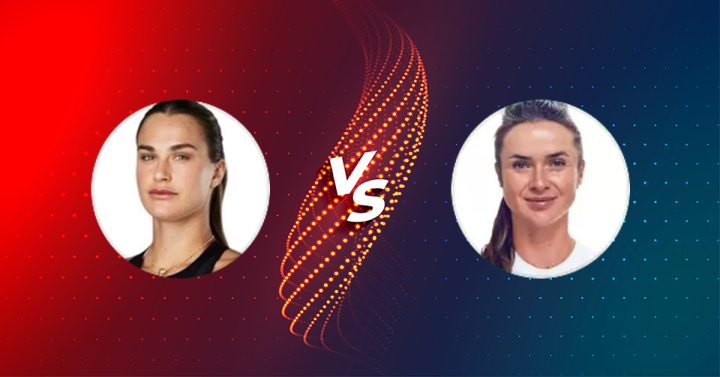
Aryna Sabalenka and Elina Svitolina collide in one of the most compelling matchups the WTA Australian Open can offer: raw, first-strike power against elite defense and tactical discipline. They’re scheduled to play on Rod Laver Arena in Melbourne, with the semifinal spot in the first Grand Slam final of the season hanging in the balance. The match is set for 2026-01-29 at 08:30:00 UTC, a time slot that typically brings slightly cooler, heavier night-session conditions—often a subtle but real factor for totals bettors and anyone weighing momentum swings.
From a betting perspective, the market frames this as a clear favorite-versus-underdog scenario. Sabalenka is priced at 1.29 to win, while Svitolina sits at 4.0. That gap tells you bookmakers expect Sabalenka to impose her game early and often—but Svitolina’s career has been built on making “expected” matches uncomfortable.
Quick odds snapshot & what they imply
The odds suggest Sabalenka wins this matchup the majority of the time, and not necessarily with a marathon attached. In simple terms:
– Sabalenka at 1.29 implies a high win probability.
– Svitolina at 4.0 implies an upset is possible, but needs several things to go right: extended rallies, Sabalenka’s error count rising, and a match rhythm that favors defense and transition play.
Our model at TennisPredictions.ai leans into that favorite profile:
– Best bet: 1 (Sabalenka to win)
– Confidence: 1.5/10 (low confidence despite the favorite price—important nuance for staking)
– Odds for tip: 1.29
– Total games lean: Under 27.5 at 1.27
If you want to compare this with other model-based angles and matchups, you can browse AI Tennis Tips and Predictions (linked once here for context).
Recent form & momentum: two very different routes
Sabalenka arrives looking like the most dominant force in Melbourne over the last few seasons. She’s been especially dangerous when she’s winning without dropping sets, because it usually means two things are working at once: the first serve is landing at a strong rate, and the “red-line” aggression is being managed rather than forced. When Sabalenka is controlling her unforced errors while still hitting heavy through the court, she becomes one of the hardest players in the world to stop on a hard court with a true bounce.
Svitolina’s path, by contrast, tends to be the kind that builds calluses. She’s often at her best when she’s had to problem-solve through tight moments—three-set battles, momentum swings, and matches where she has to absorb pace and then flip defense into offense at exactly the right time. Her tournament narratives frequently include tactical adjustments: changing return position, varying height and spin, and selectively coming forward to finish points rather than endlessly grinding from five meters behind the baseline.
That difference matters for bettors: Sabalenka’s “clean” run can point to a shorter match (supporting an under), while Svitolina’s grind-heavy route can hint at extended sets. The key is which player gets to dictate the match’s operating system.
Tactical matchup: “strike first” vs “one more ball”
Aryna Sabalenka: controlled aggression, heavy first strike
Sabalenka’s identity is built around a devastating serve and one of the heaviest baseline arsenals in women’s tennis. When she’s in rhythm, she holds serve quickly, attacks second serves ruthlessly, and takes time away with flat, penetrating groundstrokes—especially off the forehand wing. Her ideal pattern is simple: win the center of the court, shorten rallies, and force opponents to defend on the run rather than set their feet.
The betting angle: if Sabalenka starts fast and keeps her first-serve percentage healthy, she can create scoreline pressure that makes totals unders very live—because Svitolina may have fewer opportunities to grind out long return games.
Elina Svitolina: elite counterpunching with added variety
Svitolina has long been one of the tour’s smartest defenders and best “pace redirectors.” She’s not trying to outhit Sabalenka for two hours; she’s trying to make Sabalenka hit one extra ball, then one extra shot under stress, and eventually one extra risky winner attempt. Over the years, Svitolina has also mixed in more variety—occasional slices to break timing, changes of direction to pull big hitters off their strike zones, and selective net approaches to finish points when she’s earned a shorter ball.
The betting angle: Svitolina’s upset path usually requires extending rallies and stretching sets. If she can turn this into a physical chess match, the under 27.5 becomes less comfortable, and the moneyline upset becomes more plausible.
Surface & conditions: why the night session matters
The Australian Open’s GreenSet hard courts are generally considered medium-fast with a consistent bounce—conditions that typically reward clean ball-striking and first-strike tennis. That’s a natural fit for Sabalenka, who has spoken positively about playing in Melbourne and has repeatedly produced her best hard-court tennis here.
But the match timing matters. Evening conditions can slow the ball flight slightly and reduce the “instant” effect of flat power. That marginal extra time can help a defender like Svitolina track down shots and turn defense into neutral rallies. It doesn’t flip the matchup on its own, but it can be the difference between Sabalenka hitting through the court at will and Sabalenka being forced to hit two or three big shots per point.
Head-to-head context & the psychological layer
Historically, Sabalenka has held an edge in their meetings, particularly on hard courts, where her serve-plus-one patterns are most punishing. Their matches tend to be intense, and there’s also a broader context: with Svitolina representing Ukraine and Sabalenka representing Belarus, their encounters have occurred amid ongoing geopolitical tension. In recent years on tour, that has sometimes meant a noticeably restrained post-match interaction compared to traditional handshakes—an element that adds emotional gravity without changing the on-court math.
For bettors, the practical takeaway is this: emotional intensity can amplify momentum swings. If Svitolina can drag Sabalenka into frustration—long games, repeated deuces, missed break chances—that’s when the underdog price starts to look interesting. If Sabalenka stays composed, the favorite price looks justified.
Best bets: model lean, totals angle, and staking notes
Main tip
The AI pick is straightforward: 1 (Sabalenka to win) at 1.29. The confidence score (1.5/10) is low, which is a useful reminder not to over-stake simply because the favorite is short. Low confidence often signals that while the most likely outcome is clear, the match contains volatility—typically from matchup dynamics (Svitolina’s defense) or set-to-set swings.
Total games
Under 27.5 games at 1.27 aligns with the market expectation of a Sabalenka win in relatively controlled fashion—think two sets, or a match where one set is tight but the other is one-way. This under becomes most attractive if Sabalenka starts quickly, holds serve efficiently, and converts early break chances.
Final word for bettors
This semifinal is a classic stylistic test. Sabalenka’s path to victory is direct: serve well, strike early, keep errors in check, and avoid getting lured into extended, physical rallies. Svitolina’s route is more intricate: extend points, vary patterns, defend with discipline, and wait for the moment Sabalenka’s aggression turns from “controlled” into “costly.”
If you’re betting it, the cleanest angle remains the moneyline on the favorite, while the under 27.5 is a logical companion if you believe Sabalenka’s power will translate into a relatively efficient win.