
Australian Open AI Tips: Sabalenka vs Mboko
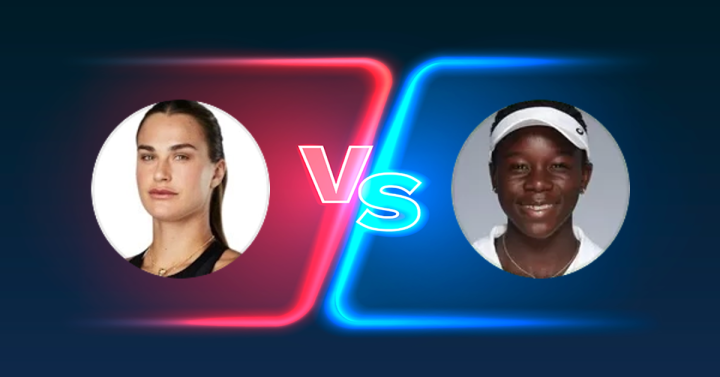
Match preview: Sabalenka vs Mboko
Aryna Sabalenka and Victoria Mboko meet in what looks like a classic Australian Open “power vs potential” matchup. This WTA Melbourne clash is scheduled to start at 00:30 UTC, and it lands at a fascinating point in the tournament: the second week, when experience, fitness, and nerve management start to matter as much as shot-making.
On one side you have Sabalenka, an established hard-court force and a regular fixture in the business end of big events. On the other, you have 19-year-old Mboko, a rising Canadian talent who has played her way into the spotlight and now gets a genuine measuring-stick match against one of the tour’s most imposing hitters. For bettors, it’s the kind of matchup where the favorite is obvious—but the best betting angle still depends on how you expect the game script to unfold.
Odds, market view, and AI picks
The market has Sabalenka as a strong favorite:
– Aryna Sabalenka to win: 1.18
– Victoria Mboko to win: 5.5
Our platform’s AI model points to a clear direction: Best tip: 1 (Sabalenka to win) with confidence 8.1 at odds 1.18. That aligns with the pricing—books are essentially saying Sabalenka wins this matchup most of the time, and the AI agrees.
There’s also a totals angle in play: the prediction for total games is Over 8.5 at odds 1.48. In plain terms, the model expects the match to clear a very low games line—something that can happen even in a straight-sets win if there are a few holds and at least one competitive set.
If you’re looking for a broader daily angle beyond this match, it’s worth checking the platform’s bet of the day for context on how today’s slate is shaping up.
Sabalenka: proven power and Melbourne comfort
Sabalenka’s identity is well known to tennis bettors: she’s a first-strike aggressor who can take control of points quickly, especially on hard courts with a true bounce. When her first serve is landing, she can “take the racket out of the opponent’s hands,” creating short points and constant scoreboard pressure.
Coming into this stage of the tournament, the storyline around Sabalenka is momentum and efficiency. She has moved through the early rounds without dropping a set, which matters in Melbourne where heat management and cumulative fatigue can become decisive. Less time on court usually means fresher legs for the second week—often the difference between holding serve comfortably and suddenly leaking break points late in sets.
Tactically, expect Sabalenka to do what she does best:
– Use a heavy first serve to earn short returns
– Step inside the baseline to dictate with the forehand
– Push Mboko deep and finish with pace, especially cross-court patterns that open the court
If Sabalenka starts fast, this can quickly look like a match where Mboko is constantly defending and trying to survive service games.
Mboko: fearless “Next Gen” upside
Mboko arrives as one of the more exciting young names in the draw. She’s part of that “Next Gen” wave that plays with ambition, athleticism, and a willingness to swing freely even against elite opponents. This is her first time reaching the second week of a Grand Slam, and that alone tells you she’s not just here for experience—she’s already converting potential into results.
Her recent run suggests real belief: she’s won 8 of her last 10 matches, and she’s looked increasingly comfortable under pressure. A standout moment in her tournament so far was a third-round win over a Top 15 seed, the kind of result that signals she can handle a big stage and a big name.
In terms of playing style, Mboko isn’t a pure counterpuncher. She brings power too, but with a few different textures:
– More topspin at times to create margin
– Strong lateral movement and defensive elasticity
– A two-handed backhand that can redirect down the line and change patterns quickly
That combination is important against Sabalenka, because simply trying to out-hit her in a flat exchange is usually a losing plan. Mboko’s best path is to absorb pace, extend rallies, and force Sabalenka to hit “one more” aggressive ball.
Tactical matchup: what decides the winner?
This match is likely decided by two betting-relevant factors: first-serve effectiveness and rally length.
1) First-serve percentage and return quality
Sabalenka’s serve is the biggest single weapon on court. If she’s landing a high percentage of first serves, Mboko may struggle to get into neutral rallies at all. That tends to create lopsided sets, because the underdog has to work extremely hard just to hold serve while the favorite holds routinely.
For Mboko, the key is not necessarily hitting return winners—it’s getting enough returns back deep to start points and avoid quick holds. If she can make Sabalenka play extra balls early in games, she increases the chance of a loose service game or a patch of errors.
2) Can Mboko extend rallies without donating short balls?
Mboko’s movement and defense can help her stay in points, but against Sabalenka, “staying in” isn’t enough. The danger is that defensive replies land short, and Sabalenka punishes them immediately. Mboko needs depth and height—especially cross-court—to keep Sabalenka from stepping in.
If rallies consistently reach 6–10 shots, Mboko’s chances improve. If rallies are mostly 1–4 shots, it’s heavily Sabalenka.
Surface and conditions: why Melbourne matters
Australian Open hard courts are typically medium-fast with a reliable bounce—conditions that often reward clean ball-striking and aggressive court positioning. That’s historically a good fit for Sabalenka’s flatter, heavier pace.
Weather and scheduling can also shape the match. Melbourne heat can make the ball fly and reward first-strike tennis, which again leans Sabalenka. A slightly slower session (often at night) can help a defender track balls down and turn points into physical exchanges—something Mboko would welcome if she’s trying to drag Sabalenka into longer patterns.
Head-to-head and narrative angle
This is their second professional meeting. They played once in late 2025 at a WTA 1000 event, where Sabalenka won in a tight straight-sets match. That result gives Sabalenka a small psychological edge—she’s already felt Mboko’s pace and handled it.
At the same time, Mboko’s development curve is steep. Young players can improve dramatically in six months, especially in serve patterns, return positioning, and match management. So while the head-to-head favors Sabalenka, it shouldn’t be treated as a perfect blueprint for what happens here.
One more angle bettors often watch: elite players can occasionally get uncomfortable against fearless youngsters who swing freely and don’t “respect” the moment. Mboko will try to lean into that—play fast, play brave, and keep the scoreboard close early.
Fitness and availability notes
Both players appear fit heading into this match. Sabalenka’s quick early-round work suggests she’s physically well positioned for the second week. Mboko had a minor thigh wrap earlier in the tournament, but she has continued to perform at a high level since then. Live bettors may want to watch her movement in the opening games—if she’s defending corners smoothly, that’s a positive sign for competitiveness.
Best betting tips for Sabalenka vs Mboko
From a betting perspective, the simplest angle matches both the odds and the AI model.
– Best tip: Sabalenka to win (1) @ 1.18 (AI confidence: 8.1)
This is the “banker” style play: you’re backing the proven hard-court powerhouse to handle the moment and the matchup.
– Total games: Over 8.5 @ 1.48
This line is low enough that it can land in many match scripts: a routine 6-3 6-2 still clears it, and any set that reaches 5-4 territory makes it even safer. The main risk would be an extremely one-sided scoreline, but even then, clearing 9 total games is not a high bar.
Final thoughts
Sabalenka has the bigger weapons, the bigger match résumé, and the stronger “Melbourne profile,” which is why both the market and the AI lean heavily her way. Mboko’s path to an upset is real but narrow: she needs a high first-serve day, excellent depth on defense, and the courage to take chances on key points without spiraling into errors.
For most bettors, the value is in keeping it simple: trust the favorite, and consider the low total games line if you expect Mboko to compete for stretches even in a likely Sabalenka win.