
Denis Shapovalov vs Luca Van Assche Prediction
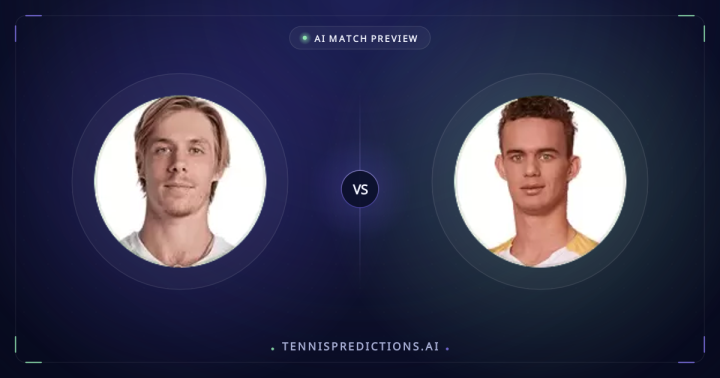
Shapovalov vs Van Assche Betting Preview
Denis Shapovalov and Luca Van Assche meet in one of the more intriguing ATP US Open second-round matches in New York, with the match scheduled for 2026-09-02 at 16:00:00 UTC. This is a clash with clear betting appeal because the market, the form guide, and the AI prediction are not fully aligned. Shapovalov is the bookmakers’ favorite at odds of 1.65, while Van Assche is priced at 2.32. However, TennisPredictions.ai’s model suggests the value may be on the second player, Luca Van Assche, with a confidence score of 2.5/10 and odds of 2.32.
That confidence score is modest, so this is not a high-certainty tennis prediction. Still, it is exactly the type of Grand Slam matchup where bettors need to look beyond the simple favorite-underdog structure. Shapovalov brings firepower, experience, and a left-handed attacking game that can overwhelm many opponents. Van Assche brings patience, consistency, physical reliability, and a growing sense that his 2026 season could become a genuine breakthrough campaign.
The suggested total games prediction is over 31.5 at odds of 1.26. In a best-of-five format at the US Open, that line is highly reachable if the match extends beyond three competitive sets. Given the contrast in styles, both players’ recent four-set first-round wins, and the possibility of momentum swings, the over games market deserves serious attention.
For bettors looking at this ATP US Open betting preview, the key question is simple: can Shapovalov hit through Van Assche often enough, or will the Frenchman’s consistency force the Canadian into too many errors?
Match Details and Betting Odds
Event: ATP US Open, New York, USA
Round: Second round
Match: Denis Shapovalov vs Luca Van Assche
Date and time: 2026-09-02 at 16:00:00 UTC
Surface: Outdoor hard court
Denis Shapovalov win odds: 1.65
Luca Van Assche win odds: 2.32
AI top prediction: 2, Luca Van Assche to win
AI confidence score: 2.5/10
Total games prediction: Over 31.5
Over 31.5 odds: 1.26
Best tip: Luca Van Assche to win at 2.32
The odds tell an interesting story. Shapovalov is favored because of his Grand Slam pedigree, superior peak level, and ability to generate winners from almost anywhere on the court. But Van Assche’s price at 2.32 is not a massive long shot. It suggests the market respects his recent progress and acknowledges that Shapovalov can be volatile, especially in longer matches where rhythm, patience, and error control become decisive.
The total games line also points toward a competitive match. Over 31.5 games at 1.26 implies that bookmakers expect enough resistance from both sides to make a quick and one-sided result less likely. A four-set match with reasonably close sets would comfortably clear this number.
Why This US Open Match Is So Interesting
This second-round match has the feel of a turning-point opportunity for both players. Shapovalov, now 27 and ranked around No. 48, is trying to move back toward the level that once made him one of the most exciting players on the ATP Tour. His best tennis is spectacular: explosive lefty serving, aggressive returns, sharp angles, and that famous one-handed backhand that can produce highlight-reel winners under pressure.
Van Assche, meanwhile, represents a different type of threat. The 22-year-old Frenchman has been building steadily and entered this US Open after reaching a career-high ranking of No. 40 in August. His 2026 season has been his best so far, including a first ATP Tour title at the Estoril Open, an ATP 250 event that confirmed he can turn potential into silverware. That matters in betting terms because young players often become more dangerous after winning a first title. Confidence changes everything.
There is also a draw-related angle. With a seeded player already removed from this section, both Shapovalov and Van Assche know there is an opening. Grand Slam draws can change quickly, and players often sense when a pathway is becoming more favorable. That does not guarantee better performance, but it can affect intensity and belief.
Denis Shapovalov Form Analysis
Shapovalov’s 2026 season has been uneven. A win rate hovering around 47% shows that he has not been consistently dominant, even though his ceiling remains extremely high. This is often the central problem for bettors evaluating Shapovalov: his best level is better than many players ranked above him, but his floor can appear suddenly through double faults, mistimed forehands, or rushed shot selection.
His first-round performance against Miomir Kecmanovic was encouraging. Shapovalov won in four sets, 6-4, 4-6, 6-4, 6-1, and reportedly produced 64 winners. That is a huge attacking output. It shows that he was seeing the ball well, stepping into the court, and trusting his weapons. When Shapovalov is striking cleanly, he can take the racket out of an opponent’s hands.
The fourth set was particularly impressive because he accelerated rather than faded. A 6-1 finish in a Grand Slam match suggests physical readiness and confidence. However, the lost second set is a reminder that Shapovalov’s matches often contain momentum dips. Against a player like Van Assche, who is excellent at making opponents play one more ball, those dips could become costly.
Shapovalov historically enjoys the stage in New York. The US Open atmosphere rewards aggressive players who feed off crowd energy, and his left-handed game can be awkward on hard courts. His serve out wide from the ad court is a major weapon, especially if he uses it to open space for the first forehand or backhand strike.
The concern is risk management. If he tries to end points too quickly, Van Assche will welcome the errors. If he mixes aggression with patience, he has every chance to justify favorite status.
Luca Van Assche Form Analysis
Van Assche arrives with strong momentum and a much more stable recent profile. His season win rate is close to 68%, which is significantly stronger than Shapovalov’s. While win percentages can be influenced by tournament level and opponent quality, the overall trend is important: Van Assche has been winning regularly and learning how to close matches.
His first-round win over Cameron Norrie was one of the standout results from his section of the draw. Norrie, seeded No. 29, won the opening set in a tiebreak, but Van Assche responded brilliantly, taking the next three sets 6-2, 6-2, 6-3. That result shows both mental resilience and tactical clarity. Losing a tight first set against an experienced opponent can easily lead to frustration. Instead, Van Assche adjusted, stayed composed, and then dominated.
One key number from that match was his performance on first serve. Van Assche won 84.5% of his first-serve points against Norrie, an excellent figure for a player not usually described as a huge server. If he can maintain a high first-serve percentage and win cheap points behind it, he becomes much harder to break. Against Shapovalov, that is crucial because the Canadian can be dangerous on return when he gets second-serve looks.
Van Assche’s identity is built around movement, patience, and tactical discipline. He is not the kind of player who needs to paint the lines early in rallies. He is comfortable extending exchanges, redirecting pace, and waiting for the opponent to overplay. That style is particularly relevant against Shapovalov, whose aggressive instincts can become both strength and weakness.
Tactical Matchup: Aggressor vs Counterpuncher
This match is a classic tennis betting matchup: power against control. Shapovalov will try to dominate with serve-plus-one patterns, early backhand strikes, and attacking forehands. Van Assche will aim to neutralize the first wave, defend intelligently, and force the Canadian to hit several high-risk shots per rally.
For Shapovalov, the first serve is vital. If he lands a high percentage of first serves, he can keep service games short and avoid long, draining rallies. His lefty angles can pull Van Assche off the court, especially on the ad side. If he follows with aggressive positioning, he can finish points quickly.
For Van Assche, the key is depth. If his defensive shots land short, Shapovalov will punish them. But if he can keep the ball deep to the baseline, especially into Shapovalov’s strike zone but with enough weight to prevent clean timing, he can extract errors. The Frenchman does not need to out-hit Shapovalov. He needs to make Shapovalov hit too much.
The backhand dynamic is also fascinating. Shapovalov’s one-handed backhand is beautiful and dangerous, but one-handers can be pressured by heavy depth and high balls. Van Assche may target that wing repeatedly, not necessarily to force immediate errors, but to reduce Shapovalov’s ability to dictate. If Shapovalov starts going for low-percentage backhand winners too early, the match could tilt toward Van Assche.
At the same time, Van Assche must protect his second serve. Shapovalov can attack second deliveries aggressively, and if the Canadian starts creating quick return winners, the Frenchman’s service games may become stressful.
AI Prediction and Value Assessment
TennisPredictions.ai suggests Luca Van Assche to win as the top prediction, but the confidence score is only 2.5/10. That is important. A low confidence rating means bettors should not read this as a lock or a guaranteed upset. Instead, it should be interpreted as a value-leaning position. The AI appears to identify Van Assche’s odds of 2.32 as more attractive than Shapovalov’s 1.65, likely because the stylistic matchup and recent form create a realistic upset path.
In betting terms, value is not the same as certainty. Shapovalov may still win, and if he serves well and keeps errors low, he could win impressively. But at 1.65, the market requires a higher probability of success. Van Assche at 2.32 offers more reward for the risk, especially considering his current momentum, strong first-round performance, and superior season consistency.
This is why the underdog is the recommended side. The Frenchman’s game is well suited to frustrating streaky attackers. Over best-of-five sets, physical and mental stability often become more important than pure shot-making.
Total Games Prediction: Over 31.5
The total games market may be the safer betting angle for many players. Over 31.5 games at odds of 1.26 is a short price, but the logic is strong. In men’s Grand Slam tennis, a four-set match usually clears this total unless the sets are extremely one-sided. For example, scores like 6-4, 4-6, 6-3, 6-4 or 7-6, 3-6, 6-4, 6-2 both go over 31.5.
Both players played four sets in the first round. Shapovalov dropped a set to Kecmanovic, while Van Assche lost the opening set to Norrie before taking control. That suggests neither player is immune to fluctuations, but both can respond well during a match.
Stylistically, the over also makes sense. Shapovalov has the weapons to win sets quickly when he is hot, but he can also lose service rhythm. Van Assche is steady enough to stay competitive and extend sets, yet Shapovalov’s attacking quality makes a straight-set Van Assche win less likely. The most natural match script is a competitive four-setter, possibly with at least one tiebreak or several 6-4 type sets.
Best tip: Luca Van Assche to win at 2.32 remains the main value selection, but over 31.5 games is a logical supporting bet for those who prefer a lower-risk market.
Key Factors for Bettors
First-serve percentage will be one of the most important match statistics. If Shapovalov serves above his average and lands plenty of first serves, Van Assche may struggle to create enough break chances. If Shapovalov’s first-serve percentage drops, the Frenchman will have more opportunities to extend rallies and apply pressure.
Unforced errors are another key area. Shapovalov can hit 60-plus winners, as he did in the first round, but if that comes with a very high error count, Van Assche will remain dangerous. The Frenchman’s defensive style is designed to test shot selection.
Van Assche’s ability to hold serve will also shape the match. His 84.5% first-serve points won against Norrie was excellent, but repeating that against Shapovalov will not be easy. If he can consistently start points on his terms, he can frustrate the Canadian and create scoreboard pressure.
Physical endurance may matter if the match reaches a fourth or fifth set. Van Assche’s season suggests strong fitness and match rhythm. Shapovalov looked sharp in round one, but longer rallies generally favor the Frenchman.
Crowd and atmosphere could favor Shapovalov. New York often rewards expressive, attacking players, and Shapovalov can build momentum quickly when the crowd reacts to his shot-making. Van Assche must stay emotionally calm and avoid being dragged into Shapovalov’s tempo.
Betting Tips and Final Prediction
From a pure odds perspective, Shapovalov at 1.65 is understandable but not especially generous. His peak level is higher, and his first-round winner count shows he is capable of producing elite attacking tennis. However, the risk is his consistency. He remains a player whose matches can change quickly if the timing goes slightly off.
Van Assche at 2.32 is the more interesting betting pick. His 2026 form is stronger, his confidence is rising, and his first-round comeback against Norrie showed maturity. He has the defensive tools to frustrate Shapovalov and the tactical patience to benefit from errors. The AI prediction also supports Van Assche as the top selection, even if the confidence score is low.
The over 31.5 games market is also attractive from a match-script perspective. A competitive four-set match is very plausible, and both players have shown enough quality to take at least one set from the other. Because the odds are only 1.26, it may be better suited for accumulators or conservative bettors rather than those seeking high single-bet value.
For readers interested in betting analytics across other sports, if you search for AI football predictions, you can access NerdyTips for data-driven insights.
Final Verdict
This ATP US Open second-round clash has upset potential. Shapovalov is dangerous and deserves respect as the market favorite, especially after producing 64 winners in his opening match. But Van Assche’s current trajectory, improved confidence, and counterpunching style make him a live underdog.
The match is likely to be decided by whether Shapovalov can maintain controlled aggression for several sets. If he dominates behind his first serve and limits loose patches, he can win. If rallies become longer and the error count rises, Van Assche has a strong chance to take control.
Best tip: Luca Van Assche to win at 2.32
Secondary tip: Over 31.5 total games at 1.26
Predicted score: Luca Van Assche to win in four or five sets