
Elina Avanesyan vs Yulia Putintseva Prediction
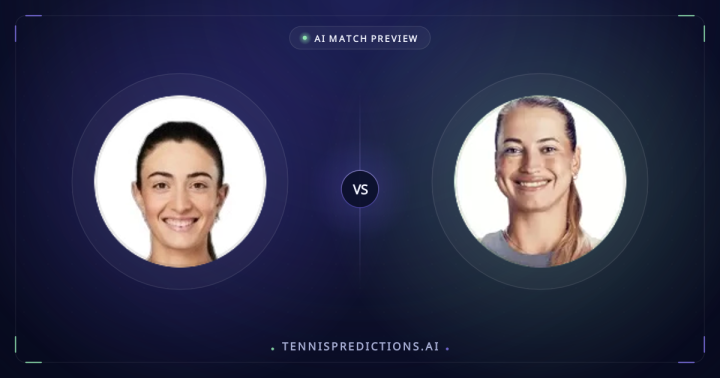
Elina Avanesyan vs Yulia Putintseva Preview
The WTA Hamburg Round of 16 brings us a genuinely intriguing clay-court contest as Elina Avanesyan meets Yulia Putintseva at the MSC Hamburg Ladies Open. The match is scheduled for 2026-07-23 at 10:00:00 UTC, and it has the feel of one of those early-round battles that could easily play above its billing. On one side, there is Avanesyan, a confident young baseliner who looks increasingly comfortable imposing herself on clay. On the other, there is Putintseva, the No. 7 seed in Hamburg and one of the most awkward, combative, and tactically intelligent players on the WTA Tour.
The setting also matters. Hamburg’s Am Rothenbaum clay courts have a long tennis tradition, and the surface tends to reward patience, movement, point construction, and emotional control. That combination makes this matchup especially compelling because both players can operate well in extended rallies, but they do it in different ways. Avanesyan wants to hit through opponents with heavy, aggressive groundstrokes. Putintseva prefers to disrupt rhythm, defend with purpose, change pace, and turn matches into uncomfortable physical and mental tests.
From a betting perspective, the market offers 2.7 for an Elina Avanesyan win, while Yulia Putintseva is priced at 1.5. Our AI at TennisPredictions.ai predicts best tip: 2, Yulia Putintseva to win, with a confidence level of 2.3 out of 10. The odds for this selection are 1.5. The total games market also has a notable angle, with the prediction set at Over 17.5 games at odds of 1.32.
For readers who follow data-driven tennis markets, this is the sort of match where price, playing style, and clay-court reliability all need to be weighed carefully. You can also compare broader model-based tennis betting views through Best AI Tennis Predictions, especially when looking for structured insight rather than gut feeling alone.
Recent Form and First-Round Momentum
Both players arrive in this Round of 16 match with something positive behind them. Avanesyan’s opening-round performance was particularly clean. She defeated the experienced Dutch left-hander Arantxa Rus 6-2, 6-1, dropping only three games against a player who has enjoyed success in Hamburg before. Rus is a veteran, a former champion at this event, and someone who usually asks plenty of questions on slower surfaces. For Avanesyan to deal with her so decisively says plenty about her timing, confidence, and comfort in the conditions.
That result was not just about the scoreline. Avanesyan appeared sharp in baseline exchanges, moved well into her forehand, and did not allow Rus to settle into the heavy, looping patterns that can frustrate younger opponents. She played with authority, and that kind of efficient first-round win can be hugely valuable in a WTA 250 draw. Less time on court means more physical freshness, and it also builds belief.
Putintseva’s first-round win was very different, but just as revealing. She overcame German home favorite Mona Barthel 6-2, 7-6(5), in a match that required concentration and nerve. After controlling the first set, Putintseva was pushed hard in the second and had to save a set point with a superb improvised backhand flick. That moment summed up much of what makes her dangerous: she finds solutions under pressure, competes fiercely, and rarely gives opponents the emotional comfort of an easy finish.
The Kazakhstani player, currently ranked around No. 79, has built much of her career on resilience. Even when she is not at her highest ranking, she remains a difficult out, particularly on clay. Her 2026 season has already included long, demanding matches, and while that can be physically draining, it also reinforces her reputation as a player who knows how to survive complicated situations.
Playing Styles: Power Against Problem-Solving
This matchup is appealing because the styles are so different. Avanesyan is part of the modern generation of aggressive baseline players. She likes to take control with heavy topspin, especially from the forehand side, and she can push opponents deep behind the baseline when her timing is right. On clay, that weight of shot can be highly effective because the ball jumps and forces defensive replies.
Her best tennis usually comes when she can dictate the rhythm. If Avanesyan is stepping inside the court, redirecting pace, and keeping Putintseva pinned back, she has a strong chance to make the underdog price look generous. She also showed in the first round that she can start quickly, which is important against Putintseva because giving the Kazakhstani an early lead often allows her to slow the match down and become even more disruptive.
Putintseva, however, is not an easy player to overpower. She is one of the tour’s great competitors, a player who often thrives when rallies become messy and uncomfortable. She uses drop shots, height, angles, slices, sudden changes of pace, and emotional intensity to take opponents out of their preferred patterns. Her defensive skills are excellent, but she is not merely a counterpuncher. She can step forward, flatten out her backhand, and punish short balls when she senses an opening.
The tactical question is simple: can Avanesyan maintain clean aggression for long enough, or will Putintseva drag her into a tactical battle? On clay, patience matters, and Putintseva has spent years developing the kind of point construction that frustrates powerful players. If she can extend rallies, vary ball height, and force Avanesyan to generate pace from awkward positions, the favorite’s odds begin to make sense.
Why NerdyTips Backs Putintseva
NerdyTips’ main selection for this match is best tip: 2, Yulia Putintseva to win at odds of 1.5. The confidence level is only 2.3 out of 10, so this is not being presented as a high-certainty pick. That is important for responsible betting analysis. Tennis matches, especially on the WTA Tour and especially on clay, can swing quickly due to momentum, service rhythm, physical condition, and emotional pressure.
Still, the reasoning behind Putintseva as the best bet is understandable. She has the more established tour-level profile, a strong clay-court toolkit, and the kind of match toughness that often proves decisive in tight second-round contests. Her win over Barthel may not have been as dominant as Avanesyan’s victory over Rus, but it showed she can solve problems during a match. That matters greatly against a younger opponent who may go through patches of brilliance and inconsistency.
Putintseva’s price of 1.5 is not huge, but it reflects her status as the more proven player. In betting terms, this is a favorite selection based on experience, tactical variety, and clay-court reliability rather than pure recent scoreline dominance. Avanesyan’s 2.7 odds will attract some value hunters, particularly after her excellent first round, but the market is asking whether she can reproduce that level against a much more disruptive opponent.
The biggest argument for Putintseva is that she can win points in more ways. If her forehand is not firing, she can defend. If the rallies become too predictable, she can use drop shots. If Avanesyan starts striking cleanly, Putintseva can alter height and tempo. That flexibility is often worth backing on clay, where matches rarely stay one-dimensional for long.
Over 17.5 Games Betting Angle
The second key betting market is the total games line. NerdyTips’ prediction is Over 17.5 games at odds of 1.32. This is a lower-risk, lower-price type of selection compared with the match winner, and it makes sense given the matchup.
For Over 17.5 games to land, the match does not necessarily need to become a three-set thriller. A competitive straight-sets scoreline such as 6-4, 6-4 or 7-5, 6-3 would already be enough. Considering Avanesyan’s recent form and Putintseva’s tendency to get involved in long, contested sets, this total looks realistic.
Putintseva’s first-round match against Barthel included a tiebreak in the second set, and that is typical of her style. She competes hard, but she can also allow opponents back into sets because her serve is not always dominant enough to shut the door quickly. Avanesyan, meanwhile, has the baseline power to hold her own in plenty of rallies. Even if Putintseva wins, it would not be surprising if Avanesyan collects enough games to push the total over this modest line.
The Over 17.5 also fits the emotional and tactical profile of the contest. Avanesyan should come in confident after losing only three games in round one. Putintseva should come in battle-tested after managing pressure against a home player. That combination suggests we may see momentum swings rather than a one-sided walkover.
Key Factors That Could Decide the Match
The first major factor is Avanesyan’s error count. If she keeps her aggressive baseline game controlled, she can put Putintseva under real pressure. But if her timing drops and the unforced errors begin to rise, Putintseva will gladly absorb, redirect, and extend rallies until frustration appears.
The second factor is Putintseva’s serve. She does not rely on huge free points, so her placement and first-serve percentage are crucial. If she protects her service games efficiently, her return game and rally tolerance should give her regular chances to break.
The third factor is variety. Putintseva’s drop shot, changes of spin, and defensive improvisation could be decisive. Avanesyan will want rhythm, but Putintseva is one of the better players at denying rhythm. The more broken and tactical the match becomes, the more it should favor the Kazakhstani.
The final factor is mental balance. Putintseva is famously fiery, but that fire often fuels her competitiveness. Avanesyan, still developing her profile at this level, will need to stay calm if the match becomes tense or if she feels she is playing well without always winning points.
Final Prediction and Betting Verdict
This should be a lively Hamburg clay-court battle between a rising hitter and a seasoned problem-solver. Avanesyan’s opening-round win over Arantxa Rus was excellent and should not be dismissed. She has the tools to challenge Putintseva, especially if she starts fast and keeps her forehand heavy and accurate.
However, Putintseva remains the more reliable pick. Her experience, tactical intelligence, defensive quality, and ability to handle difficult scorelines make her a deserved favorite. The odds of 1.5 are not spectacular, but they are logical for a player with her clay-court skill set and competitive edge.
The total games market may be the more comfortable angle for cautious bettors. Over 17.5 games at 1.32 looks reasonable because Avanesyan is in good form and should be capable of making at least one set competitive. Putintseva can win, but a quick demolition is not the most natural expectation given the matchup.
best tip: 2, Yulia Putintseva to win
Secondary tip: Over 17.5 total games
As always, betting should be approached responsibly. The AI confidence level of 2.3 out of 10 reminds us that this is a competitive match with real uncertainty. Putintseva is the preferred selection, but Avanesyan’s form means bettors should expect a contest rather than a routine favorite’s cruise.