
Jesper De Jong vs Andrey Rublev: Forecasts
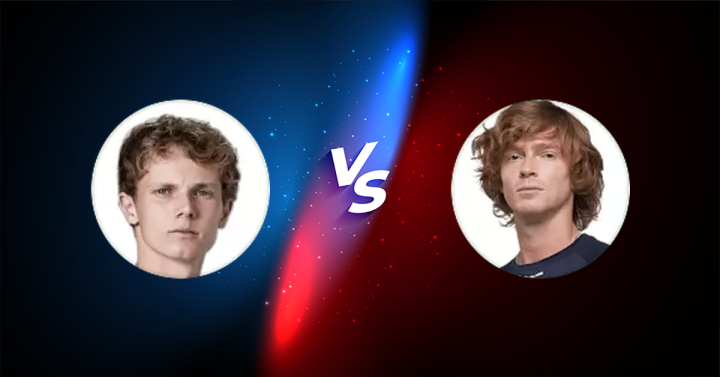
Doha lights, big names, and a dangerous first round
The ATP tour lands in the desert with that particular Doha feeling: warm air, quick courts, and a stadium that seems built for clean ball-striking. At the Khalifa International Tennis and Squash Complex, the 2026 Qatar ExxonMobil Open begins with a first-round pairing that looks, on paper, like a formality—yet carries the tension of a champion’s obligation and an outsider’s opportunity.
On 2026-02-17 at 10:30:00 UTC, defending champion Andrey Rublev opens his campaign against Dutch challenger Jesper De Jong. Doha’s recent upgrade to an ATP 500 has only sharpened the stakes: more points, more pressure, more reason for favorites to avoid early turbulence. Rublev arrives as the established power-hitter with history on these courts; De Jong arrives as the man with nothing to lose and everything to repair after a bumpy start to the season.
Match odds and what the market is really saying
The bookmakers have drawn a clear line. The odds list:
– Jesper De Jong to win at 5.6
– Andrey Rublev to win at 1.18
That gap is not subtle—it’s a statement. A 1.18 price implies the market expects Rublev to win comfortably most of the time, while 5.6 for De Jong reflects a scenario where the Dutchman needs a near-perfect day (and likely a Rublev dip) to flip the script.
Our AI at TennisPredictions.ai aligns with that reading. The model’s best bet is 2 (Rublev to win) with a confidence level of 8.0/10, priced at 1.18. In betting terms, this is a “probability play” rather than a “value longshot”: you’re backing the most likely outcome, not hunting a big payout.
Rublev’s 2026: solid results, unfinished feeling
Rublev’s season record stands at 4–2 in 2026, a start that would satisfy many players but reads as “average” by his own standards. He began the year with a semifinal run in Hong Kong, then exited the Australian Open in the third round, beaten by Francisco Cerúndolo. It’s not a collapse—more like a reminder that Rublev’s ceiling is high enough that anything short of deep runs feels like a missed appointment.
The most intriguing subplot is his evolving support team. Rublev has brought Marat Safin into the coaching picture, a move that feels less like a technical tweak and more like a psychological project. Rublev’s tennis has always been built on intensity—sometimes too much of it. The goal now is to keep the fire while reducing the self-inflicted damage: fewer emotional spikes, fewer rushed errors, more variety when the baseline exchanges turn into a sprint.
Rublev himself has framed the change with typical bluntness, joking that “Marat and the team are killing me in training,” describing the off-season work as brutal. In Doha, that “massacring” training block is supposed to show up as steadier decision-making at full speed—still aggressive, but less frantic.
De Jong’s reality check: searching for a reset
Jesper De Jong enters this match ranked around world No. 86, and his early 2026 has been turbulent. He lost in the first round of the Australian Open to Daniil Medvedev—no shame there, but no momentum gained either. Then came a Davis Cup stumble that drew attention for the wrong reasons: a loss to India’s Dhakshineswar Suresh, a player ranked far outside the top tier. Add a first-round defeat in Rotterdam against Karen Khachanov, and the picture is clear: De Jong is still looking for his first significant main-draw win of the season.
This is where sport becomes narrative. Doha offers De Jong a clean slate, but also the harshest possible examiner. Against Rublev, you don’t get time to “play your way in.” You either absorb pace and redirect it with conviction—or you get rushed into short points and scoreboard pressure.
Styles clash: power versus patterns
Rublev is the archetype of the modern aggressive baseliner. His inside-out forehand is a signature weapon, struck flat and hard, designed to open the court and finish points quickly. His serve, while not always the tour’s biggest, is delivered with intent—setting up the first forehand strike and keeping returners from settling.
De Jong’s game is more measured and tactical. He’s built to compete through coverage, rally tolerance, and a reliable two-handed backhand. His best path here is not to trade forehands in a straight line—Rublev lives for that. Instead, De Jong needs to break rhythm: occasional slices, changes of height, and the odd drop shot to force Rublev to move forward and think. The theory is simple: if Rublev gets comfortable hammering from the baseline, the match can become a one-way acceleration.
The problem is surface speed. De Jong tends to look more at home on clay or slower hard courts where his movement and patience can grind opponents down. Doha’s outdoor hard courts, typically quick in the dry air, reward first-strike tennis—an environment that amplifies Rublev’s strengths.
Doha conditions and Rublev’s history in the desert
Doha can play fast, though evening sessions sometimes feel a touch heavier and grittier. Even then, Rublev’s flat ball travels through the court with authority. He’s not just comfortable here—he’s proven. Rublev has already lifted the Doha trophy twice (2020 and 2025), and that kind of course history matters: the sightlines, the bounce, the rhythm of the venue. Some players need days to calibrate; Rublev often looks calibrated on arrival.
For De Jong, the adjustment is more demanding. His 0–3 record on outdoor hard courts so far in 2026 suggests he’s still searching for timing and confidence on quicker conditions. Against Rublev, that search can become urgent.
Head-to-head: a small sample, a clear memory
They’ve met once before: first round of the 2025 Barcelona Open on clay, where Rublev won 6–1, 6–3. Clay is usually the surface that gives defenders and counterpunchers extra oxygen. If Rublev controlled that meeting so comfortably on slower dirt, the hard-court rematch in Doha theoretically tilts even further toward his power.
Of course, tennis isn’t played in theory. But bettors should respect patterns: Rublev has already shown he can take De Jong’s time away.
Best bets: AI pick, totals angle, and how to read them
TennisPredictions.ai points to the straightforward side:
– Best tip: Rublev to win (2) — confidence 8.0/10 — odds 1.18
There’s also a totals recommendation:
– Total games: Over 18.5 — odds 1.39
These two bets can coexist logically. A Rublev win doesn’t automatically mean a short match; a single tight set, a tiebreak, or a De Jong patch of strong serving can push the total beyond 18.5 even if Rublev wins in two. The Over 18.5 line suggests a scenario where De Jong competes enough to add games—without necessarily threatening the final outcome.
If you’re the type of bettor who follows multiple sports with AI assistance, and you’re also searching for AI football predictions, you can access NerdyTips via this link: football predictions.
Final word: the champion’s duty, the outsider’s test
This match has the feel of a season checkpoint. Rublev begins his title defense with expectations and a new coaching dynamic meant to steady the mind without dulling the blade. De Jong arrives needing a reset, hoping variety and resilience can disrupt a player who thrives on rhythm.
In Doha, rhythm is often everything. If Rublev finds it early, the desert night can become very long for the Dutchman. If De Jong can stretch the match—make Rublev hit extra balls, play uncomfortable patterns, and keep the scoreboard close—then the Over 18.5 has a clear runway. But the central betting story remains the same: the market, the matchup, and the AI model all point in one direction—Rublev to win.