
Karolina Muchova vs Mananchaya Sawangkaew Prediction
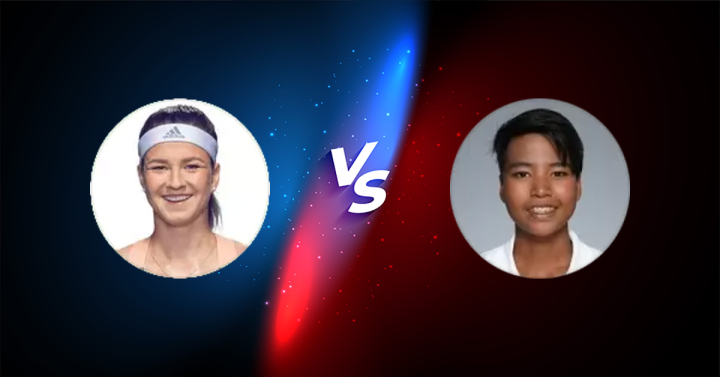
Karolina Muchova vs Mananchaya Sawangkaew Preview
Karolina Muchova and Mananchaya Sawangkaew meet in a highly intriguing WTA Wimbledon clash in London, Great Britain, with the match scheduled for 2026-07-03 at 11:00:00 UTC. This is the kind of third-round contest that immediately catches the eye of betting enthusiasts: an established elite-level player with proven Grand Slam pedigree against a rising qualifier carrying momentum, belief, and very little pressure.
The market has made its position very clear. Karolina Muchova is priced at 1.1 to win, while Mananchaya Sawangkaew is available at 8.0. Those odds suggest a strong expectation that Muchova will control the match and move into the next round. Our platform’s AI has also identified Karolina Muchova to win as the best tip, with a confidence rating of 10.0 and odds of 1.1. For the total games market, the recommended line is under 24.5 games, priced at 1.29.
On paper, this is a classic Wimbledon matchup between craft and ambition. Muchova, the seeded player and more experienced grass-court competitor, brings variety, court intelligence, and an all-court style that is especially valuable on the lawns of the All England Club. Sawangkaew, meanwhile, has already done well to come through qualifying and earn her place in the main draw conversation. She is unlikely to be intimidated easily, but the tactical and technical demands of facing Muchova on grass are substantial.
For users who also search for football betting insights, AI football predictions are available on NerdyTips, where data-driven models help support smarter betting decisions.
Match Odds and Betting Market Analysis
The outright odds tell a powerful story. A price of 1.1 on Karolina Muchova indicates that bookmakers see her as a heavy favorite. In implied probability terms, that number puts her chance of winning at roughly 90.9% before accounting for bookmaker margin. Sawangkaew’s 8.0 price implies a much smaller chance, around 12.5%, again before market adjustment.
That kind of gap is not just about ranking or reputation. It reflects the matchup conditions, surface suitability, Grand Slam experience, and the likelihood that Muchova can impose her game from the opening stages. Wimbledon often rewards players who can problem-solve quickly, transition forward, handle low bounces, and vary pace. Muchova checks many of those boxes.
The best tip is therefore straightforward: Karolina Muchova to win. It is not a high-return selection at 1.1, but in betting terms it profiles as a short-priced favorite with a strong probability edge. Bettors who prefer bigger odds may look at alternative markets, such as straight sets, handicap games, or total games, but the safest and clearest position remains the match winner market.
The total games prediction is under 24.5 at odds of 1.29. This aligns with the expectation that Muchova can win without the match becoming a long, extended battle. Under 24.5 games generally allows for several common scorelines, including 6-4 6-4, 6-3 6-4, 6-2 6-4, or even a tighter two-set result. It can also survive some three-set formats depending on the score, but the main logic here is that Muchova’s superiority should reduce the chance of a lengthy contest.
Why Muchova Is the AI Best Tip
The AI confidence rating of 10.0 behind Karolina Muchova to win reflects a strong alignment between player profile and match conditions. Muchova is not simply a baseline hitter relying on rhythm. She has a complete tennis toolkit: slice, net play, drop shots, controlled aggression, strong movement, and the ability to change direction without overhitting.
That variety is especially important on grass. Wimbledon does not always reward one-dimensional power. Players need to manage awkward bounces, react quickly, and use short points efficiently. Muchova’s style naturally fits these demands. She can take pace off the ball, force opponents forward, chip returns low, and finish at the net. Against a qualifier who may still be adjusting to the pace and precision of a seeded opponent, those skills can create pressure from the first service game.
Muchova’s Grand Slam experience is another key factor. She has previously shown that she can compete deep into major tournaments and handle the mental weight of high-profile matches. That matters in a third-round setting, where nerves often become more visible. The player who has been there before usually has an edge in tight moments, especially on break points and late-set service games.
Sawangkaew deserves respect for reaching this stage. Qualifiers often arrive with extra match sharpness because they have already played competitive rounds on the surface. That can be dangerous for seeded players who are still finding their best rhythm. However, the downside for a qualifier is physical and emotional fatigue. Coming through qualifying and then dealing with main-draw intensity can take a toll, particularly when the opponent offers very few cheap points.
Karolina Muchova Player Profile
Karolina Muchova is one of the more elegant and tactically versatile players on the WTA Tour. Her tennis is built on variation rather than repetition. She can rally from the baseline, but she is at her best when mixing patterns, dragging opponents out of position, and using her feel to break rhythm.
This makes her a difficult opponent to prepare for. Many players prefer predictable exchanges where they can settle into timing. Muchova does not always allow that. She can hit a heavy forehand, then follow it with a slice backhand. She can serve wide, move forward, and close the point with a volley. She can draw opponents in with a drop shot and then pass them with precision. On grass, where points can turn quickly, that unpredictability is a major weapon.
Her movement is also a major part of her game. Muchova covers the court smoothly and often looks balanced even when defending. On faster surfaces, balance and anticipation are just as important as raw speed. She reads the game well, which allows her to make smart decisions under pressure.
From a betting perspective, Muchova’s biggest appeal in this matchup is reliability. She has a higher ceiling, more experience, and more ways to win. Even if one part of her game is not firing perfectly, she can shift tactics. That is crucial for a favorite at short odds. Bettors backing a 1.1 selection want a player who does not rely on only one pattern or one hot streak. Muchova’s adaptability reduces risk.
Mananchaya Sawangkaew Player Profile
Mananchaya Sawangkaew enters this contest as the underdog, but her presence in this stage of Wimbledon should not be dismissed. Coming through qualifying is an achievement in itself, especially at a Grand Slam. It requires concentration, resilience, and the ability to win under pressure before the main spotlight even arrives.
Thai tennis has had inspiring moments on the global stage, and Sawangkaew’s progress adds another interesting storyline. For a qualifier, matches like this are opportunities to test herself against a top-level opponent and announce her potential to a wider audience. She will likely play with energy and freedom because the expectations are not on her side.
Her best chance is to start aggressively, protect her serve, and prevent Muchova from settling into creative control. If Sawangkaew can keep points short and avoid being pulled into uncomfortable court positions, she may be able to make the match more competitive than the odds suggest. Underdogs on grass can sometimes create surprise momentum with strong serving, fearless returning, and quick holds.
However, the challenge is maintaining that level over a full match. Muchova is skilled at asking different questions every few games. Sawangkaew may need to adjust repeatedly: dealing with slices, changes of height, forward movement, and disguised shot selection. For a less experienced player, that tactical variety can become mentally draining.
The 8.0 odds reflect the scale of the challenge. Sawangkaew has a route to competitiveness, but she likely needs an exceptional serving performance, a slow start from Muchova, and a high conversion rate on break-point chances. Without those factors, the favorite should have too much quality.
Grass-Court Matchup Breakdown
Grass is a surface that magnifies first-strike tennis and rewards players who can stay low, react quickly, and transition forward. Muchova’s skill set is well suited to that environment. Her slice backhand can stay low after the bounce, forcing Sawangkaew to generate pace from awkward positions. Her net play can shorten points and prevent long baseline exchanges from becoming a rhythm contest.
The serve-return dynamic will be central. If Muchova lands a high percentage of first serves, she should be able to dictate immediately. She does not need to hit aces constantly; placement and follow-up shots are enough. A wide serve followed by a forehand into open court is a classic grass-court pattern, and Muchova has the intelligence to use it effectively.
On return, Muchova’s ability to block and redirect could be decisive. Against a qualifier, the pressure of holding serve at Wimbledon can build quickly. If Sawangkaew starts facing frequent 30-30 situations, Muchova’s experience may show. The favorite is likely to test the second serve, step in when possible, and use depth to prevent Sawangkaew from attacking first.
Sawangkaew’s path is narrower but not impossible. She must avoid passive rallies and resist the temptation to overpress. If she goes for too much too early, unforced errors can pile up. But if she plays too safely, Muchova can take control with variety. That balance is difficult, which is one reason the market is so heavily tilted toward the seeded player.
Total Games Prediction: Under 24.5
The under 24.5 games selection at 1.29 is a logical companion to the match winner prediction. If Muchova wins as expected, the most likely script is a controlled two-set victory. This does not necessarily mean a demolition. It could simply mean that Muchova wins the key points, breaks once or twice per set, and avoids tiebreak complications.
A scoreline like 6-3 6-4 would produce 19 games. A 6-4 6-4 result gives 20 games. Even 7-5 6-4 stays under at 22 games. The danger for the under is a tiebreak-heavy match or a three-set battle with extended sets. For that to happen, Sawangkaew needs to serve consistently well and keep scoreboard pressure on the favorite.
The under also connects to the tactical matchup. Muchova’s variety could create breaks of serve without requiring long physical rallies. If she reads Sawangkaew’s patterns early, she can disrupt service games and prevent the underdog from settling. Grass-court matches can move quickly when one player has a clear edge in return quality, court craft, and big-point composure.
For bettors, under 24.5 at 1.29 is not a massive price, but it offers a more interesting angle than the simple moneyline for those seeking a slightly different market. Still, it carries more risk than the match winner pick because totals can be affected by a single tiebreak or one loose service game from the favorite.
Key Factors to Watch
The opening four games may reveal a lot. If Muchova begins confidently, holds comfortably, and applies pressure on Sawangkaew’s serve, the match could quickly move in the favorite’s direction. Early breaks are especially valuable on grass because they allow the stronger player to serve from in front and take more calculated risks on return games.
Sawangkaew’s first-serve percentage is another crucial metric. As an underdog, she cannot afford too many second serves. Muchova is too smart to let weak second deliveries go unpunished. If Sawangkaew consistently starts points neutrally or defensively behind her second serve, she will be under constant pressure.
Muchova’s error count also matters. The main risk with a creative player is occasional overcomplication. If she becomes too adventurous too soon, she could give Sawangkaew free points. However, in a Grand Slam setting, Muchova’s experience should help her manage risk intelligently. She does not need to produce highlight-reel tennis on every point; she simply needs to maintain structure and let her variety do the work.
The crowd and atmosphere may also play a subtle role. Wimbledon has a unique rhythm. The courts, traditions, and expectations can feel different from any other tournament. Muchova has the profile of a player who can embrace that stage. Sawangkaew, as a qualifier, may draw support as the underdog, but she must convert that energy into calm execution.
Betting Verdict and Final Prediction
Everything in this matchup points toward Karolina Muchova as the justified favorite. The odds of 1.1 are short, but they accurately reflect the difference in experience, tactical range, surface suitability, and proven high-level performance. Sawangkaew’s run to this stage is admirable, and she may produce moments of bold, exciting tennis, but sustaining that level against a player of Muchova’s quality is a major challenge.
The best betting angle remains Karolina Muchova to win. It is the clearest selection, supported by the AI confidence rating of 10.0 and the market price of 1.1. For bettors looking beyond the moneyline, under 24.5 games at 1.29 is also a reasonable option, especially if expecting Muchova to win in straight sets.
The likely match script is that Muchova uses her grass-court intelligence to take control gradually. Sawangkaew may compete well in patches, particularly early, but Muchova’s ability to change pace, attack the net, and handle pressure should separate the players over two sets.
Best tip: Karolina Muchova to win
Predicted total games angle: Under 24.5 games
Final score prediction: Karolina Muchova to win in straight sets, with a likely scoreline in the range of 6-3 6-4 or 6-2 6-4.