Marrakech AI Predictions and Betting Tips
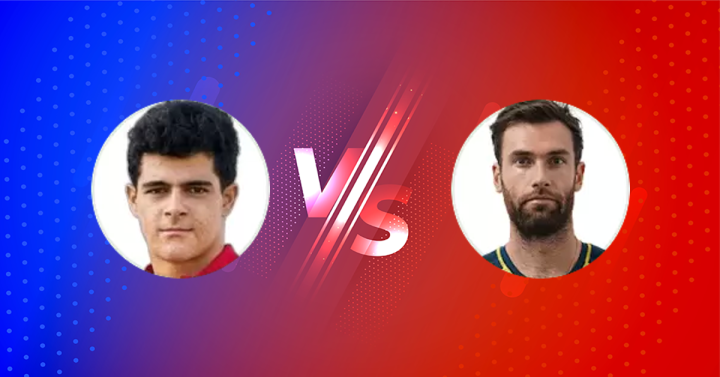
Karim Bennani vs Quentin Halys Preview
The ATP Grand Prix Hassan II in Marrakech always brings a special mix of clay-court grit and local emotion, and this first-round matchup has plenty of both. On one side is Karim Bennani, an 18-year-old Moroccan hopeful stepping onto a big stage in front of home fans. On the other is Quentin Halys, a 29-year-old French power player with far more tour mileage and a game built to shorten points even on slower red clay.
The match is scheduled for 2026-03-30 at 11:00:00 UTC, and the market has made its position clear: Bennani is priced at 9.5, while Halys is a heavy favorite at 1.07. Those odds reflect the gap in experience, ranking level, and proven performance against ATP-caliber opponents. Still, Marrakech can be a tricky setting—new conditions, early-round nerves, and the unique pressure of playing a motivated local wildcard can create awkward moments, especially for a favorite arriving with expectations.
Odds, Market View, and AI Angle
Let’s frame what the betting numbers are really saying.
- Moneyline: Bennani 9.5 vs Halys 1.07
- AI top pick: Halys to win (prediction “2”), confidence 7.5/10, aligned with 1.07 odds
- Total games: Over 16.5 at 1.29
When a player is 1.07, books are essentially pricing in a routine win most of the time. That doesn’t automatically mean the match will be “easy,” but it does mean you’re paying a premium for safety. In these spots, bettors often look for alternative markets—totals, handicaps, or set betting—where the price is more usable.
If you like data-driven perspectives, it’s worth noting that the AI recommendation aligns with the market favorite and the listed odds. For more match modeling and broader picks, many bettors also cross-check sources like Tennis Tips to see whether projections and prices agree before placing a wager.
Player Snapshot: Karim Bennani
Karim Bennani enters this match as the classic home underdog. At 18 years old and ranked around the mid-700s, he’s still in the early “foundation” stage of a pro career—building match toughness, learning how to manage momentum swings, and stacking reps on the ITF circuit.
What makes Bennani interesting is not just the wildcard narrative, but the progress he has shown in his own environment. He has spent significant time competing in North African ITF events, which matters because it suggests he’s comfortable with the regional conditions: the climate, the clay speed, and the rhythms of tournaments in that part of the world. Late in 2025, he also drew attention by winning a professional title at the M15 level, becoming the youngest Moroccan man in decades to lift a pro trophy. That kind of milestone doesn’t mean he’s suddenly ready to beat established ATP players—but it does indicate he’s not here purely for the photo opportunity.
From a betting perspective, Bennani’s main value is psychological and situational: he’s playing at home, likely with nothing to lose, and he can swing freely early. If he starts well, he can make the favorite work for a set, which is relevant for totals like Over 16.5.
Player Snapshot: Quentin Halys
Quentin Halys is the more complete and proven competitor in this matchup. He’s a tall, powerful Frenchman (around 6’3″) who likes to play first-strike tennis: big serve, aggressive forehand patterns, and a preference for keeping points short. Even on clay—where the surface naturally slows the ball and extends rallies—Halys can still impose himself if his first serve lands and he earns quick looks at plus-one forehands.
In terms of trajectory, Halys has shown a high ceiling in recent seasons. He has hovered around the Top 100 level and previously pushed his ranking into much stronger territory, reaching a career-best inside the Top 50 in 2025. That’s a meaningful indicator: players who have lived at that level typically have a “default” intensity and ball quality that overwhelms opponents outside the top tiers.
He also arrives with a notable recent performance on a big stage, having made a strong run in Miami before losing to an elite opponent. The only small caution is the turnaround: switching from a major hard-court event rhythm to clay can take a match or two to fully calibrate movement and timing. But against a teenager still learning ATP pace, Halys should have enough margin to manage that transition.
Tactical Matchup: How This Could Play Out
1) Serve and first-ball patterns
This is the central storyline. Halys’ serve is the biggest weapon on court, and it’s the tool that can prevent Bennani from settling into long, confidence-building rallies. If Halys serves at a high percentage and follows with aggressive forehands, he can keep Bennani defending and prevent the crowd from getting fully involved.
2) Clay-court patience vs quick-strike tennis
Marrakech clay can reward patience, height over the net, and smart point construction. Bennani, having played plenty in the region, may be more comfortable sliding and extending points. Halys, meanwhile, will want to avoid getting dragged into long exchanges where a young player can swing with freedom. Expect Halys to look for early court positioning—stepping in on second serves and taking time away.
3) The emotional factor
Home wildcards often start fast. Bennani’s best window is early in the match, where adrenaline and crowd energy can lift his level. For Halys, the key is professionalism: hold serve early, avoid loose games, and make the underdog feel the weight of having to win points repeatedly.
Best Betting Tips and Recommended Plays
Given the pricing, the moneyline on Halys is extremely short. It may be accurate, but it’s not always practical as a standalone bet. That’s why totals become attractive here.
Best tip: Over 16.5 total games (1.29)
Why this makes sense:
– Even if Halys wins comfortably, a scoreline like 6-3, 6-3 lands at 18 games and cashes.
– Bennani’s home-court energy could help him hold serve a few times, even if he struggles to break.
– Halys may need a set to fully adjust to clay timing, which can create a 6-4 type set without threatening the favorite’s win probability.
Secondary lean (risk-aware):
– Halys to win (1.07) is consistent with both the market and the AI pick (confidence 7.5/10), but the price is best used in parlays or combined bets rather than as a single.
Score Prediction
The most likely script is Halys controlling with serve-plus-forehand patterns, with Bennani showing flashes—especially early—before the Frenchman’s experience and weight of shot take over.
Projected scoreline: Halys in straight sets, something like 6-3, 6-4.
Final Word for Bettors
This match has a clear favorite, but it’s not automatically a “blink-and-it’s-over” situation. Bennani’s youth, local support, and comfort in the region can translate into enough resistance to push the total upward, even if Halys remains firmly in control. If you’re betting this match, the smartest approach is to respect Halys’ win equity while choosing a market—like Over 16.5 games—that better matches realistic match flow and offers a more usable return than a 1.07 moneyline.