Mirra Andreeva vs Marie Bouzkova: Forecasts
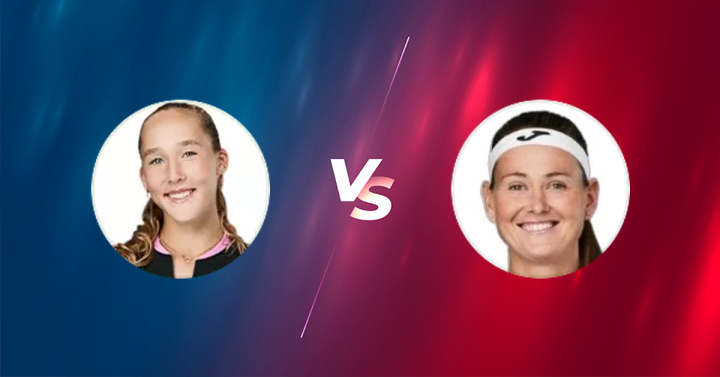
Andreeva vs Bouzkova: third-round spotlight in Miami
Mirra Andreeva and Marie Bouzkova meet in a compelling third-round (Round of 32) matchup at the WTA Miami Open, USA, with the match scheduled for 17:20 UTC. On paper, it’s a classic contrast: an 18-year-old Russian phenomenon already living in the top tier of the sport versus a 27-year-old Czech specialist in problem-solving tennis—disciplined, defensive, and stubbornly hard to hit through.
The market has taken a strong stance. The odds list Andreeva at 1.2 to win, with Bouzkova priced at 5.2. That gap tells you two things: bookmakers respect Andreeva’s ceiling and current status, and they also see Bouzkova as the underdog who needs a very specific match script to flip the result.
If you’re looking for data-driven context and broader model-based angles, you can also compare this matchup with other picks on AI Tennis Tips and Predictions, but here we’ll keep the focus on what matters for this specific contest—and how NerdyTips’ recommended angles fit the tennis logic.
Quick match context: rankings, narrative, and why it matters
Andreeva comes in as World No. 10, while Bouzkova sits around World No. 32. That ranking spread is meaningful in a WTA 1000, where early rounds can be tricky, but the elite players are expected to assert themselves by the third round.
For Andreeva, Miami is about momentum and maturity. She’s already proven she can win at the very top level—her breakthrough WTA 1000 title at Indian Wells in 2025 was a statement that her rise isn’t hype, it’s substance. But the flip side of being a headline act is that every wobble becomes a storyline. After failing to defend that Indian Wells crown earlier this month—an emotional third-round loss to Kateřina Siniaková—Miami offers a clean slate and a chance to show she can reset quickly.
Bouzkova’s 2026 has been a bit stop-start. A first-round exit at Indian Wells to Taylor Townsend didn’t help her rhythm, but Miami has looked kinder: she opened with a controlled 6-2, 6-2 win over Elsa Jacquemot in 1 hour 25 minutes, and the serving numbers were eye-catching—she won 82% of her first-serve points. That’s the kind of efficiency Bouzkova needs if she’s going to threaten a top-10 opponent.
Styles make fights: power and invention vs the defensive wall
This matchup is easy to sell because it’s easy to understand.
Mirra Andreeva: aggressive baseliner with variety
Andreeva’s game is built around heavy, penetrating groundstrokes and the confidence to take time away. What separates her from many young power hitters is the improvisation: she’s comfortable changing the geometry of points with drop shots, lobs, and sudden pace shifts. That variety matters in Miami, where conditions can be sticky and rallies can balloon if you don’t finish points cleanly.
The key word for Andreeva here is patience. Against a retriever, raw power alone can become a trap—especially if you start pressing for winners too early. Her best tennis in this matchup will likely come when she constructs points: heavy to the corners, open the court, then finish with margin.
Marie Bouzkova: counterpunching, consistency, and depth
Bouzkova is the kind of opponent who makes you play “one more ball” until you hate the sound of it. She’s a classic counterpuncher: excellent court coverage, reliable depth, and a calm willingness to extend rallies. She doesn’t need to hit through you; she needs you to hit through yourself.
Her route to an upset is clear but demanding:
– absorb pace early and keep returns deep,
– force Andreeva to hit extra shots from uncomfortable positions,
– and turn the match into a physical and mental grind where frustration becomes a factor.
Surface and Miami conditions: who benefits?
Miami’s Laykold hard courts are generally described as medium-slow and bouncy, often paired with humidity that can make the ball sit up and rallies last longer. In theory, that helps a defender like Bouzkova because she gets extra time to track down shots and reset.
But theory doesn’t always beat matchups. Andreeva’s weight of shot—her ability to hit heavy through the court—has proven effective even when conditions slow down. Importantly for bettors, Andreeva is already 2-0 against Bouzkova on hard courts, which suggests her power-and-variety package translates well against the Czech’s defensive patterns regardless of surface speed.
NerdyTips best bet: match winner
NerdyTips’ AI has identified the best tip as 1 (Mirra Andreeva to win), with a confidence rating of 6.9 and odds of 1.2.
From a betting perspective, 1.2 is not a price you take because it’s “exciting”—you take it because you believe the true win probability is even higher than the implied probability, or because it fits a broader staking plan (for example, as a conservative single or a low-risk leg in a multiple, depending on your risk tolerance).
Here’s why the pick makes sense in tennis terms:
– Matchup history leans Andreeva: a 2-0 hard-court edge matters because it indicates she’s already found solutions to Bouzkova’s defensive structure.
– Andreeva can win in multiple ways: if she’s striking cleanly, she can hit through; if rallies extend, she has the variety to disrupt patterns rather than endlessly trading crosscourt.
– Bouzkova’s upset path is narrow: she likely needs Andreeva to spray errors, lose patience, or dip physically. That can happen, but it’s not the base case.
The main risk to the favorite is psychological and tactical: if Andreeva starts chasing lines too early, Bouzkova’s consistency can turn the match into a slow leak of frustration. But if Andreeva plays with measured aggression—heavy targets, smart height, and selective acceleration—she should control the majority of baseline exchanges.
Secondary angle: total games under 26.5
NerdyTips’ prediction for totals is Under 26.5 games (U26.5) at odds of 1.26.
This is a “shape of match” bet: you’re not just picking the winner, you’re predicting the match won’t become a long, swingy battle. Under 26.5 often aligns with outcomes like:
– a straight-sets win with one set not going to 7-5/7-6, or
– a three-set match where one set is very lopsided (e.g., 6-1) and the other two are manageable.
Why the under is plausible here:
– Andreeva’s ceiling is high enough to produce a one-sided set if she starts fast and Bouzkova’s serve doesn’t earn free points.
– We’ve recently seen Andreeva navigate a match with a clear “dominant sets” pattern in Miami—beating McCartney Kessler 6-1, 6-7(3), 6-1. That kind of scoreline is exactly how unders can land even when a set is tight.
– Bouzkova’s style can create long rallies, but long rallies don’t automatically mean long matches if the scoreboard stays under control and breaks of serve come in clusters.
The caution flag: Bouzkova is capable of dragging sets into extended games if she’s serving well (and that 82% first-serve-points-won stat from her opener is a reminder). If she holds comfortably and forces Andreeva into a tiebreak, the under becomes more fragile. Still, the pricing suggests the market expects Andreeva to create separation on the scoreboard.
How this match could play out
Expect Andreeva to look for early dominance in the return games—testing Bouzkova’s second serve and trying to get on top of rallies quickly. Bouzkova’s priority will be depth: if she leaves the ball short, Andreeva can step in and finish points with one or two strikes.
If Andreeva keeps her error count reasonable and uses her variety at the right moments (not as a panic button), the favorite should justify the odds. For Bouzkova, the upset requires near-perfect discipline: high first-serve percentage, elite defending, and the ability to turn Andreeva’s aggression into rushed decisions.
Best betting tips recap
– Best tip (NerdyTips AI): Mirra Andreeva to win @ 1.2 (confidence 6.9)
– Total games: Under 26.5 games @ 1.26
As always, keep staking sensible: even strong favorites can wobble in Miami’s demanding conditions, but the matchup profile and market price both point in the same direction—Andreeva with a likely controlled win, and a total that trends under if she gets early scoreboard traction.