Monte Carlo Qualifying AI Tips & Predictions
Match Overview
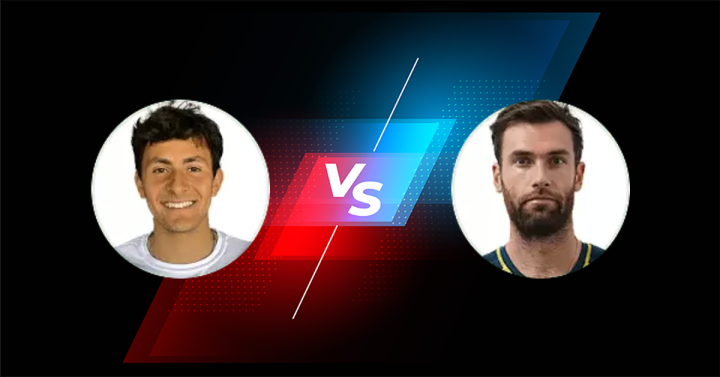
The 2026 Rolex Monte-Carlo Masters qualifying draw serves up an intriguing contrast in styles and career arcs as Emilio Nava meets Quentin Halys. The match is scheduled for the ATP Monte Carlo, Monaco Qualifying on the iconic clay of Monte Carlo, with first ball set for 10:00:00 UTC. Qualifying in Monte Carlo is rarely straightforward—conditions are slower, rallies stretch, and momentum swings can decide everything—so this is the kind of matchup bettors love: competitive odds, clear tactical storylines, and a realistic chance of three-set drama.
Nava, the 24-year-old American, continues to build his reputation as a gritty competitor who’s comfortable grinding from the baseline and absorbing pressure. Halys, the 29-year-old Frenchman, brings a more aggressive, first-strike profile—often looking to shorten points with serve-plus-one patterns and early forehand strikes. On clay, that contrast becomes even sharper: the surface rewards patience and point construction, but it also punishes any dip in intensity or footwork.
Player Snapshot: Emilio Nava
Nava has long been viewed as a hard-working, match-tough player whose game translates better than many expect onto clay. His strengths tend to show up in qualifying environments: he competes hard in extended exchanges, tracks down balls well, and usually looks comfortable turning defense into neutral positions. In a Monte Carlo qualifying setting—where nerves, wind, and the slower court can disrupt rhythm—those traits matter.
From a betting perspective, Nava’s appeal is that he can win in multiple ways. If his return game clicks, he can pressure Halys’ service games and force extra balls. If the match becomes physical, Nava’s willingness to extend rallies can draw errors and sap confidence from a more attack-minded opponent. He’s also at an age where incremental improvements—especially in shot tolerance and tactical discipline—often show up match to match.
Player Snapshot: Quentin Halys
Halys arrives as the more experienced name and a player who can look unplayable when his serve and forehand are firing. His profile is built around pace: he likes to take time away, step in, and dictate. That approach can be extremely effective in qualifying because it can produce quick holds and scoreboard pressure.
The clay question is always the key variable. Monte Carlo’s surface can blunt raw power if placement and patience aren’t there. Halys’ best path typically involves landing a high first-serve percentage, earning short balls, and finishing points efficiently. If he’s forced into repeated neutral rallies, the risk of timing errors rises—especially if Nava keeps the ball deep and makes him hit one more shot.
Tactical Matchup: What Could Decide It
This match has a clear “tempo battle” feel. Halys will want fast points and early control; Nava will want to extend exchanges, test movement, and make the Frenchman hit under pressure.
Key angles to watch:
– Return pressure: If Nava gets enough balls back in play, Halys may be dragged into longer service games than he prefers.
– Rally tolerance: On clay, the player who stays composed in 8–12 shot rallies often wins the big points.
– Momentum swings: Qualifying matches can turn quickly—one loose service game or a tight tiebreak can flip the script.
Betting Odds & Market Read
The market expects a tight contest. Emilio Nava is priced at 1.94 to win, while the opposing side is slightly shorter at 1.86 (the pricing suggests a near coin-flip). In other words, bookmakers anticipate a competitive match where a few points could separate the winner.
If you’re comparing value, the question becomes: does Nava’s clay-friendly grit and ability to extend points justify taking the bigger price? Our platform’s model believes it does.
For more match modeling and daily picks, you can also explore Tennis Forecasts as part of your research routine.
Best Bet (AI Pick)
Our platform’s AI has flagged the best tip as: 1 (first player will win) with a confidence rating of 1.8 and odds of 1.94.
Why this can make sense in betting terms:
– Price vs. probability: In a near-even matchup, taking the slightly bigger number can be attractive when the matchup dynamics lean your way.
– Surface factor: Clay tends to reward consistency and resilience—traits that often show up in Nava’s best wins.
– Qualifying intensity: Matches here can become physical and scrappy, which can reduce the edge of pure first-strike tennis.
Total Games Prediction: Over 20.5
The total games lean is O20.5 at odds of 1.42. That aligns with how this matchup profiles: competitive pricing, contrasting styles, and a realistic chance of at least one tight set. Even if one player wins in straight sets, a 7–6, 6–4 type scoreline gets you there. And if it goes three sets, the Over is often in excellent shape.
Responsible Betting Note
This preview is designed to be informative and ethical: it’s a probability-based opinion, not a guarantee. Keep your staking disciplined, compare lines across books, and avoid chasing losses—especially in qualifying rounds where variance can be higher than main-draw matches.
Final Word
Expect a compelling Monte Carlo qualifying battle where Halys tries to impose quick, aggressive patterns and Nava looks to turn it into a demanding clay-court test. With the odds tight and the matchup likely to feature momentum swings, the AI’s lean toward Nava at 1.94 and the Over 20.5 games angle both fit the story of a close, hard-fought contest.