
AI Tennis Predictions and Betting Tips
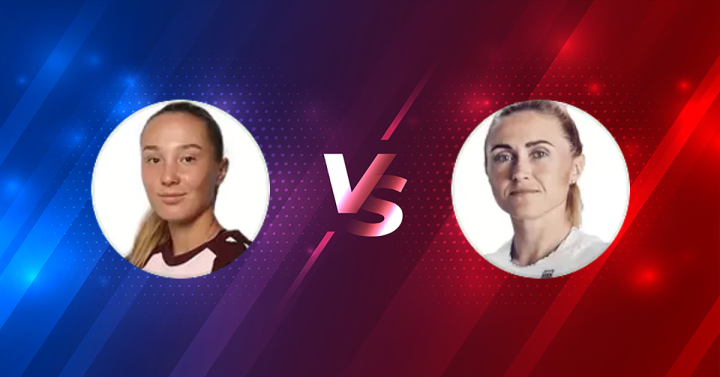
Quarterfinal spotlight in Paris: youth vs experience
The WTA 125 Trophée Clarins in Paris sets up a classic contrast: Alina Charaeva, a 23-year-old Russian on the rise, versus Aliaksandra Sasnovich, a 32-year-old Belarusian veteran who’s seen just about every match script tennis can offer. They meet at the Lagardère Paris Racing club, a venue that often rewards players who can stay patient, manage momentum swings, and handle the emotional “mini-crises” that clay-court tennis creates.
From a betting perspective, this is exactly the kind of matchup that tests discipline. The market leans toward the established name: Charaeva is priced at 2.14 to win, while Sasnovich sits at 1.72. That gap signals respect for Sasnovich’s experience and ability to problem-solve mid-match, but it also leaves room for the underdog narrative—especially if Charaeva starts fast and plays freely.
What the odds say (and what they don’t)
Odds aren’t just numbers; they’re a snapshot of collective expectation. With Sasnovich at 1.72, bettors are paying a premium for stability—someone perceived as more likely to handle pressure points, close sets, and avoid mental walkabouts. Charaeva at 2.14 is the “potential” play: you’re betting on upside, timing, and the possibility that the younger player’s trajectory matters more than the résumé.
TennisPredictions.ai’s model aligns with the market direction: it points to 2 (Sasnovich to win) as the top call, but the confidence score is only 1.0/10, which is a big psychological cue for bettors. Low confidence doesn’t mean the pick is wrong—it means volatility is expected. In other words: the model sees Sasnovich as the likelier winner, but not by a comfortable margin.
If you’re the type of bettor who struggles with uncertainty, this is a match where you either size down or focus on a totals angle rather than a winner. If you’re comfortable with variance, you can still play the side—but you should do it with eyes open.
Form and momentum: why Paris can magnify confidence
Sasnovich has reportedly looked sharp in the French capital, including a convincing opening win over Australia’s Talia Gibson, 6-4, 6-0. A scoreline like that matters beyond the stats: it suggests she found her range quickly and, crucially, she didn’t let a competitive first set drag into a physical three-set grind. On clay, conserving energy is often an invisible edge—especially for a player with a veteran’s understanding of tournament pacing.
Charaeva, meanwhile, represents that dangerous category for favorites: a younger player with less to lose. Rising talents often play their best tennis when the narrative is “free swing,” and the quarterfinal stage can be a sweet spot—big enough to feel meaningful, but not always as suffocating as a final. If Charaeva starts landing first strikes and feels she belongs on the same court, belief can snowball quickly.
Matchup dynamics: patterns, patience, and problem-solving
This matchup reads like a chess game between structure and momentum.
Sasnovich’s edge is likely to be her ability to change the picture: varying height, pace, and direction to disrupt rhythm. Veterans often win these matches by forcing the opponent to hit “one extra ball” repeatedly—turning impatience into errors. If Sasnovich gets an early read on Charaeva’s preferred patterns (for example, where she wants to finish points and which wing breaks down under pressure), she can steer rallies into uncomfortable zones.
Charaeva’s path is usually clearer: start assertively, protect serve with first-ball aggression, and avoid getting dragged into long, neutral exchanges where experience tends to show. The psychological key for her is emotional control. Underdogs can play brilliant tennis until the first moment they realize they’re close—then the arm tightens, targets shrink, and the match becomes a test of nerve rather than skill.
On clay, those “close moments” happen constantly: break points, long deuce games, and service holds that feel like small victories. The player who treats pressure as routine—rather than as a threat—often wins.
The psychology of betting this match
This is where many bettors slip: they confuse “who is better” with “who will win today.” Sasnovich’s price implies she’s more reliable, but reliability is not immunity. The AI confidence being low is a reminder that outcomes can swing on a handful of points.
A smart psychological approach:
– Avoid chasing if the match starts against your position. Tennis offers many turning points; panic-betting live can compound mistakes.
– Respect the underdog’s hot start. If Charaeva begins fast, it doesn’t automatically mean Sasnovich is “done.” Veterans often absorb early pressure and adjust.
– Think in sets and totals, not just match winner. Clay matches can be deceptive: one lopsided set can still lead to an under if the other set is tight but not long.
If you want more model-driven context and market-friendly angles, one useful resource is Tennis Tips, especially for bettors who like comparing odds to algorithmic projections without overcommitting emotionally.
Best bets and value angles
The totals market is particularly interesting here. The prediction for total games is Under 23.5 at 1.55. That implies a match that resolves in two sets or in a three-set scenario with at least one short set. Sasnovich’s recent 6-0 second set in Paris supports the idea that she can run away with a set if she gets on top of patterns and confidence.
Meanwhile, if Charaeva wins, it could still come in two tight sets—but under 23.5 becomes trickier if both sets go deep (like 7-5, 7-6). So the under leans on a specific match story: one player gains control for a stretch and converts it into a “cheap” set.
Given the market favorite, the venue, and the AI’s lean (even with low confidence), the cleanest betting narrative is: Sasnovich’s experience creates separation at key moments, and at least one set doesn’t fully extend.
Best tip: Under 23.5 games (1.55)
For bettors who prefer sides, Sasnovich at 1.72 is the conventional play, but the low AI confidence suggests keeping stakes sensible. This is a quarterfinal where emotional discipline—both for players and bettors—may be the real edge.
Final prediction
Sasnovich’s combination of experience, tactical flexibility, and early-tournament sharpness in Paris makes her the more stable pick in a match that could feature momentum swings. Charaeva’s upside is real, but the pressure points—break chances, closing games, and responding after losing a tight set—tend to favor the veteran profile.
Projected outcome: Sasnovich in two sets, with a realistic chance of one set being one-sided enough to support the under.