
McCartney Kessler vs Oksana Selekhmeteva: Predictions
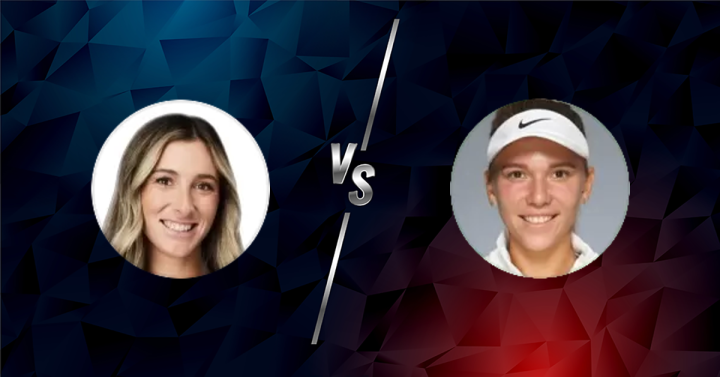
Match Overview: Strasbourg Qualifying Stakes
McCartney Kessler and Oksana Selekhmeteva meet in a high-pressure WTA Strasbourg qualifying match in France, with the first ball scheduled for 2026-05-17 at 09:30:00 UTC. Even though it’s “only” qualifying, the psychology is often closer to a main-draw final: one strong performance can unlock a week of ranking points, prize money, and momentum right before Roland Garros.
Strasbourg is a key WTA 500 stop on European clay, and the venue typically rewards players who combine patience with smart aggression. That’s why this matchup is so intriguing for bettors: it’s a classic contrast of styles. Kessler is broadly viewed as the more direct, first-strike player, while Selekhmeteva brings a more tactical, shape-heavy clay toolkit—especially dangerous in qualifying, where rhythm and problem-solving often matter more than raw reputation.
The market leans toward the American. Betting odds list 1.7 for a McCartney Kessler win. (The second quoted “2.12 for a McCartney Kessler victory” appears to be a duplication error—2.12 would normally correspond to the underdog.) Either way, the core message is clear: Kessler is priced as the favorite, but not overwhelmingly so, which signals real upset potential if the matchup tilts toward longer rallies and messy patterns.
Quick Odds Snapshot & AI Betting Lean
Our AI at TennisPredictions.ai flags the best bet as 1 (McCartney Kessler to win) with a confidence level of 4.9/10, and the odds for that tip are 1.7. That confidence score is important from a betting psychology perspective: it’s not a “lock,” it’s a lean. In practical terms, this is the kind of match where disciplined bankroll management matters more than bravado.
The model also points to the total games market: Over 19.5 games (O19.5) at 1.45. That suggests a scenario where even if Kessler wins, the match may include a tight set, a swingy stretch, or a scoreline like 7-5 6-4, 6-4 6-4, or even a three-set battle.
Player Form & Momentum: What Each Brings In
McCartney Kessler: Favorite With Something to Prove on Clay
Kessler enters as the higher-ranked player, sitting around the mid-50s and having previously climbed as high as No. 30 in 2025. That ranking context matters: players who have “been there” in bigger draws often carry a different kind of belief into qualifying. They’re used to being hunted, not hunting.
Still, clay has been a work in progress. Her 2026 win rate on the dirt has hovered around the low-30% range, which is a meaningful red flag for bettors who blindly follow rankings. The storyline is familiar: a flatter, pace-driven attacker can look dominant on faster courts, but on clay the ball sits up, points extend, and timing gets tested.
Recent results paint a mixed but not discouraging picture. She showed she can compete on big stages in Rome, beating fellow American prospect Iva Jovic before losing to Yulia Putintseva—an opponent known for turning matches into mental endurance contests. In Strasbourg qualifying, Kessler opened with a steady win over Renata Zarazua, which is the kind of “professional” clay result that can settle nerves.
Oksana Selekhmeteva: Underdog With Clay Instincts and Confidence
Selekhmeteva, the 23-year-old Russian, has been hovering around the high-70s to low-80s in the rankings. Her 2026 season has been more uneven than her strong 2025 campaign, when she reportedly posted an overall win rate near 70%. That drop-off is relevant: it can signal either a tougher schedule, small injuries, or simply the volatility that comes when opponents start taking you seriously.
But momentum is not always linear—and right now, she has a psychological spark. She pushed Rebeka Masarova to three sets in Rome (a useful indicator that her level can hold under pressure), and she arrives in this match after a major confidence-boosting win over Sofia Kenin in Strasbourg qualifying. Beating a former Grand Slam champion—even if Kenin isn’t at her peak—can change how a player swings on big points. It often shows up in freer service games and bolder return positioning.
Styles Make Fights: Tactical Matchup Breakdown
Kessler’s Blueprint
Kessler is a right-handed aggressor who likes to take the ball early, flatten out rallies, and win by controlling the middle of the court. Her serve and first ball after the serve are key. When she’s playing well, she creates the feeling that points are happening “to” the opponent, not “with” the opponent.
The clay challenge is twofold:
1) the surface absorbs pace, so clean winners are harder to come by, and
2) impatience becomes expensive—one rushed strike can turn into a break of serve.
For Kessler, the mental cue is patience with intent: she doesn’t need to become a grinder, but she does need to accept that clay points often require two or three constructed shots before the finishing blow.
Selekhmeteva’s Toolkit
Selekhmeteva is a left-hander with variety—an attribute that tends to play up on clay. She can use topspin and angles to pull opponents off the court, and she’s known for mixing in a backhand slice that stays low and disrupts timing. Against a flatter hitter, that slice can be more than a change-up; it can be a pattern that forces errors.
Her likely plan is to work the lefty cross-court forehand into Kessler’s backhand corner, then change direction when the American starts leaning. If Selekhmeteva can make Kessler hit “one extra ball” repeatedly, frustration can creep in—especially in qualifying, where players feel the weight of every missed chance.
Surface & Conditions: Why Strasbourg Clay Matters
Strasbourg’s red clay typically rewards players who defend well, vary height and spin, and stay emotionally steady through momentum swings. That doesn’t mean attackers can’t win—only that they must win with smarter aggression. For bettors, this is where psychology meets tactics: the favorite often feels pressure to “justify” the odds, while the underdog can play with a nothing-to-lose edge.
If rallies extend, Selekhmeteva’s variety can become a stress test for Kessler’s shot tolerance. If Kessler serves well and steps inside the baseline, she can prevent Selekhmeteva from turning the match into a chess game.
The Betting Psychology Angle: Managing Risk Like a Pro
This is the type of match where many bettors fall into two traps:
– Overvaluing ranking and ignoring surface fit
– Chasing certainty in a matchup that’s inherently swingy (qualifying + clay + contrasting styles)
The AI confidence of 4.9/10 is a healthy reminder: this is not a max-stake situation. If you like Kessler, think in terms of a measured stake, not an emotional one. If you like totals, Over 19.5 at 1.45 aligns with the idea that Selekhmeteva can keep sets competitive even in defeat.
Best Bets & Final Prediction
Best Tip: 1 (McCartney Kessler to win) @ 1.7
AI confidence: 4.9/10
Total Games Lean: Over 19.5 games (O19.5) @ 1.45
From a pure matchup perspective, Selekhmeteva has the clay-friendly patterns to make this uncomfortable. But Kessler’s higher ceiling—especially if her serve lands and she commits to controlled aggression—gives her the edge in key moments. Expect a match with momentum shifts, some long games, and at least one set that feels like it could go either way—exactly the kind of script that supports the Over 19.5 while still favoring Kessler to come through.
Always bet responsibly, and keep your staking consistent—qualifying tennis can be profitable, but only for bettors who respect variance.