
AI Tennis Tips: Tjen vs Bondar
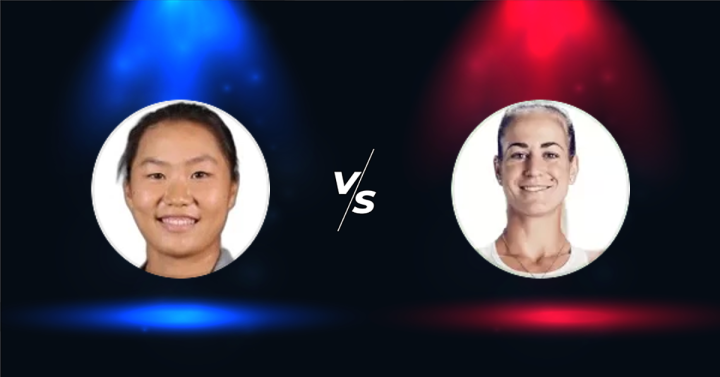
Match overview: Rouen opener with contrasting styles
Rouen is set for a compelling first-round storyline as Janice Tjen meets Anna Bondar at the Open Capfinances Rouen Métropole (WTA 250). The match begins at 10:00 UTC on April 15, 2026, and it’s a classic betting handicap: a higher-seeded, fast-rising talent trying to impose her game, against a seasoned European competitor whose skill set is naturally aligned with clay-court patterns.
Tjen comes in as the No. 6 seed and is listed around World No. 41, a ranking that reflects how quickly she has pushed into the WTA conversation. Bondar, around World No. 65, is the type of opponent who can look “underrated” in markets when the surface slows down and points become more physical. That’s exactly why this matchup is so interesting for bettors: it’s not just player vs player—it’s tempo vs patience, first-strike tennis vs clay-court construction.
Odds, market context, and what they imply
The pre-match prices tell a clear story:
– Janice Tjen to win: 2.95
– Anna Bondar to win: 1.42
In implied probability terms, Bondar is being treated as the rightful favorite, and not by a small margin. A 1.42 line suggests the market expects her to win this matchup comfortably more often than not, likely due to surface suitability and the expectation that she can extend rallies, expose movement patterns, and force Tjen to hit extra balls.
From a betting perspective, the key question is whether Tjen’s upside (and seeding) is being overvalued relative to the clay-specific edge Bondar brings. The pricing says: “Bondar’s game translates better here.” The analytics tip you provided agrees.
For additional match-by-match context and modeling-driven previews, it’s worth checking Tennis Analyses—especially when you want to compare market odds with probability-based projections.
Player snapshot: Janice Tjen’s rise meets a clay reality check
Tjen’s profile is that of a modern aggressor: she wants to take time away, dictate with early ball-striking, and keep points on her terms. That approach can look unstoppable on quicker courts, where a strong first ball does most of the damage and defensive skills are less frequently tested.
Clay, however, asks different questions. It rewards players who can:
– defend with depth and height,
– slide efficiently into corners,
– reset points after being stretched,
– and maintain discipline when winners don’t come as easily.
That doesn’t mean Tjen can’t succeed on clay—top players adapt—but it does mean her margin for error shrinks if she tries to force the same pace she uses on hard courts. Against a clay-savvy opponent, the “one extra shot” dynamic becomes decisive: if Bondar consistently makes Tjen hit a fourth or fifth aggressive ball, the error rate often rises.
The betting angle: Tjen’s best path is to start fast, protect serve early, and keep Bondar from settling into long return games. If she falls behind and has to press, clay can magnify impatience.
Player snapshot: Anna Bondar’s clay-court toolkit
Bondar is widely viewed as a player whose strengths are amplified on slower surfaces. Her style is built around structure: using heavy, higher-net-clearance shots to push opponents back, changing direction at the right time, and turning rallies into physical exchanges where decision-making matters as much as power.
On clay, that toolkit becomes a problem for opponents who rely on clean, early timing. Bondar can absorb pace, extend points, and force uncomfortable contact points—especially when she gets time to set her feet and work patterns crosscourt before pulling the trigger down the line.
From a bettor’s standpoint, Bondar’s edge is not just “she likes clay.” It’s that her default game plan naturally creates:
– more break chances,
– more pressure on second serves,
– and more scoreboard stress for aggressive players.
If she starts returning well, the match can quickly tilt into her preferred rhythm.
Best bet (AI pick) and why it makes sense
Your AI model at TennisPredictions.ai flags the best bet as 2 (second player to win), with a confidence level of 9.0/10, and the odds for that tip are 1.42.
The logic is straightforward and betting-sound:
– The market already respects Bondar’s surface advantage.
– The matchup dynamic favors the player who can extend rallies and defend.
– In early rounds, players still adjusting to conditions are more vulnerable—especially if their primary weapons are timing-based.
So the recommended play is: Best Tip: Anna Bondar to win (1.42).
This is the kind of selection that fits bettors who prefer higher-probability outcomes rather than chasing big underdog prices. It’s not a “lottery ticket” bet—it’s a percentage play aligned with surface realities.
Total games prediction: Under 27.5 at 1.28
The total games lean is U27.5 with odds of 1.28. That suggests a match script where Bondar’s advantage shows up on the scoreboard without requiring a marathon.
How does an under land here?
– A straight-sets win with at least one set that features multiple breaks.
– A scenario where Tjen struggles to hold consistently if Bondar gets traction on return.
– Or a match where Tjen’s aggression produces streaky runs—either quick holds or quick breaks against her.
Under 27.5 still allows for competitive sets (like 6-4, 6-4 = 20 games) and even a tighter set (7-5, 6-4 = 22 games). You generally only lose this under if it becomes a three-set match or two long sets with tiebreak involvement. On clay, tiebreaks are less frequent than on faster courts, which supports the under angle.
How bettors can approach staking and risk
If you’re building a card, Bondar moneyline at 1.42 is a classic “foundation” bet—more suitable for singles at moderate stake or as a conservative piece in a multiple (if you accept accumulator risk). The under 27.5 at 1.28 is even more price-compressed, so it’s best used selectively—either as a small add-on or avoided if you dislike low-return totals.
The cleanest betting plan based on the information provided:
– Primary: Anna Bondar to win
– Secondary lean: Under 27.5 games (only if you agree the match is unlikely to go three)
Final prediction
Bondar’s clay-court structure, defensive resilience, and ability to turn points into physical tests make her the more reliable side in Rouen conditions. Tjen’s ceiling is real, but this matchup asks for patience and point construction—areas where Bondar is typically more comfortable.
Best Tip: Anna Bondar to win (1.42)
Total games lean: Under 27.5 (1.28)