
AI Tips for Fonseca vs Djokovic
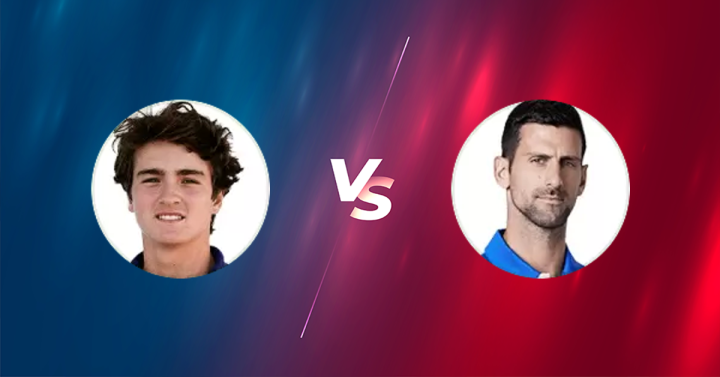
Match Overview
Roland Garros sets the stage for a fascinating generational showdown as Joao Fonseca meets Novak Djokovic at the ATP French Open in Paris, France. The match is scheduled to begin at 10:00:00 UTC on 2026-05-29, and it’s the kind of pairing that instantly grabs the attention of bettors: a fearless teenage talent with momentum versus the most decorated big-match operator the sport has ever seen.
Fonseca, still only 19, arrives as one of the most talked-about young players in men’s tennis—an explosive athlete with the confidence to swing freely on the biggest points. Across the net stands Djokovic, the 24-time Grand Slam champion, still hunting history and still treating majors like his personal domain. On clay, experience, patience, and tactical discipline often decide outcomes, which is why this matchup is so compelling: Fonseca’s high-octane shot-making against Djokovic’s ability to absorb pace, extend rallies, and turn matches into mental endurance tests.
Betting Odds Snapshot
The market has a clear favorite:
– Joao Fonseca to win: 2.57
– Novak Djokovic to win: 1.55
Those prices reflect what most professionals see here: Fonseca has the upside and the “unknown factor,” but Djokovic owns the higher baseline level, the deeper toolkit on clay, and the proven ability to manage Grand Slam pressure.
Player Breakdown: Joao Fonseca
Fonseca represents the modern Next Gen profile bettors love to track—power off both wings, quick acceleration, and a willingness to attack second serves. The upside is obvious: when his timing is on, he can take the racquet out of an opponent’s hands and run away with patches of play. That’s especially dangerous early in matches, when young players often swing their freest and favorites are still calibrating conditions.
The risk, from a betting perspective, is that clay at Roland Garros punishes impatience. The longer rallies get, the more Fonseca must repeatedly choose the right shot, manage his margins, and stay emotionally level after long games. Against most opponents, he can ride momentum. Against Djokovic, momentum is rarely “given”—it has to be taken, and then defended again and again.
Player Breakdown: Novak Djokovic
Djokovic at a major is a different betting asset than Djokovic anywhere else. Even at 39, his identity remains built for five-set tennis: elite return positioning, elastic defense, and the ability to problem-solve mid-match. On clay, he’s historically been at his most methodical—using depth to the backhand corner, changing height and spin, and forcing opponents to hit extra balls until the error arrives.
What makes Djokovic so reliable in this type of matchup is his ability to turn raw power into a liability. Big hitters often feel they must hit “one more winner” to finish points, and that’s exactly where Djokovic thrives—he keeps the ball in play, redirects pace, and makes the court feel smaller for the attacker. Over the course of a best-of-five, that dynamic tends to tilt the percentages toward the veteran.
Key Matchup Factors That Shape the Betting Angle
1) Grand Slam problem-solving
Fonseca’s ceiling is high, but Djokovic’s in-match adjustments are historically elite. If Fonseca starts fast, Djokovic is one of the few players who can calmly lose a set, collect data, and then systematically remove the opponent’s favorite patterns.
2) Return games and pressure points
Djokovic’s return is a major separator. Even when servers are landing first serves, he consistently creates “playable” returns that start neutral rallies. That matters against a young player because it increases the number of pressure points—deuces, break points, and long games—where experience usually wins out.
3) Physical and mental tax on clay
Paris clay rewards patience and repeatability. Fonseca can absolutely win stretches with aggression, but sustaining that for three winning sets against Djokovic is a much taller order. Over time, Djokovic’s ability to extend rallies can draw errors or rushed decisions.
Best Bet: Match Winner
Our platform’s AI has identified the strongest angle as the second player to win, with a confidence rating of 5.8 at odds of 1.55. In betting terms, this is a classic “favorite with structural edges” spot: Djokovic has the superior return game, the more stable rally tolerance, and the deeper experience in best-of-five management.
The price at 1.55 isn’t a longshot, but it’s justified by matchup dynamics. Fonseca can absolutely make this entertaining—and even dangerous—yet Djokovic’s ability to neutralize first-strike tennis on clay makes him the more dependable side.
Best tip: Novak Djokovic to win (1.55)
Total Games Prediction: Over 31.5
The recommended total is O31.5 at odds of 1.32, and it fits the likely match script. Even if Djokovic is the more probable winner, Fonseca’s firepower and youthful freedom can translate into at least one competitive set, potentially a tiebreak, or a scenario where Djokovic wins in four with one extended set that pushes the total upward.
From a totals perspective, clay also naturally inflates game counts because breaks of serve are more common, leading to longer sets with multiple momentum swings. If Fonseca holds serve well early or steals a set, the Over becomes even more attractive. The main risk to Over 31.5 is a straight-sets Djokovic win with one or two lopsided sets, but Fonseca’s profile suggests he can keep portions of this match tight.
Prediction: Over 31.5 total games (1.32)
Final Betting Take
This is the kind of match bettors love: a rising star with upset potential against a legend who rarely loses these early-round Grand Slam tests. Fonseca’s talent should create highlight moments and genuine pressure, but Djokovic’s clay-court discipline, return quality, and five-set expertise make him the sharper side at the current odds. For staking strategy, Djokovic on the moneyline is the primary play, while Over 31.5 games is a sensible secondary angle if you expect Fonseca to compete hard for at least a set or two.