
Australian Open AI Tips: Wawrinka vs Fritz
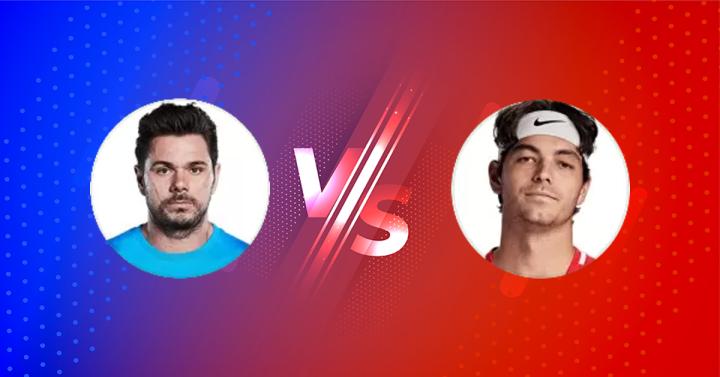
Wawrinka vs Fritz: a Melbourne collision of eras
The Australian Open always has a way of turning the early rounds into headline events, and this third-round matchup at Melbourne Park is exactly that: three-time Grand Slam champion Stan Wawrinka stepping into the arena against world No. 9 Taylor Fritz. The match is scheduled for 2026-01-24 at 06:00:00 UTC, and it carries the kind of narrative bettors love—experience and legacy on one side, prime-age power and ranking pressure on the other.
Wawrinka, now 40 and in what he has said will be his final season on tour, is effectively playing with a “last dance” edge. He’s a former Australian Open champion (2014) with a game that can still catch fire and overwhelm anyone for stretches. Fritz, 28, is the established top-10 force who has been knocking on the door of a truly deep Slam run and knows that beating legends is part of becoming one.
Betting odds and market temperature
The sportsbook numbers paint a clear picture of where the market expects this to go:
– Stan Wawrinka to win: 8.4
– Taylor Fritz to win: 1.1
That’s not just “Fritz favored”—that’s “Fritz priced like a near-lock,” the kind of moneyline you typically see when the market expects the favorite to control the majority of patterns and physical exchanges. Still, the Australian Open is best-of-five, and Wawrinka’s brand of shot-making can create volatility, especially if he lands a high first-serve percentage and starts ripping through the backhand wing.
AI picks: best bet and totals angle
Our AI at TennisPredictions.ai flags the top play as the straight-up winner market:
– Best bet: 2 (Taylor Fritz to win)
– Confidence: 10.0/10
– Tip odds: 1.1
On the totals board, the model also leans toward a longer match script:
– Total games: Over 29.5
– Odds: 1.38
If you want to compare this read with other matchups and model outputs, you can find more structured betting insights at Tennis Tips.
Form guide: why this isn’t just a “name vs ranking” match
Stan Wawrinka: the “Stanimal” still shows up
Wawrinka came into Melbourne with tempered expectations after a rough 2025 that pushed his ranking outside the top 100. But the first week has been a reminder of why he’s one of the most dangerous “if he’s on” players of his era. He opened by beating Laslo Djere in four sets, then survived a punishing five-set marathon against 21-year-old qualifier Arthur Gea that lasted 4 hours and 33 minutes.
That second match matters for bettors because it cuts both ways:
– Positively, it shows Wawrinka can still problem-solve in best-of-five and maintain a high ceiling under pressure.
– Negatively, it puts a massive physical tax on a 40-year-old body with a quick turnaround before facing a top-10 power server.
In other words: the “Stanimal” is alive, but the fuel gauge is a real handicap variable.
Taylor Fritz: trending upward after a shaky lead-in
Fritz’s lead-up to the Australian Open wasn’t spotless. He had a mixed United Cup, dropping three of four matches, and there were lingering questions about rhythm. But the early rounds have looked progressively cleaner: after a four-set opener against Valentin Royer, he tightened the screws in round two, beating Vit Kopriva in straight sets while blasting 15 aces.
From a betting lens, that second-round performance is the type that signals “serve + first-strike patterns are clicking,” which is exactly what you want backing a heavy favorite in a Slam. It also suggests he’s gaining confidence at the right time—often the difference between a routine win and a match that gets messy.
Tactical matchup: where the points will be decided
Wawrinka’s blueprint
Wawrinka is still an aggressive baseliner built for shot tolerance with violence. His one-handed backhand remains iconic—when he has time, he can drive it through the court and flip rallies instantly. The key for him here is efficiency:
– Protect energy by shortening points.
– Use the serve to earn cheap holds.
– Look for early backhand strikes to avoid getting dragged into extended corner-to-corner patterns.
If Wawrinka can keep Fritz from settling into predictable forehand exchanges, he can absolutely steal a set. But doing that for three sets against a top-10 athlete is the hard part.
Fritz’s blueprint
Fritz is the modern hard-court archetype: big serve, flat forehand, and a calm, tactical approach that often shows up in smart target selection. Against Wawrinka, the most logical plan is also the most ruthless:
– Stretch Wawrinka laterally and make him defend wide.
– Extend rallies selectively, especially early in sets, to test recovery after those long first two rounds.
– Apply scoreboard pressure with strong returning games and quick service holds.
If Fritz keeps his unforced errors in check, the matchup leans toward controlled dominance—especially as the match wears on.
Surface and conditions: Melbourne hard courts favor first-strike tennis
Melbourne’s medium-fast hard courts tend to reward big servers and aggressive hitters who can finish points with the first two shots. That’s good news for Fritz, who has already shown he can thrive here (including a quarterfinal run in 2024). But Wawrinka has a special relationship with this venue—he won his first major title here in 2014, and his ball-striking can still penetrate through these conditions when timing is sharp.
The swing factor is physical intensity. In warm conditions, the player who can keep their footwork crisp late in sets usually wins the “invisible points”—the extra ball retrieved, the extra return put in play, the extra rally tolerated without blinking.
Head-to-head: Wawrinka leads, but context matters
Wawrinka leads the head-to-head 2–1, winning earlier meetings in 2016 and 2018. Fritz got his first win over the Swiss in 2023 at Monte-Carlo on clay. This match adds a new wrinkle: it’s their first meeting on an outdoor hard court, which is arguably Fritz’s most comfortable environment and the one where his serve-forehand patterns are most punishing.
For bettors, that means the raw H2H number is less important than the “version” of each player showing up now—Wawrinka with mileage and recent marathon time, Fritz with top-10 consistency and a surface edge.
Fitness notes: the hidden market inside the market
Wawrinka’s biggest opponent may be the clock. Nearly eight hours on court across two rounds is a serious workload, and he has openly acknowledged feeling exhausted after the Gea match. He can still swing freely, but recovery speed at 40 is not the same variable it was at 30.
Fritz, meanwhile, had been dealing with knee tendonitis that affected his offseason and showed up during the United Cup. The encouraging sign is his report after round two that the knee has been “feeling really good,” paired with the way he served and moved in that straight-sets win.
Best betting angles (professional, risk-aware)
1) Moneyline
The AI’s top recommendation is clear: Taylor Fritz to win at 1.1 with maximum confidence. The price is short, so it’s more of a “parlay piece” or bankroll-stability play than a standalone value smash—unless your strategy is built around high-probability singles.
2) Total games: Over 29.5
The Over 29.5 at 1.38 is the more interesting “betting story” because it aligns with a plausible match shape: Wawrinka can still hold serve, still steal momentum with backhand bursts, and still turn one set into a grind—even if Fritz is the more likely winner overall. A four-set match with one tight set (or even three sets with multiple tiebreaks) can get you into that number quickly.
Final word for bettors
This is the kind of matchup where the favorite is favored for real reasons—serve reliability, movement, age curve, and matchup geometry—yet the total can still climb because Wawrinka’s shot-making and pride tend to produce resistance. Expect Fritz to look clinical and physical, and expect Wawrinka to swing like someone who knows every match in Melbourne could be one of his last big stages.