
Catherine McNally vs Elena Rybakina Prediction
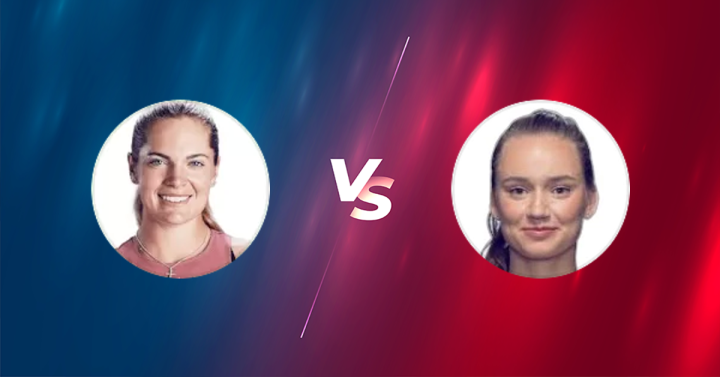
Catherine McNally vs Elena Rybakina: Wimbledon Betting Preview
The grass is ready, the air is heavy with expectation, and Wimbledon once again prepares to stage one of those matches where contrast becomes the central drama. Catherine McNally, the spirited American ranked around World No. 50, steps into the Round of 64 with the kind of underdog energy that can trouble a favourite if the match opens even slightly. Across the net stands Elena Rybakina, World No. 2 and a former Wimbledon champion, a player whose game seems almost designed for the lawns of the All England Club.
This WTA Wimbledon clash in London, Great Britain, is scheduled for 2026-07-02 at 11:00:00 UTC, and the betting market has already delivered a very clear message. Catherine McNally is priced at 4.6 to win, while Elena Rybakina is available at 1.2. Those numbers tell their own story: McNally is dangerous enough to be respected, but Rybakina is being treated as the player with the stronger weapons, greater pedigree, and clearer route to victory.
Our platform’s AI has identified 2 (second player will win) as the best tip, with a confidence rating of 4.6 and odds of 1.2. In simple betting terms, that means the model strongly leans toward Rybakina winning the match, even though the return is modest. It is not a long-shot prediction; it is a calculated, probability-based call built around form, surface suitability, ranking difference, and tactical matchup.
For readers looking to compare this match with broader model-based insights, our Data-Driven Tennis Predictions section offers a wider look at how AI evaluates tennis betting markets.
The Storyline: McNally’s Courage Against Rybakina’s Authority
There are matches that look one-sided on paper but carry hidden tension. This is one of them. Catherine McNally is not walking onto Centre Court or any Wimbledon court simply to admire the scenery. She is a competitor with doubles intelligence, soft hands, and a natural feel for the geometry of the court. Her game has craft. She knows how to change the rhythm, how to use slice, how to attack the net, and how to make opponents hit one more uncomfortable ball.
But Wimbledon is also a place where clean power often becomes royalty. And few players in the women’s game deliver cleaner, more destructive first-strike tennis than Elena Rybakina. Her serve is a weapon not just because of speed, but because of placement and calmness. She can hit her spots under pressure. She can turn a neutral point into a winning position in two shots. On grass, that matters enormously.
Rybakina’s former Wimbledon title is not just a line on her biography. It is evidence. She has already solved the puzzle of these courts. She knows the bounce, the movement, the patience required, and the aggression needed. Her game does not need adaptation in London; it arrives already fluent.
McNally, meanwhile, needs disruption. She needs to make the match messy, emotional, and varied. If it becomes a pure contest of serve plus first forehand, the American may spend much of the afternoon chasing shadows.
Odds Analysis: What 4.6 vs 1.2 Really Means
The match odds are direct and revealing. Catherine McNally at 4.6 represents the outsider price. In implied probability terms, that suggests roughly a 21.7% chance before bookmaker margin is considered. Elena Rybakina at 1.2 suggests an implied probability of about 83.3%, again before margin adjustment.
That gap is significant. The market is not merely calling Rybakina a slight favourite; it is placing her firmly in control of the pre-match narrative. Bettors backing Rybakina are accepting a lower payout because the perceived risk is lower. Bettors taking McNally are chasing higher value, but they also need a very specific match pattern to unfold.
This is where the AI tip aligns with the market. The recommended pick is 2 (second player will win), and at odds of 1.2 it fits the profile of a safer selection rather than a speculative one. The confidence rating of 4.6 reinforces that view: the model sees enough separation between the players to justify siding with Rybakina.
However, responsible betting always requires context. A low odd does not mean a guaranteed result. Tennis is volatile. A slow start, a poor serving day, a medical issue, or one inspired underdog performance can change everything. Still, from a pre-match betting perspective, the strongest available position is clearly Rybakina to win.
Why Rybakina Is the Logical Favourite
Elena Rybakina’s advantage begins with the serve. On grass, the serve is not just a shot; it is a structure. It dictates the rally before the rally truly begins. Rybakina’s height, reach, and relaxed delivery allow her to generate easy pace and sharp angles. When her first serve percentage is healthy, she becomes extremely difficult to break.
Her return game is also underrated. She does not always need spectacular defending because she can shorten points quickly. Against a player like McNally, who may try to vary speed and direction, Rybakina’s ability to hold court position will be crucial. If she steps in and attacks second serves, she can apply immediate pressure.
The former Wimbledon champion also brings mental authority. Some players enjoy grass; Rybakina has conquered it at the highest level. That distinction matters. At Wimbledon, experience can soften nerves. She has already handled the ceremonial weight of the tournament, the noise around expectations, and the sudden momentum swings that define Grand Slam tennis.
The matchup also suits her if she maintains discipline. McNally will likely try to pull her forward, mix in slice, and avoid giving her the same ball twice. But Rybakina’s compact ball-striking can cut through variation. If she keeps her unforced errors under control, her heavier shot quality should gradually push McNally backward.
How Catherine McNally Can Make It Complicated
McNally’s path to an upset is narrow, but not imaginary. Her best chance is to deny Rybakina rhythm. If she trades power from the baseline, she is unlikely to win the match. Instead, she needs to play with imagination: short slices, deep returns through the middle, sudden net approaches, and changes of pace that force Rybakina to create power from awkward positions.
The American’s doubles background can become a useful weapon. She has good instincts around the net and understands angles well. On grass, a player willing to move forward can sometimes steal time from a bigger hitter. If McNally can serve with precision and win cheap points, she may be able to keep sets close enough to create scoreboard pressure.
The first set is especially important. If McNally starts confidently and holds serve early, she can create doubt. Favourites at Grand Slams often prefer to impose themselves immediately. If Rybakina is made to play extended games, especially on return, the match could become more competitive than the odds suggest.
But there is a major problem for McNally: sustaining that level over two full sets, or even three, is a difficult task. Rybakina’s serve may give her easier service games, while McNally may have to work harder for each hold. Over time, that difference tends to show.
Tactical Key: First Serve Pressure
The central tactical question is simple: who controls the opening shot of each point?
For Rybakina, first serve percentage will be decisive. If she lands enough first serves, McNally may struggle to create break opportunities. The Kazakh star can then play with freedom on return, knowing her own service games are secure.
For McNally, the second serve must be protected. Rybakina can punish short or predictable second serves brutally. If McNally begins service games with 0-15 or 15-30 too often, the pressure could snowball quickly. She needs variety in placement and must avoid letting Rybakina step inside the baseline.
The American may also look to attack Rybakina’s movement forward and side-to-side. While Rybakina is much more mobile than critics sometimes suggest, she is most comfortable when she can set her feet and strike. Balls kept low, skidding, and awkward can at least test her timing.
Still, Wimbledon rewards those who strike first. In this department, Rybakina has the sharper sword.
Betting Tip: Best Market Selection
The best betting tip for this match is 2 (second player will win).
At odds of 1.2, this is not a high-risk, high-reward selection. It is a favourite-based pick, best suited for bettors who prioritize probability over payout size. Rybakina’s Wimbledon history, ranking status, serve dominance, and surface compatibility all point in the same direction.
The confidence rating of 4.6 supports the idea that the AI sees Rybakina as the stronger betting side. This does not mean bettors should ignore bankroll management. A short-priced favourite still carries risk, especially in Grand Slam conditions where early rounds can bring nerves and unfamiliar rhythms. But from a matchup and market perspective, 2 (second player will win) is the logical call.
For those exploring additional betting angles, possible related markets could include Rybakina to win in straight sets, Rybakina – games handicap, or under total games if the price is attractive. However, those markets carry more conditions. The cleanest and safest prediction remains the match winner market: 2 (second player will win).
Player Profiles: Two Different Tennis Languages
Catherine McNally plays tennis with a sense of touch. Her game is not built only on force; it has texture. She can improvise, redirect, and use the court intelligently. That makes her a tricky opponent, particularly when she is confident and physically sharp. She is the type of player who can make favourites uncomfortable because she refuses to give them a repetitive rhythm.
Elena Rybakina speaks a different tennis language. Her game is direct, elegant, and severe. There is a quiet violence in her ball-striking. She does not need emotional displays to dominate; often, her calmness is part of the intimidation. She can look almost expressionless while taking control of a match, which makes her even more dangerous.
That contrast is what gives this Round of 64 meeting its intrigue. McNally must turn the match into a puzzle. Rybakina wants to turn it into a procession.
Momentum, Pressure, and Wimbledon Atmosphere
Wimbledon is never just another tournament. The grass changes the timing. The crowd reads points differently. Tradition adds gravity. For a former champion like Rybakina, the return to these courts may feel familiar and empowering. For McNally, it can be an opportunity to play freely, with little external expectation.
That is the underdog’s emotional advantage: freedom. McNally can swing without the burden of being expected to win. Rybakina, as the heavy favourite, carries responsibility. But elite players learn to transform responsibility into routine. Rybakina has already shown she can do that at Wimbledon.
If she breaks early, the match could move quickly. If McNally holds firm through the first six or seven games, tension may enter. The opening phase will tell bettors plenty about whether the favourite is fully locked in.
Final Prediction: Rybakina to Advance
Everything points toward Elena Rybakina. The odds, the AI confidence rating, the surface, the ranking gap, and the Grand Slam pedigree all support the same conclusion. Catherine McNally has enough creativity to make sections of the match interesting, and she should not be dismissed as a passive outsider. She has the tools to ask questions.
But Rybakina has the answers most suited to Wimbledon. Her serve can shield her from danger, her groundstrokes can dominate short rallies, and her experience as a former champion gives her a psychological edge. Unless McNally produces an exceptional serving and tactical performance, the favourite should control the match.
The recommended betting pick is 2 (second player will win) at odds of 1.2.
Expected outcome: Elena Rybakina wins and moves into the next round.
This is a classic Wimbledon betting profile: a dangerous underdog with variety against a top-tier favourite with proven grass-court power. The story may have elegant rallies and moments of resistance, but the prediction remains firm. Rybakina is the player to trust.