
French Open AI Predictions: Kalinskaya vs Boisson
Match Overview: A Clash of Styles and Stakes
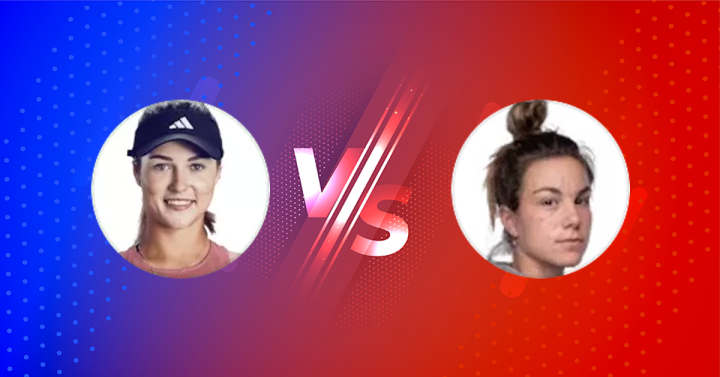
The 2026 French Open serves up a tantalizing first-round showdown between No. 22 seed Anna Kalinskaya and French wildcard Lois Boisson on May 24, 2026, at Roland Garros. This isn’t just any opening match—it’s a high-stakes battle where an established top-25 player meets a local hero playing on the biggest stage of her career. The Parisian crowd will be electric, with partisan support for Boisson, but Kalinskaya’s experience and aggressive baseline game make her the favorite. For bettors, this match offers a fascinating psychological puzzle: can the underdog thrive under pressure, or will the favorite’s composure prevail?
Recent Form and Momentum: Who Holds the Edge?
Anna Kalinskaya enters Roland Garros ranked No. 24 in the world, with a solid 13-10 record in 2026. Her season has been marked by flashes of brilliance, including a deep run at a clay-court warm-up event where she defeated two top-20 opponents. Kalinskaya’s game thrives on heavy topspin forehands and relentless court coverage, making her a natural on the slow Paris clay. However, she has struggled with consistency, often losing focus in tight matches—a vulnerability that could be exploited by a fired-up opponent.
Lois Boisson, ranked outside the top 100, is a different beast. The 22-year-old Frenchwoman captured her first WTA title at a 125K event in 2025, and she’s riding a wave of confidence after qualifying for the main draw. Boisson’s game is built on variety: she uses slice backhands, drop shots, and clever angles to disrupt rhythm. Her mental resilience was on full display in her qualifying matches, where she saved match points in the final round. The home crowd will be her 12th player, but can she handle the pressure of a Grand Slam main draw?
Betting Odds and Market Analysis
The bookmakers have installed Anna Kalinskaya as the heavy favorite at 1.47, while Lois Boisson is priced at 2.7. These odds reflect Kalinskaya’s ranking and experience, but they also underestimate the intangibles of a first-round match against a local hero. The total games market is set at Over 18.5 games with odds of 1.43, suggesting a competitive match that could go deep into a third set. For bettors, the key question is whether Boisson can keep it close or if Kalinskaya will dominate from the start.
Psychological Dynamics: Mindset and Pressure
This match is a masterclass in contrasting mental states. Kalinskaya is the favorite, but she carries the burden of expectation. She knows she should win, but she also remembers past collapses against lower-ranked opponents. The Russian’s body language can sometimes betray frustration, especially when her shots aren’t landing. If Boisson wins the first set, Kalinskaya’s confidence could waver.
Boisson, on the other hand, has everything to gain and nothing to lose. She’s playing with house money, and the crowd’s energy will fuel her. The danger for her is over-excitement—she might go for too many risky shots early on, handing Kalinskaya easy points. But if she can channel the adrenaline into controlled aggression, she has the tools to cause an upset. The psychological battle will be fought on every point, and the player who manages their emotions better will likely win.
Key Matchup Factors
Serve and Return: Kalinskaya’s serve is a weapon, averaging over 105 mph on first serves, but her second serve is vulnerable. Boisson will look to attack the second ball, using her return to put pressure on Kalinskaya’s movement. Boisson’s serve is less powerful but more varied, with kick serves and slices that can pull opponents off the court.
Baseline Rallying: Kalinskaya prefers to dictate rallies with heavy topspin, but Boisson’s slice backhand can neutralize that pace. If Boisson can keep the ball low and force Kalinskaya to generate her own power, she might force errors. Conversely, if Kalinskaya finds her rhythm, she’ll push Boisson behind the baseline and open up the court.
Movement and Fitness: Both players are excellent movers, but Kalinskaya has a slight edge in endurance. Boisson’s style requires more sprinting and lunging, which could tire her in a three-set match. The Paris clay is slow, so rallies will be long—fitness could be decisive in the final set.
AI Predictions and Best Bet
According to Automated Tennis Predictions, the AI model favors Anna Kalinskaya to win, but with a low confidence score of 2.3 out of 10. This low confidence suggests high uncertainty, likely due to Boisson’s home-court advantage and Kalinskaya’s inconsistency. The AI also recommends the Over 18.5 total games market, which aligns with the expectation of a competitive match.
The best tip is to back Over 18.5 games at 1.43. This bet accounts for the likelihood of a tight first set and a possible third set, regardless of the winner. Kalinskaya might win in straight sets, but the games total should still exceed 18.5 if both sets are close. Alternatively, if Boisson pushes her to a decider, the over hits easily.
Betting Strategy and Risk Management
For bettors, this match is a classic “favorite vs. underdog” scenario with a twist. The odds on Kalinskaya are short, but the risk is real—Boisson has the crowd and the momentum. Instead of betting on the moneyline, consider the games handicap or set betting markets. For example, a bet on Boisson to win a set (+1.5 sets) at around 1.80 could be a smart play, as she’s likely to take at least one set.
Psychologically, avoid overcommitting to either player. The emotional swings of a Grand Slam match can lead to irrational decisions. Stick to the total games over as a safer play, and only bet a small portion of your bankroll on the moneyline if you have a strong conviction.
Conclusion: A Match to Watch and Bet Wisely
The Kalinskaya vs. Boisson clash is a gift for tennis fans and bettors alike. It’s a story of experience vs. youth, favorite vs. underdog, and composure vs. passion. While Kalinskaya is the logical pick, the low AI confidence and Boisson’s home-court advantage make this a dangerous match to predict. The over 18.5 games market offers the best value, as it captures the likely competitive nature of the contest. Remember to bet responsibly and enjoy the drama of Roland Garros. For more insights, check out Automated Tennis Predictions for real-time updates and AI-driven analysis.