
French Open AI Tennis Tips Preview
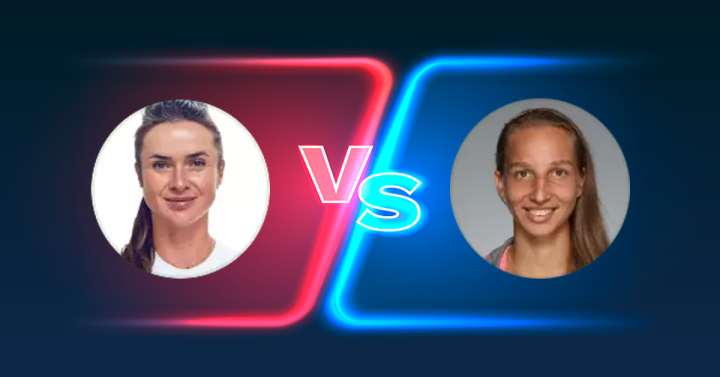
Match overview: Svitolina vs Korpatsch
Elina Svitolina and Tamara Korpatsch meet at the WTA French Open in Paris, France, with the first ball scheduled for 2026-05-29 at 10:00:00 UTC. On paper, it’s a classic Roland Garros “favorite vs underdog” setup: Svitolina arrives as the higher seed and a proven elite performer on clay, while Korpatsch comes in as a determined outsider enjoying one of the biggest Grand Slam moments of her career.
From a betting perspective, the market is making a clear statement. The odds list 1.06 for a Svitolina win, while Korpatsch is priced at 14.0—a gap that typically reflects a major difference in baseline consistency, return quality, and ability to manage pressure points over two sets on clay.
Player profiles: what makes this matchup unique
Svitolina’s identity is built around structure and resilience. She’s long been known as one of the tour’s best counterpunchers—someone who turns defense into offense, absorbs pace, and forces opponents to hit extra shots. Clay amplifies those strengths: longer rallies reward her movement, and her return game tends to create frequent scoreboard pressure.
Korpatsch, ranked around No. 95 in the world in the information provided, represents a different story: a late-blooming competitor who has had to grind through the tour’s middle layers. The key angle for bettors is that players who break through to a first-ever Grand Slam third round often do so by riding a short burst of confidence and clean execution—but sustaining that level against a top-tier returner on clay is a different test entirely.
Recent form and momentum (non-live, data-driven angle)
The internet notes you provided paint Svitolina as entering Paris in outstanding form, including an eight-match winning streak and a major title run in Rome, where she reportedly beat top names like Iga Swiatek and Coco Gauff. Whether you view that as “peak level” or simply “high confidence,” it matters for handicapping because it suggests two things that translate well to betting markets:
1) her serve + first-ball patterns are holding up under pressure, and
2) she’s converting key games efficiently rather than letting sets drift.
In Paris, the same trend appears in her early-round scorelines: after a tougher three-set opener against Anna Bondar, she settled quickly and produced a dominant 6-0, 6-4 win over qualifier Kaitlin Quevedo. For totals bettors, that’s important: when a favorite drops a bagel in round two, it’s often a sign that their return games are landing early and they’re not donating service games.
Korpatsch’s run, according to your notes, includes a straight-sets win over Sara Sorribes Tormo and an upset of 32nd seed Wang Xinyu (with the scoreline partially shown). Those are meaningful results because Sorribes Tormo is typically a tough out on slower surfaces, and upsetting a seed suggests Korpatsch is competing well in longer exchanges. Still, stepping up from “winning as an underdog” to “beating an in-form top seed on clay” is a steep jump in opponent quality.
Statistical matchup: where the edges usually show up on clay
This is the kind of match where the most predictive clay-court indicators tend to be:
– return points won (can the underdog protect serve often enough?),
– break-point conversion (does the favorite punish second serves?), and
– unforced error tolerance (can the underdog sustain rally length without leaking errors?).
Svitolina’s profile historically aligns with strong return pressure and high rally tolerance—two traits that frequently lead to “scoreboard separation” (a 6-3 set that becomes 6-2, or a close start that turns into a one-sided finish). Korpatsch, meanwhile, is likely to need a high first-serve percentage and quick holds to keep the total games climbing. If she gets dragged into repeated deuce games, the match can shorten quickly because clay deuce games often end with a break.
Best betting tips: AI picks, odds, and confidence
Our AI at TennisPredictions.ai points to the safest angle in the market:
– Match winner tip: 1 (Elina Svitolina to win)
– Confidence: 10.0 / 10
– Odds: 1.06
That aligns with the pricing: 1.06 implies the market expects Svitolina to win the vast majority of the time. For bettors, the main question isn’t “who wins?” but “how does the match script affect totals and handicap lines?”
For more model-driven picks and market comparisons, you can also check Best AI Tennis Predictions.
Total games prediction: Under 22.5
The total games lean is:
– Total games: U22.5
– Odds: 1.26
Under 22.5 is essentially a bet on a relatively efficient win—something like 6-3, 6-4 (19 games) or 6-4, 6-4 (20 games). Even 7-5, 6-4 lands on 22, still under. To lose an under 22.5, you often need either a three-set match or at least one tiebreak set plus a competitive second set.
Given the form indicators you provided—Svitolina’s ability to produce lopsided sets (like the 6-0 opener in round two) and her general clay-court consistency—the under is a logical companion bet. Korpatsch’s upset potential exists, but the statistical burden is heavy: she likely needs to hold serve frequently enough to force 5-5 pressure moments, and that’s exactly where Svitolina’s return-and-rally style tends to pay off.
Ethical betting note
These are predictions, not guarantees. Keep stakes responsible, compare lines across books, and treat heavy-favorite odds like 1.06 as low-return, low-upside positions—best used selectively and only when they fit your overall bankroll plan.