
French Open AI Tips: Chwalinska vs Parry
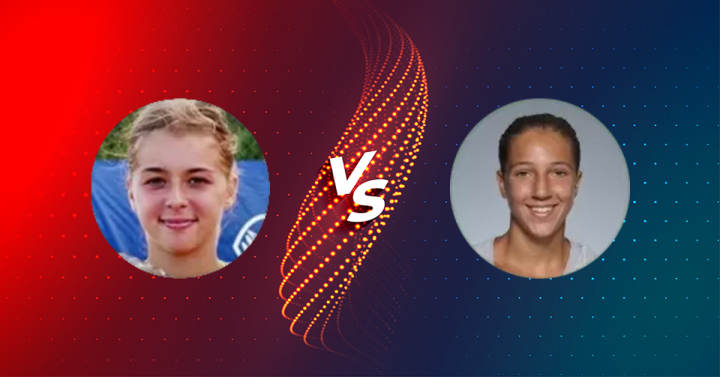
Match snapshot and why bettors should care
A fascinating WTA French Open clash is on the card in Paris, France, as Maja Chwalinska meets Diane Parry on 2026-06-01 at 10:00:00 UTC. This is a Round of 16 matchup that few predicted before the tournament began, which is exactly why it has become such a high-interest betting market. Both players are unseeded and both have pushed into the second week of a Grand Slam for the first time, turning this into one of the most compelling “surprise packages” of Roland Garros.
From a wagering perspective, this is a classic momentum-versus-home-crowd scenario. Chwalinska arrives with the confidence of a qualifier who has kept winning, while Parry has the boost of playing in her home Slam with the Parisian crowd ready to lift her through tight moments. For bettors, the key question is whether Chwalinska’s steadier baseline patterns and match volume translate into another win, or whether Parry’s variety and comfort on clay can flip the script.
Betting odds and market read
The outright prices show Chwalinska as the favorite:
– Maja Chwalinska to win: 1.55
– Diane Parry to win: 2.47
Those odds imply the market is leaning toward the Polish left-hander’s current level and consistency. Parry’s price reflects both her threat level and the uncertainty that comes with an unseeded Round of 16 match where form can swing quickly.
Our platform’s AI has also landed on the same side, identifying 1 (Maja Chwalinska to win) as the best tip with a confidence rating of 5.0 at odds of 1.55. In addition, the total games lean is Under 27.5 (U27.5) at 1.3, suggesting a match script that is more likely to finish in two sets or a relatively controlled three-setter without extended service holds and tiebreak-heavy tennis.
If you want to compare this pick with other data-led selections across the tour, you can browse today AI tennis predictions and see how different matchups grade out.
Chwalinska form guide: the qualifier who won’t stop
Chwalinska has been one of the stories of the tournament. A Polish left-hander ranked around the World No. 114 range, she didn’t just sneak through qualifying—she used it as a launchpad. Coming into this Round of 16, she has stacked up six straight wins in Paris, which matters for bettors because it signals both physical readiness and strong day-to-day problem solving on clay.
Her main-draw run has included multiple statement results. She has taken out big-name opposition, including Zheng Qinwen and No. 23 seed Elise Mertens, and she produced a headline comeback against Maria Sakkari, winning 1-6, 6-3, 6-2 after a rough opening set. That specific scoreline is important: it shows she can absorb pressure, adjust tactically, and raise her level as the match goes on—an underrated trait when betting favorites at a Slam, where nerves can spike late in sets.
Stylistically, Chwalinska’s lefty patterns can be awkward on clay. The natural crosscourt shape into a right-hander’s backhand can open the court, and on slower Paris clay, her ability to extend rallies and force extra shots often draws errors or short balls. For totals bettors, that can also mean sets that swing once she “locks in,” rather than endless hold-hold sequences.
Parry scouting report: home advantage and clay craft
Diane Parry is the French local favorite, and that matters at Roland Garros. The crowd support in Paris can be a real edge—especially in momentum games, break points, and deciding-set pressure. Parry’s pathway to the second week has also been a breakthrough, and she’ll see this match as a genuine chance to reach a Grand Slam quarterfinal on home soil.
Parry’s appeal as an underdog is her ability to change rhythm. On clay, variety is a weapon: mixing height, spin, and pace can disrupt an opponent who prefers a steady tempo. If Parry can keep Chwalinska from settling into repeatable lefty patterns—by moving the ball, using angles, and forcing uncomfortable contact points—she can absolutely make this a high-stress match for the favorite.
The betting risk for Parry backers is that variety can come with volatility. If her timing is slightly off, or if she over-presses in front of the home crowd, she can leak errors in clusters—exactly the kind of run that turns a close match into a scoreline that lands under the total.
Key matchup factors that shape the best bets
Three angles stand out for bettors:
1) Momentum and match volume
Chwalinska’s qualifying route means she has played a lot of tennis in Paris, but it also means she has solved multiple opponents on these courts. That often translates into sharper movement and clearer decision-making early in sets.
2) Lefty patterns vs Parry’s variety
If Chwalinska controls crosscourt exchanges and consistently gets to Parry’s backhand wing, she can grind out breaks. If Parry disrupts that rhythm and pulls her forward or wide, the underdog price becomes more attractive.
3) Total games logic (U27.5)
Under 27.5 aligns with a scenario where Chwalinska wins in straight sets, or wins in three without a tiebreak and without two marathon sets. Given Chwalinska’s tendency to build into matches (as shown against Sakkari) and Parry’s potential for streaky patches, the under has a reasonable narrative fit—though the 1.3 price suggests the market already expects a relatively contained scoreline.
Best tip and final prediction
Based on the odds, the AI signal, and the matchup dynamics, the recommended play is Maja Chwalinska to win (1.55). She has shown she can beat higher-ranked opponents in Paris, she has already proven her ability to adjust mid-match, and her left-handed clay patterns are a consistent foundation in pressure moments.
Lean: Under 27.5 games (1.3) for bettors looking to pair a totals angle with the favorite, as long as you’re comfortable with the shorter price and the risk that a crowd-fueled Parry pushes this deep.
As always, keep bankroll management tight—Grand Slam second-week matches can bring nerves, momentum swings, and unexpected dips in level, even when the favorite looks solid on paper.