
French Open AI Tips: Sabalenka vs Kasatkina
Match Overview
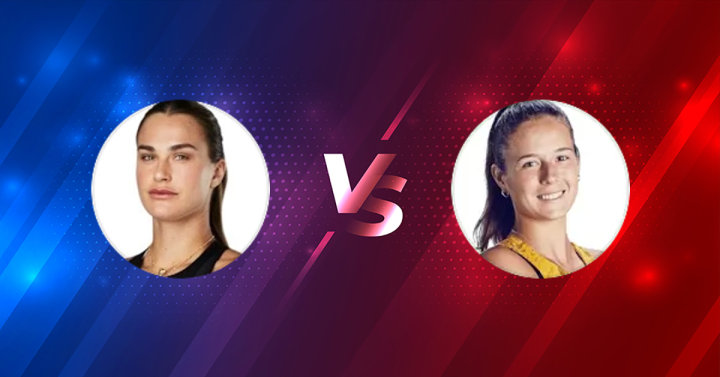
Saturday morning in Paris brings a blockbuster feel as Aryna Sabalenka and Daria Kasatkina meet at the WTA French Open. The match is scheduled for 2026-05-30 at 10:00:00 UTC, and it has the look of a classic “power versus craft” contest on clay—one player looking to hit through the court, the other trying to pull every string available.
Sabalenka arrives as the headline act: the top seed, a fixture at the business end of the biggest tournaments, and a player whose aggressive baseline game can make even elite defenders look rushed. Kasatkina, meanwhile, is one of the tour’s most intelligent tacticians—an opponent who rarely gives you the same ball twice and who’s comfortable turning matches into physical, mental puzzles.
From a betting perspective, the market is heavily tilted toward the favourite. The odds list a Sabalenka win at 1.09, while Kasatkina is priced as a big underdog. That gap tells you how bookmakers see the matchup: Sabalenka’s firepower and first-strike tennis are expected to dictate the majority of rallies, even on a surface that can reward patience and variety.
Sabalenka vs Kasatkina: Styles Make Fights
Aryna Sabalenka: first-strike tennis with a clay edge
Sabalenka’s identity is simple to describe and difficult to stop: big serve, heavy return pressure, and relentless baseline acceleration. When she’s timing the ball cleanly, she can shorten points in a hurry—an important trait in best-of-three matches where momentum can swing quickly. On clay, her power doesn’t disappear; it just needs smarter construction. The key is her ability to open the court with depth and weight of shot, then finish with a decisive strike.
What makes her especially dangerous in a Grand Slam setting is that she can win matches in multiple ways: she can blow opponents off the court when her rhythm is perfect, but she can also grind when needed, leaning on athleticism and competitive edge. In Paris, where conditions can vary day to day, that adaptability matters.
Daria Kasatkina: variety, angles, and problem-solving
Kasatkina is a very different proposition. She’s not trying to win a pure hitting contest; she’s trying to win the match. Expect changes of pace, looping topspin, sharp angles, and plenty of probing to find Sabalenka’s less comfortable patterns. On clay, those tools become even more valuable because the surface gives her time to reset points and lure opponents into extra shots.
Kasatkina’s best route is to extend rallies, force Sabalenka to hit “one more” ball repeatedly, and tempt errors by changing height and spin. If she can make Sabalenka hit from awkward positions—especially on the move—she can keep the contest competitive longer than the odds suggest.
Market Odds and What They Suggest
The pre-match prices are blunt:
– Sabalenka to win: 1.09
– Kasatkina to win: 9.2 (as listed)
In betting terms, this is a classic “short-priced favourite” scenario. The market expects Sabalenka to progress, and it’s pricing in a fairly straightforward win. That doesn’t guarantee an easy match—Kasatkina is too clever for that—but it does indicate that most outcomes the market considers likely end with Sabalenka’s hand raised.
NerdyTips AI Predictions
Our platform NerdyTips has landed on two angles for this French Open clash: the match winner and the total games line.
Best Tip: Match Winner
NerdyTips’ top selection is: 1 (first player will win) with:
– Confidence rating: 10.0
– Odds: 1.09
This is the most direct bet on the board, and it aligns with both the market and the matchup logic. Sabalenka’s ability to take time away is a major weapon against a player like Kasatkina, who thrives when she can set patterns and vary tempo. If Sabalenka serves efficiently and starts well on return, she can prevent Kasatkina from settling into the kind of chess match she prefers.
Why the AI likes it so strongly:
– Power advantage: Sabalenka can end points on her terms, even on clay, if she finds depth early in rallies.
– Scoreboard pressure: Short-priced favourites often win because they convert key moments—early breaks, tight service games, and set-closing games.
– Matchup dynamics: Kasatkina’s variety can frustrate, but it also relies on Sabalenka missing. If Sabalenka keeps her error count under control, the underdog’s path narrows quickly.
From a bettor’s viewpoint, the trade-off is obvious: 1.09 is not a price you take for fun—it’s a price you take when you believe the probability is extremely high and you’re building a conservative slip.
Total Games Tip: Under 24.5
NerdyTips also flags the totals market:
– Prediction: U24.5
– Odds: 1.28
Under 24.5 games is essentially a bet on a match that doesn’t turn into a long, three-set tug-of-war. In practical terms, it’s looking for a straight-sets win or a match where one set is relatively one-sided. For example, 6-4 6-4 (20 games) or 6-3 6-4 (19 games) both land comfortably under. Even 7-5 6-4 (22 games) still cashes.
Why the under can make sense here:
– Favourite control: If Sabalenka gets ahead early in sets, she can run away with games quickly.
– Return pressure: Kasatkina can be pulled into long service games; if Sabalenka converts breaks at a solid rate, sets can move fast.
– Market expectation: The win odds imply a relatively smooth path; the under complements that narrative.
The main risk to Under 24.5 is Kasatkina’s ability to drag sets deep—think 7-5 sets, extended deuce games, or a three-set match where Sabalenka drops focus for a stretch. But with the AI leaning heavily toward the favourite, the under is a logical secondary angle.
How the Match Could Play Out
Expect Kasatkina to start by testing Sabalenka’s patience: higher balls to the backhand, changes in rhythm, and plenty of movement. Sabalenka’s mission is to keep the first strike clean—serve plus one, return plus one—and avoid getting drawn into endless neutral exchanges.
If Sabalenka wins the early return games, the match could feel one-way quickly. If Kasatkina survives the opening storm and forces longer patterns, the contest becomes more tactical—but even then, the favourite’s ability to produce “unstoppable” games on serve can be the difference.
Responsible Betting Note
These predictions are designed to inform, not guarantee outcomes. Keep stakes sensible, compare prices, and remember that even strong favourites can have off-days—especially in Grand Slam tennis where pressure is constant.
Final Betting Summary
– Best bet (NerdyTips): 1 (first player will win) — Confidence 10.0, Odds 1.09
– Total games: Under 24.5 games — Odds 1.28
For bettors looking for a clean, readable angle, NerdyTips is firmly in the Sabalenka camp—expecting the top seed’s power to be the defining factor in Paris.