
French Open Qualifying AI Tips & Predictions
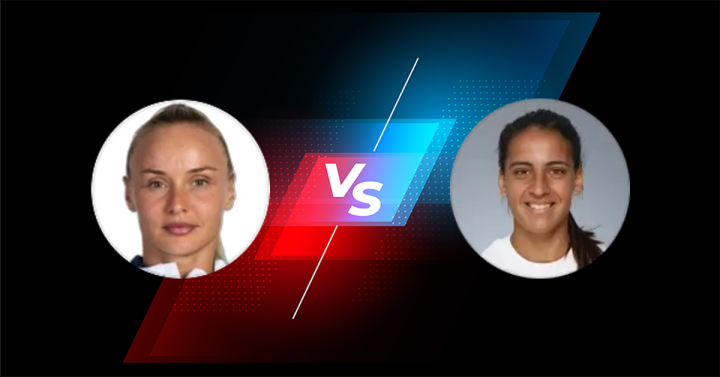
Paris, one ticket left: Šramková vs Carlé
Roland-Garros qualifying has its own particular tension: the courts are the same red clay, the stadiums are the same, but the margins are thinner and the pressure is often heavier. On 2026-05-22 at 12:20:00 UTC, Slovakia’s Rebecca Šramková meets Argentina’s Maria Lourdes Carlé in Paris with a single, brutally simple prize—entry into the French Open main draw. Two wins already banked in qualifying, one more required, and no room for sentiment.
From a betting perspective, the market paints a clear hierarchy. Šramková is priced at 1.36 to win, while Carlé sits at 3.25. Those numbers don’t just suggest favoritism; they imply expectation. Yet clay has a way of turning expectation into negotiation—especially when an aggressive first-strike player meets a patient, pattern-building specialist who grew up learning to win points twice.
What the odds say (and what they don’t)
The odds are the first storyline. At 1.36, Šramková is the designated front-runner, the player bookmakers believe is more likely to impose her game and escape the traps of qualifying. Carlé at 3.25 is the underdog with a clear path to upsetting the script: extend rallies, stretch the match, and make it about legs and decisions rather than raw pace.
Our platform’s Artificial Intelligence aligns with the market and goes one step further in clarity: the best tip is 1 (Šramková to win), carrying a confidence rating of 5.9 at odds of 1.36. That confidence score isn’t a guarantee—it’s a reflection of how the model weighs form signals, surface tendencies, and the price currently on offer.
There’s also a totals angle that fits the narrative of control versus resistance. The prediction for total games is Under 23.5 at 1.53. That leans toward a match where the favorite either wins efficiently or the sets don’t balloon into marathon scorelines. Under 23.5 can still cash in many two-set scenarios (6-4, 6-4 = 20 games; 6-3, 7-5 = 21 games), but it becomes fragile if the match drifts into a deciding set or repeated tiebreak territory.
Šramková’s resurgence: power with purpose
Šramková’s recent career arc has been one of the more striking reinventions on tour. Over the last couple of seasons, she has been widely described as a player who found a second wind—picking up her first WTA title, pushing her ranking into a new bracket, and proving she can translate her weapons into week-to-week results. Rankings can fluctuate, especially around the grind of a full calendar, but the broader point remains: she has spent meaningful time playing like someone who belongs in the main-draw conversation, not just in qualifying corridors.
On clay, her profile is intriguing. She is often framed as the more aggressive, higher-octane option in matchups like this—someone who can shorten points with depth, take the ball early when she’s balanced, and use first-strike patterns to avoid getting dragged into the long, attritional exchanges that clay rewards. If she serves cleanly and lands her first forehand after the serve, she can make the court feel smaller for her opponent.
The key for bettors: favorites at 1.36 don’t need perfection; they need repeatable advantages. Šramková’s advantage is that she can win points in clusters—service holds that don’t last, return games where one or two big strikes flip the scoreboard, and momentum swings that can turn 2-2 into 5-2 quickly. That’s exactly the kind of match flow that supports both Šramková to win and the Under 23.5 lean.
Carlé’s clay education: patience, patterns, and problem-solving
Carlé arrives with a different kind of credibility: the kind that is built on clay, point after point, with a refusal to donate errors. Argentine tennis culture has long valued craft on slower courts—height over the net, heavy topspin, and the ability to construct points like a staircase rather than an elevator. Carlé’s best route here is not to outgun Šramková, but to outlast her decision-making.
In practical terms, that means using the clay to her advantage: varying height and spin, pulling the Slovakian into uncomfortable contact points, and making every short ball feel like a test rather than an invitation. If Carlé can turn the match into a series of long exchanges—especially crosscourt patterns that tempt Šramková into pressing—then the underdog price begins to look less like a long shot and more like a live possibility.
But underdogs at 3.25 usually need one of two things: a clear matchup edge or a clear instability on the favorite’s side. Carlé’s edge is stylistic—clay-court problem-solving. The question is whether that edge is strong enough to survive Šramková’s ability to end points early, particularly if the Slovakian starts well and plays with front-foot conviction.
Tactical keys that could decide the match
This is where the match becomes a story rather than a spreadsheet.
First, watch the opening games. If Šramková establishes depth and pace immediately, Carlé may spend the day defending behind the baseline, which is a dangerous place to live against a hitter who senses control. Conversely, if Carlé absorbs the early storm and forces Šramková to hit “one more ball” repeatedly, the match can tilt into the kind of slow-burn contest where underdogs thrive.
Second, the return games. Qualifying matches often swing on a few loose service games—one double fault cluster, one rushed second serve, one poorly timed drop in first-serve percentage. Šramková’s path to a clean win is to protect her serve with high first-serve volume and to attack Carlé’s second serve with intent. Carlé’s path is to make every service game feel like work and to turn the scoreboard into a psychological weight.
Third, emotional management. Clay amplifies frustration because points don’t end when you want them to. If Šramková stays patient when rallies extend, she’s the rightful favorite. If she gets impatient, Carlé’s entire game plan comes alive.
Best bets: AI pick, value logic, and totals angle
The betting market and the AI model agree on the primary direction: 1 (Šramková to win) at 1.36, confidence 5.9. In betting terms, it’s a classic “favorite moneyline” selection—less glamorous than a big underdog stab, but supported by the idea that Šramková owns the more decisive weapons and the more direct routes to winning games.
The totals recommendation—Under 23.5 games at 1.53—fits if Šramková’s power translates into a straight-sets win with at least one set that doesn’t spiral into 7-5 or 7-6. It also fits if Carlé competes but can’t consistently convert break chances, leading to sets that feel close in rallies but not in numbers.
A cautious bettor might see the relationship like this: if you like Šramková to win, the Under often correlates with her doing it efficiently. If you believe Carlé can drag this into a third set, the Under becomes the vulnerable leg. That’s the strategic choice: back the favorite’s authority, or back the underdog’s endurance.
Final word: the last gate of qualifying
This is the final gate before the bright lights of the main draw, and both players know what it means. Šramková arrives with the aura of a player who has recently learned how to convert opportunity into titles and rankings. Carlé arrives with the clay-court instincts of someone who believes every match can be negotiated, slowed, and turned.
Paris doesn’t hand out invitations. It demands a signature. The market expects Šramková to sign first.
Best tip: 1 (Rebecca Šramková to win) @ 1.36
Total games lean: Under 23.5 @ 1.53