
Indian Wells AI Tips: Sinner vs Zverev
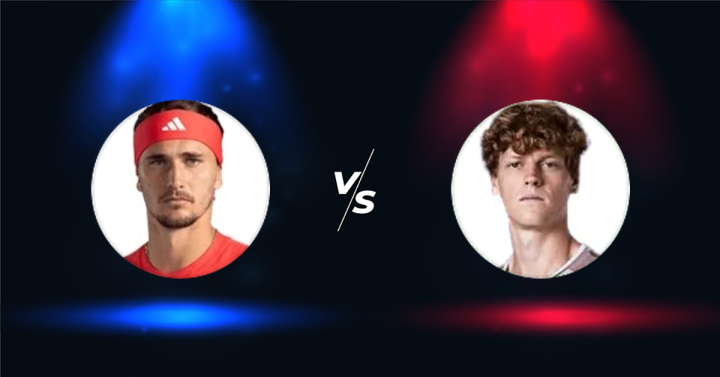
Match Overview
On March 14, 2026, the tennis spotlight shifts to the California desert as Indian Wells stages a marquee semifinal: World No. 2 Jannik Sinner vs World No. 4 Alexander Zverev. The BNP Paribas Open is often called “the fifth Slam” thanks to its prestige, slow-ish hard courts, and the unique desert conditions that can reward patience, heavy topspin, and elite movement. With a place in the final on the line, this matchup has the ingredients of a high-stakes, high-quality battle—yet the betting market is signaling a clear favorite.
The scheduled start time is 2026-03-14 at 21:30:00 UTC, a slot that typically draws maximum global attention and often comes with slightly cooler evening conditions—sometimes helping big servers, but also making baseline consistency even more valuable.
Betting Odds and Market Snapshot
Sportsbooks have installed Sinner as the strong favorite:
– Alexander Zverev to win: 5.4
– Jannik Sinner to win: 1.18
Those odds imply the market expects Sinner to advance far more often than not, while Zverev is priced as the underdog who likely needs a near-perfect serving day plus sustained aggression to flip the script.
If you’re comparing models, lines, and form indicators, it can help to cross-check multiple sources. One useful reference point for bettors is Best Tennis Predictions, especially when you want a quick read on AI-driven angles without overcomplicating the handicap.
AI Best Tip and Confidence
Our platform’s AI has identified the best tip as: 2 (Jannik Sinner to win) with:
– Confidence rating: 8.0
– Odds: 1.18
From a betting perspective, this is a classic “favorite moneyline” recommendation. The value question is always whether the price is too short—but the confidence score suggests the model sees a meaningful gap in expected performance under these conditions.
Total Games Prediction: Under 28.5
The projected total games angle is:
– Under 28.5 games (U28.5) at 1.26
An under in a match featuring two elite players might sound counterintuitive, but it can make sense if the favorite is expected to win in straight sets or if one set is likely to be lopsided. In Indian Wells, the court pace and bounce often encourage extended baseline exchanges, but that doesn’t automatically mean long scorelines—if one player consistently wins the key points, sets can still finish 6-3 or 6-4.
Player Focus: Jannik Sinner
Sinner’s rise to the top tier has been built on repeatable, high-percentage power. His groundstrokes—especially off the backhand wing—are among the cleanest in the sport, and he’s become increasingly effective at turning neutral rallies into immediate offense. What makes him particularly dangerous on hard courts is how early he takes the ball: he can rush opponents, take time away, and still maintain control.
From a betting angle, Sinner’s profile fits well with Indian Wells conditions. The slower hard court can reward players who construct points intelligently and defend well when rallies extend. Sinner’s improved serve patterns and return pressure also make him less reliant on tiebreaks, which matters for an Under 28.5 lean: if he can earn a break per set, the match can stay under the number even if the rallies are physical.
Player Focus: Alexander Zverev
Zverev remains one of the tour’s most imposing athletes, combining height, reach, and a heavy first serve that can still dominate on hard courts. When his serve is landing and his forehand timing is sharp, he can control matches quickly—especially by earning free points and shortening rallies.
However, the underdog price reflects the challenge: against an elite returner and baseline controller, Zverev often needs sustained first-serve efficiency and disciplined shot selection. Indian Wells can also test patience; if Zverev gets drawn into extended exchanges, he must be willing to build points rather than forcing low-percentage winners too early. In a semifinal setting, a brief dip in serving level can be costly—particularly against a player like Sinner who tends to capitalize on second serves and pressure moments.
Why the Betting Tips Make Sense
Best Tip: 2 (Sinner to win)
At 1.18, the moneyline is short, but it aligns with the market’s view and the AI confidence rating (8.0). The core logic is straightforward: Sinner’s baseline reliability, return quality, and ability to dictate from both wings make him the more stable option in a high-pressure semifinal. If the match becomes physical and tactical—common at Indian Wells—Sinner’s point construction and rally tolerance are strong assets.
Under 28.5 Games (1.26)
The Under 28.5 projection pairs naturally with a favorite win scenario. A two-set result with typical semifinal scorelines (6-4, 6-4 or 6-3, 6-4) lands comfortably under 28.5. Even one tiebreak can still keep the under alive if the other set is routine. The key risk is a three-set match, which often pushes totals over—so this bet is most consistent with the idea that Sinner asserts control early and maintains scoreboard pressure.
Final Betting Takeaway
This Indian Wells semifinal is set up as a premium hard-court contest, but the odds and AI model both point in the same direction. For bettors seeking a clear, data-aligned position, the recommended approach is to back 2 (Jannik Sinner to win) at 1.18, with Under 28.5 games at 1.26 as a complementary total-games angle—particularly if you expect Sinner to win in straight sets or avoid a prolonged three-set battle.