
Jan Choinski vs Marc-Andrea Huesler: Predictions
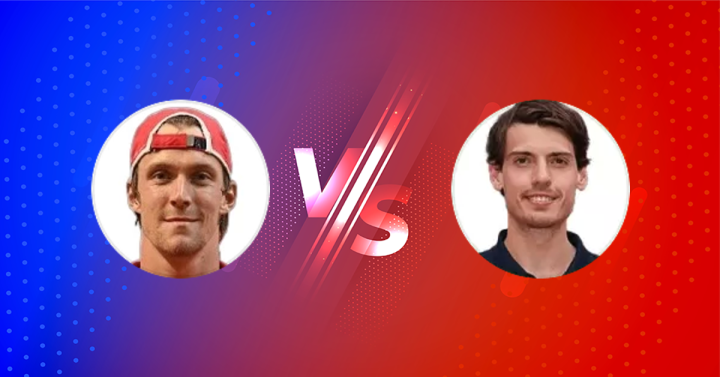
Munich qualifying: a morning duel with real stakes
On 11 April 2026 at 10:00 UTC, the ATP Munich (BMW Open) qualifying draw serves up a match that feels bigger than its “qualifying” label: Jan Choinski versus Marc-Andrea Huesler. In the quiet of a Bavarian morning, this is the kind of contest where momentum, confidence, and a few tight points can decide not only a place in the main draw—but a player’s entire spring narrative.
From a betting perspective, the market has already taken a position. Choinski is priced at 1.5 to win, while Huesler sits at 2.6. Those numbers don’t just suggest a favorite; they suggest expectation. And yet, anyone who follows tennis closely knows qualifying matches can be volatile: different balls, different courts, different rhythms, and players arriving with very different recent workloads.
Still, the data-driven angle is clear. Our platform’s model points to a straightforward outcome: Best tip: 1 (Choinski to win), confidence rating 1.5, at odds of 1.5. Alongside that, the total games lean toward a match that doesn’t crawl: Over 19.5 games is offered at 1.37.
Quick betting snapshot (odds & angles)
Match winner market
Jan Choinski to win (1) is priced at 1.5, reflecting the idea that he’s more likely to impose his patterns and manage the key moments. Huesler at 2.6 is the underdog ticket—tempting if you believe his serve and first-strike tennis can catch fire early.
Total games market
The suggested total is Over 19.5 games at 1.37. That line often implies at least one competitive set, a tiebreak threat, or a three-set scenario. It doesn’t require an epic—just sustained resistance from the underdog or a favorite who needs time to break through.
For bettors who like to cross-check opinions, it’s worth comparing this preview with broader model outputs and market movement tools such as Automated Tennis Predictions, especially close to match time when line shifts can reveal late information.
Jan Choinski: the grinder with a modern edge
Choinski’s profile is built for qualifying tennis. He’s the type of player who tends to travel well across conditions because his game isn’t dependent on one fragile weapon. Instead, he leans on repeatable patterns: solid baseline tolerance, a willingness to extend rallies, and the ability to turn defense into neutral positions. In qualifying rounds—where nerves and rhythm can be uneven—that reliability matters.
What makes Choinski particularly interesting in this matchup is the way he can win without playing “perfect.” He doesn’t need to paint lines for two hours. He can win ugly games, survive pressure moments, and gradually squeeze an opponent’s margins. That’s often the difference between a favorite who just looks good on paper and a favorite who actually cashes at 1.5.
Tactically, Choinski’s route is usually clear: make returns, get the ball back deep, and force the server to hit extra shots. Against a player like Huesler—who can be dangerous when points are short—Choinski’s ability to drag exchanges into uncomfortable territory becomes a quiet weapon.
Marc-Andrea Huesler: lefty serve, fast points, sudden runs
Huesler brings a different kind of threat, and it’s the kind that can flip a match quickly. As a left-hander, he naturally creates awkward serving angles—especially in the ad court—opening the court and forcing uncomfortable return positions. When his first serve lands, he can shorten points and protect his service games with minimal drama.
That’s why the underdog price is not an insult; it’s a warning label. If Huesler finds a serving rhythm early, he can keep sets close even without dominating rallies. And when sets stay close, a couple of points—one loose return game, one mistimed backhand—can decide everything.
The question for Huesler is often about sustainability: can he maintain first-strike efficiency long enough against an opponent who keeps asking for “one more ball”? If his first-serve percentage dips, the match can quickly tilt toward the steadier baseliner.
How the matchup could unfold (a story of pressure)
Expect a contrast in styles that reads like a classic qualifying script. Huesler will try to write the match in quick sentences: serve, plus-one, finish. Choinski will try to turn it into a long paragraph: return, rally, reset, repeat.
Early games matter. If Choinski starts returning well—blocking back deep, neutralizing the lefty angles—Huesler may feel pressure to go bigger, earlier. That’s where errors can creep in. On the other hand, if Huesler holds comfortably and forces Choinski to hold under scoreboard stress, the match can tighten into a set decided by one break chance or a tiebreak.
This is also why the Over 19.5 games call makes sense. Even if Choinski is the more likely winner, Huesler’s serve can keep him close for stretches. A 7–6 set, or a 6–4 set with long games, gets the total moving quickly. And if it goes three sets, the over is usually in excellent shape.
Best bets: what the odds are really saying
Main pick
Best tip: Choinski to win (1) @ 1.5
This aligns with the model’s top recommendation and the market’s favorite. The logic is simple: Choinski’s steadiness and return tolerance are valuable in qualifying, and they directly target the one area that can destabilize Huesler—extended exchanges and second-serve pressure.
Totals lean
Over 19.5 games @ 1.37
This is the “safer” style of bet in a matchup where the underdog has a serve that can protect him for long periods. It doesn’t require Huesler to win—only to compete.
Ethical note for bettors
No preview can guarantee an outcome, especially in qualifying where form can swing quickly and small physical issues sometimes appear without warning. Use sensible staking, compare prices, and treat odds as probabilities—not promises.
In Munich, the stage may be modest, but the tension won’t be. Choinski arrives as the favorite with the steadier script; Huesler arrives with the lefty plot twist. And at 10:00 UTC, we’ll see which story the court chooses to tell.