
Jannik Sinner vs Alexander Zverev Prediction & Match Preview
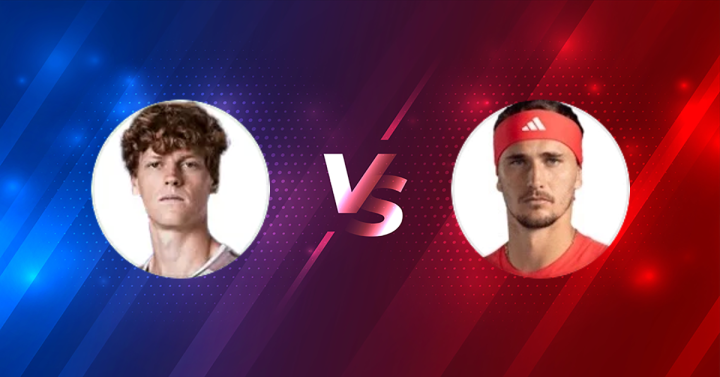
Jannik Sinner vs Alexander Zverev Betting Preview
Jannik Sinner and Alexander Zverev meet in one of the most anticipated matches of the ATP Wimbledon event in London, Great Britain, with the contest scheduled for 2026-07-12 at 16:00:00 UTC. This is a headline clash between two elite players, and the betting market clearly sees Sinner as the stronger side. The available odds price Jannik Sinner to win at 1.24, while Alexander Zverev is offered at 4.75.
From a betting perspective, this is a fascinating matchup because the outright market and the total games market tell slightly different stories. Sinner is a heavy favorite, but the total games line of Over 31.5 at odds of 1.33 suggests the bookmakers still expect Zverev to be competitive enough to push the match beyond a short, one-sided contest. That creates an interesting angle for bettors: Sinner looks like the most reliable winner, but Zverev’s quality, serve, experience, and Grand Slam pedigree may still make this a demanding match.
TennisPredictions.ai’s AI model strongly supports Jannik Sinner as the top prediction, assigning confidence of 8.9/10 to the Italian winning the match. The recommended pick is 1, meaning the first player listed, Jannik Sinner, is expected to win. At odds of 1.24, this is not a high-risk, high-reward selection, but rather a short-priced favorite bet built around probability, form, matchup strength, and consistency.
Best tip: Jannik Sinner to win at 1.24
Match Details
Event Information
Competition: ATP Wimbledon, London, Great Britain
Match: Jannik Sinner vs Alexander Zverev
Scheduled time: 2026-07-12 at 16:00:00 UTC
Surface: Grass
Odds: Jannik Sinner 1.24, Alexander Zverev 4.75
AI prediction: Jannik Sinner to win
AI confidence score: 8.9/10
Total games prediction: Over 31.5 at 1.33
This match has all the ingredients of a premium Grand Slam-level showdown: the World No. 1 profile of Sinner, the major-final credentials of Zverev, the pressure of Centre Court, and the tactical contrast between one of the cleanest baseline ball-strikers in the game and one of the most dangerous servers among top-ranked players.
Why Jannik Sinner Is the Favorite
The main reason Sinner is priced as the clear favorite is his superior all-court consistency. On grass, small margins matter more than on slower surfaces. A player must protect serve, attack second serves, move efficiently, and remain mentally stable in tie-break situations. Sinner checks almost every box.
His game has evolved into one of the most complete packages in men’s tennis. He hits with pace, depth, and precision from both wings, but what makes him especially difficult to beat is how early he takes the ball. On grass, that early ball-striking is a huge weapon because it reduces the opponent’s reaction time and prevents long defensive rallies. Zverev is a tremendous athlete, but if Sinner controls the first three shots of the rally, the German may find himself constantly pushed behind the baseline.
Sinner’s return game is also crucial. Against a server like Zverev, breaking serve will not be easy. However, Sinner is among the best in the world at neutralizing big first serves and stepping inside the baseline against second serves. If he can consistently get Zverev’s serve back into play and make the German work in service games, the pressure naturally shifts toward Zverev.
The market at 1.24 reflects not only Sinner’s talent but also trust. Bettors are not simply backing a player with impressive shots; they are backing a player who has shown he can deliver in high-pressure matches. According to the supplied match context, Sinner entered this final with extraordinary momentum, reportedly winning 17 consecutive sets after dropping a set in his opening match. That kind of run at Wimbledon is a major signal. It suggests he has adapted well to the surface, is reading the conditions perfectly, and is not wasting energy unnecessarily.
Sinner’s Recent Form and Momentum
Sinner’s reported route into this stage has been dominant. After a slightly rusty opening against Miomir Kecmanovic, where he dropped a set, he has supposedly raised his level dramatically and gone on a long run of straight-set dominance. That is exactly what bettors want to see from a short-priced favorite: progression through the tournament, improved rhythm, and reduced vulnerability with every round.
A particularly notable detail from the supplied information is Sinner’s clinical 6-4, 6-4, 6-4 win in the semifinal stage against a seven-time Wimbledon champion. Even without focusing too heavily on the name, the scoreline itself is revealing. Winning three sets by identical margins against an elite grass-court opponent suggests control rather than chaos. Sinner did not need to rely on wild swings of momentum. He found a break in each set, protected his own serve, and closed efficiently.
That kind of controlled performance is highly relevant for betting analysis. It indicates that Sinner can win without needing to redline. He does not have to paint lines for three hours or depend on his opponent collapsing. His base level is high enough to beat world-class opponents through repeatable patterns: strong first serve percentage, aggressive first strike, heavy backhand pressure, and consistent depth.
For bettors, this matters because repeatability is one of the most important concepts in pre-match wagering. A player who wins because of a temporary hot streak can be dangerous to back at short odds. A player who wins because his patterns are sustainable is much more attractive. Sinner falls into the second category.
Alexander Zverev’s Chances
Alexander Zverev may be the underdog at 4.75, but he should not be dismissed. Those odds imply he has a much lower probability of winning than Sinner, yet Zverev has weapons that can cause problems on grass.
His serve is the obvious starting point. When Zverev lands a high percentage of first serves, he can hold comfortably and force sets into tie-break territory. Grass rewards players who can earn cheap points, and Zverev’s height, reach, and serving power make him dangerous. If he is consistently hitting his spots out wide and down the T, Sinner may not get many looks at break points.
Zverev also has excellent backhand stability. His two-handed backhand is one of the strongest in the sport, especially cross-court. Against Sinner, that matters because many opponents break down when the Italian drives pace into their backhand corner. Zverev is less likely than most players to collapse under that type of pressure. He can redirect the ball, absorb pace, and extend rallies.
Another factor is experience. Zverev has played deep in major tournaments and knows what big-match tension feels like. The supplied information describes him as the reigning French Open champion and the World No. 2, which adds to the narrative that this is not a mismatch. He is not simply a big name trying to hang around; he is one of the very best players in the world and has earned his place in this kind of match.
However, the challenge for Zverev is execution over a full best-of-five match. Against Sinner, one loose service game per set may be enough to lose. Zverev’s second serve has historically been a pressure point in the biggest matches, and if nerves appear at crucial moments, Sinner is exactly the type of returner who can punish him.
Tactical Breakdown
This match is likely to be decided by a few key tactical areas: first serve efficiency, return depth, baseline positioning, second-serve pressure, and tie-break performance.
Sinner will want to take time away from Zverev. He is at his best when stepping forward, hitting through the court, and making opponents feel rushed. On grass, his flat, clean ball-striking becomes even more damaging because the ball stays lower and skids through the court. If Sinner can pin Zverev behind the baseline, the German will struggle to transition into attack.
Zverev, by contrast, must use his serve as a platform. He needs free points, short balls, and quick holds. If his service games become long and physical, Sinner will gain confidence. Zverev must also avoid playing too passively from deep court positions. Against many opponents, his defensive skills allow him to survive. Against Sinner, merely surviving rallies may not be enough. He needs to step in when possible and change direction before Sinner gets complete control.
The second serve battle could be decisive. Sinner is likely to attack Zverev’s second delivery whenever he gets the chance. If Zverev feels pressure and starts taking pace off the ball, Sinner can move forward and take command immediately. On the other hand, if Zverev serves bravely and keeps his double faults low, he can make the match much tighter than the moneyline odds suggest.
Net play may also matter. Grass rewards players who move forward at the right time. Sinner is not a serve-and-volley specialist, but he has become increasingly comfortable finishing points at the net. Zverev, too, has the wingspan and reach to be effective there, but he must choose the right moments. Approaching behind weak balls against Sinner is risky because the Italian’s passing shots are sharp and accurate.
Betting Odds Analysis
The odds are very clear: Jannik Sinner is the strong favorite at 1.24, while Alexander Zverev is the outsider at 4.75. In implied probability terms, Sinner’s price suggests a very high likelihood of victory. For casual bettors, 1.24 may look too short, but in elite tennis betting, short odds can still offer value if the probability is strong enough.
The key question is not whether 1.24 is exciting. The key question is whether Sinner wins this match more often than the price implies. Based on the matchup, form, surface suitability, and AI confidence rating of 8.9/10, the answer leans yes. Sinner has fewer weaknesses, more reliable return pressure, and better current momentum.
Zverev at 4.75 will attract bettors looking for a big price on a world-class player. That is understandable. In a best-of-five match on grass, a powerful server can make things uncomfortable for any favorite. If Zverev serves at an elite level and wins a couple of tie-breaks, the upset path exists. But betting is about probability, not possibility. Zverev can win, but the more likely outcome remains Sinner.
From a staking perspective, Sinner to win is a lower-risk selection compared with handicap or exact-score betting. The downside is the short return. Bettors who want more value might combine it with another market, but from a pure prediction standpoint, the straight moneyline is the cleanest and most logical play.
Total Games Prediction: Over 31.5
The total games market is also worth serious attention. The AI-supported total games prediction is Over 31.5 at odds of 1.33. This is an interesting complement to the Sinner moneyline because it suggests that even if Sinner wins, the match may still include enough competitive sets to clear the line.
In men’s Grand Slam tennis, Over 31.5 is not an extremely demanding number. A four-set match often gets there comfortably. Even a straight-sets match can land close if the sets are tight, such as 7-6, 7-5, 6-4. With Zverev’s serve, tight sets are realistic. He may not win the match, but he can certainly hold serve enough times to extend the scoreboard.
For the Over to cash, Zverev likely needs to do one of three things: win a set, force at least one tie-break, or consistently keep sets to 6-4 or 7-5 rather than suffering quick breaks. Given his serving profile, that is possible. Sinner may be the better player overall, but Zverev’s serve gives him a natural route to accumulating games.
The danger for Over 31.5 is a dominant Sinner performance with multiple early breaks, such as 6-3, 6-3, 6-4. That type of score would fall short. However, against a player of Zverev’s caliber, that is not the most likely script. The more realistic outcome is Sinner winning while Zverev remains competitive for long stretches.
This is why the Over 31.5 market makes sense. It respects both sides of the matchup: Sinner’s superiority and Zverev’s ability to stay in sets.
Key Player Details
Jannik Sinner’s rise has been built on technical clarity and mental calm. He rarely looks rushed emotionally, even when the scoreboard tightens. That is a major asset at Wimbledon, where pressure can escalate quickly. The crowd, the tradition, and the importance of every service game can affect players, but Sinner’s body language is usually composed. For bettors, emotional stability is not just a narrative point; it directly affects performance in tie-breaks, break points, and closing games.
His baseline game is also uniquely suited to grass in the modern era. While traditional grass-court tennis favored serve-and-volley players, today’s Wimbledon rewards aggressive baseliners who can hit through low-bouncing balls. Sinner’s compact strokes, especially on the backhand side, allow him to redirect pace with minimal preparation. That helps him stay balanced even when opponents serve big or attack early.
Zverev brings a different profile. He is physically imposing, difficult to pass when he moves forward, and capable of generating easy power. His serve can dominate entire stretches of a match. He also has the stamina for long contests, which matters in a Grand Slam final environment. If this match becomes physical, Zverev will not fade easily.
The most interesting psychological detail is that both players belong at the top of the sport. The supplied background describes Sinner as World No. 1 and defending Wimbledon champion, while Zverev is described as World No. 2 and reigning French Open champion. That creates a genuine heavyweight dynamic. This is not only a technical matchup; it is a statement match between two players who may define the elite tier of men’s tennis in this period.
Potential Match Script
The most probable match script is Sinner controlling the majority of baseline exchanges while Zverev uses his serve to stay close. Early in the match, Zverev may be able to hold comfortably if his first serve percentage is high. Sinner, however, is likely to create more return pressure as the match develops. Once he starts reading Zverev’s serve patterns, break chances should appear.
Sinner’s ideal route is to avoid tie-break randomness. He will want to earn one break per set and then protect his own serve with efficient first-strike tennis. If he can do that, a straight-sets win is possible. Still, Zverev’s serve makes at least one extended set very plausible.
Zverev’s best route to the upset is to take the first set. If he can win an early tie-break or steal a break late in the opener, the pressure dynamic changes. Sinner would still be favored, but Zverev would gain belief and force the Italian to play from behind. That is likely the scenario underdog bettors are hoping for.
Even so, over five sets, Sinner’s consistency should gradually separate him. He is less likely to donate points in clusters, and his return game gives him more ways to influence the match. Zverev may have periods of dominance on serve, but Sinner is better equipped to win the important return games.
Best Bet and Final Prediction
The best betting angle is the straightforward moneyline selection: Jannik Sinner to win. The price of 1.24 is short, but the confidence level is high. TennisPredictions.ai’s AI model rates this pick at 8.9/10, and the reasoning aligns with the market. Sinner has the more reliable baseline game, stronger return pressure, better current rhythm, and fewer obvious vulnerabilities.
Best tip: Jannik Sinner to win at 1.24
For bettors seeking an additional angle, Over 31.5 total games at 1.33 is also logical. Zverev’s serve should help him remain competitive, and this matchup has a strong chance of producing at least one tight set. The Over is especially appealing if you expect Zverev to win a set or force a tie-break.
A reasonable final score prediction would be Sinner winning in four sets. Something like 7-6, 6-4, 4-6, 6-3 or 6-4, 7-6, 3-6, 6-4 would fit the betting picture well: Sinner wins, Zverev competes, and the total games moves over the 31.5 line.
Final Verdict
Jannik Sinner vs Alexander Zverev is a premium Wimbledon matchup between two elite players with contrasting strengths. Zverev has the serve, experience, and power to make the match competitive, but Sinner’s all-round superiority makes him the deserved favorite. The Italian’s ability to return, absorb pace, and dominate from the baseline gives him the edge in the most important tactical areas.
The betting market is right to lean heavily toward Sinner. At 1.24, the value is not explosive, but the probability is strong. Zverev at 4.75 is tempting only for bettors who believe his serve can completely control the match. Over a best-of-five format, however, Sinner’s consistency should win out.
The recommended play is clear: trust the favorite.
Best tip: Jannik Sinner to win at 1.24