
Madrid AI Predictions and Betting Tips
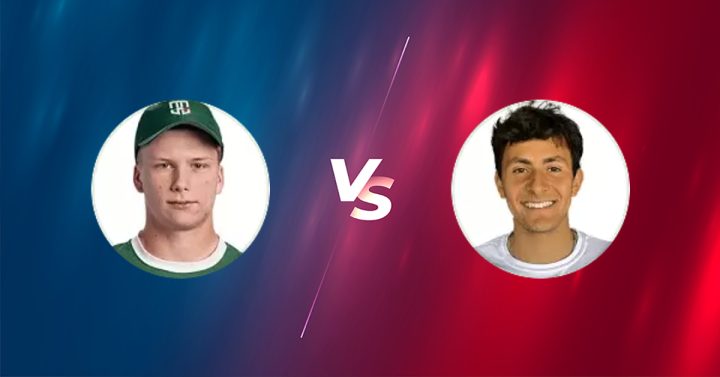
All-American intrigue on Madrid clay
Caja Mágica has a way of turning first-round matches into small dramas, and this one has the ingredients. Jenson Brooksby and Emilio Nava—two Americans shaped by hard-court upbringing—step onto European red clay at the Mutua Madrid Open with very different narratives attached to their rackets. Madrid is not just another stop: it’s a Masters 1000, played at altitude, where the ball jumps, serves bite, and a single loose service game can decide a set. For bettors, that mix of thin air and clay-court patience often creates a fascinating tension between “quick points” and “long rallies.”
The market leans toward Nava. The available odds list 2.24 for a Brooksby win and 1.7 for the other side, reflecting a clear favorite on the second player. TennisPredictions.ai’s model also points to the same direction: the top pick is 2 (second player to win), priced at 1.7, but with a modest confidence score of 2.8/10—a reminder that this is not a “lock,” but a match with volatility. Meanwhile, the total games angle is tilted toward restraint: Under 29.5 games is offered at 1.29, suggesting expectations of a relatively contained scoreline rather than a marathon.
Brooksby: the chess player looking for rhythm
Brooksby’s tennis has always felt like a conversation with the opponent—he asks questions, changes pace, absorbs, redirects, and waits for the moment to steal time. When he’s at his best, he can make even aggressive hitters feel like they’re playing one extra shot every rally. That style can translate to clay because clay rewards point construction, variety, and the ability to defend without panicking.
But clay also demands physical continuity: sliding patterns, patience on the backhand corner, and the willingness to win ugly points. For Brooksby, the key in Madrid is rhythm—especially on return games. If he finds depth early, he can turn Nava’s service games into negotiations: a couple of extended rallies, a few uncomfortable second serves, and suddenly the favorite is playing from 15–30 more often than he’d like.
From a betting perspective, Brooksby’s underdog price at 2.24 is tempting because his game can disrupt. Yet that same disruptive style can be fragile if timing is off: he needs his legs and his feel. Madrid’s altitude can also punish short balls—anything sitting up becomes a target.
Nava: the athlete with a clear lane to control
Nava arrives as the market’s preferred option for a reason. His profile fits modern clay success: athletic coverage, willingness to grind, and the ability to accelerate when the opening appears. In Madrid, where the ball can fly through the court faster than in Monte Carlo or Rome, the player who strikes cleanly and serves with intent often gains an extra advantage. If Nava lands a high percentage of first serves and dictates with the forehand, he can keep this match on his terms.
What makes this matchup compelling is that Nava doesn’t need to win every rally quickly—he just needs to avoid getting dragged into Brooksby’s web of awkward patterns. That means being disciplined on the first two shots: serve plus one, return plus one. If Nava’s forehand is reliable cross-court and he chooses the right moments to go down the line, he can prevent Brooksby from turning points into puzzles.
The odds at 1.7 imply a meaningful edge, but not an overwhelming one. That’s consistent with the AI confidence score of 2.8/10: the model sees Nava as the likelier winner, yet acknowledges the uncertainty that comes with early rounds, clay variability, and the stylistic clash.
Madrid conditions: altitude, clay, and quick swings
Madrid clay is its own species. The altitude makes serves more potent and groundstrokes more penetrating, often shortening exchanges compared to slower clay events. That can be good news for the favorite if he serves well, because it reduces the number of neutral rallies where Brooksby can improvise and counterpunch.
But altitude also makes control harder. A few forehands can sail long, a few returns can miss by inches, and suddenly a set turns on a mini-run. This is why totals betting matters here: you can see straight-set wins with plenty of games (two tight sets), or comfortable wins with fewer games (a break early in each set and clean holds).
The current totals lean toward a match that doesn’t balloon: Under 29.5 at 1.29 suggests the expectation is either a straight-sets result or a three-setter that doesn’t feature multiple tiebreaks and extended sets.
Best betting angles: moneyline and total games
Let’s translate the numbers into a bettor-friendly plan.
1) Main pick (moneyline)
The AI’s top prediction is the second player to win at 1.7, but with low confidence. That means it’s more of a “lean” than a hammer. Still, the market and model align, and alignment matters in betting: when both price action and prediction point the same way, it often signals the most probable outcome—even if the match remains tricky.
Best tip: Emilio Nava to win (1.7)
If you want to explore more data-driven angles and match-based context, one useful resource is Best Tennis Predictions, which frames picks alongside odds and confidence.
2) Total games
The Under 29.5 at 1.29 is priced like a conservative selection—lower return, higher implied probability. It fits a scenario where Nava wins in two sets, or in three sets without two tiebreaks. For this total to lose, you typically need either:
– a long three-set match with at least one tiebreak, or
– two tight sets with tiebreak(s) and a third set.
Given Madrid’s tendency to reward strong serving and first-strike tennis, a match that stays under 30 games is a reasonable expectation—especially if one player gets a lead and protects serve.
How the story could unfold
Watch the first four games. If Brooksby is returning deep and extending rallies, the match becomes psychological: Nava will have to prove he can finish points without forcing. But if Nava holds comfortably and earns a few cheap points on serve, the court speed will start to work like an ally—shortening the match and pushing it toward the Under.
In L’Equipe fashion, think of it as a duel between the tactician and the athlete. Brooksby wants a match of questions. Nava wants a match of answers. On Madrid clay, with the air thin and the margins thinner, the favorite’s clean execution should be enough—yet the confidence meter reminds us to keep stakes sensible and respect the chaos of a Masters 1000 first round.
Responsible betting note
This preview is informational, not a guarantee. Odds move, form changes, and tennis can turn on a single medical timeout or a gust of wind in the stadium corridors. Bet responsibly, size your stake carefully, and treat the AI confidence score—2.8/10—as a warning label: edge exists, but certainty does not.