
Naomi Osaka vs Karolina Muchova Prediction
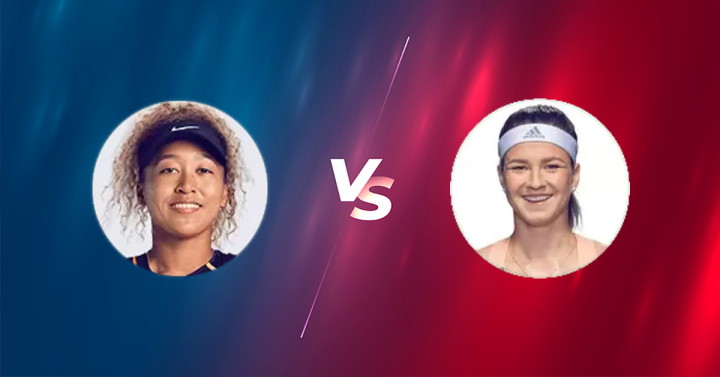
Naomi Osaka vs Karolina Muchova Wimbledon Prediction
Naomi Osaka and Karolina Muchova meet in what has all the ingredients of a high-level Wimbledon quarterfinal, a matchup that brings together first-strike power, elite shot-making, grass-court instincts, and two very different tennis personalities. The match is scheduled for 2026-07-07 at 11:00:00 UTC in London, Great Britain, and it is already shaping up as one of the standout contests of the women’s draw.
This WTA Wimbledon clash features 14-seed Naomi Osaka against 10-seed Karolina Muchova, according to the match preview information available, and that ranking context tells us plenty. Osaka arrives as the slightly lower seed but the betting favorite, priced at 1.76 to win. Muchova, despite being the higher seed, is available at 2.08. That difference between seeding and market price makes this an especially interesting betting spot.
The AI prediction from TennisPredictions.ai leans toward Osaka, with “1” — first player to win — listed as the top prediction. The confidence score is 4.7/10, which is important. This is not a maximum-confidence selection, and bettors should treat it as a competitive quarterfinal rather than a mismatch. Still, at odds of 1.76, Osaka is viewed as having the stronger win probability. The total games market also offers a key angle, with Under 29.5 games priced at 1.31.
From a betting perspective, this is a match where the outright winner market and the total games market both deserve attention. Osaka’s power game can shorten points and create fast sets, while Muchova’s variety can make the contest tactically complex. On grass, those contrasting styles can produce momentum swings, but they can also lead to one player taking control quickly if the serve-return dynamic becomes one-sided.
Best Tip: Naomi Osaka to win at 1.76
Match Details and Betting Odds
Event Information
Competition: WTA Wimbledon, London, Great Britain
Match: Naomi Osaka vs Karolina Muchova
Scheduled time: 2026-07-07 at 11:00:00 UTC
Round: Wimbledon quarterfinal
Player seeds: Naomi Osaka 14-seed, Karolina Muchova 10-seed
Match Winner Odds
Naomi Osaka to win: 1.76
Karolina Muchova to win: 2.08
Total Games Market
Under 29.5 games: 1.31
AI Betting Prediction
TennisPredictions.ai top pick: 1 — Naomi Osaka to win
AI confidence score: 4.7/10
Odds for AI pick: 1.76
The odds suggest a tight match, but Osaka has been given the edge by the market. In implied probability terms, odds of 1.76 suggest Osaka is being priced as the more likely winner, while Muchova at 2.08 is very much live as an underdog. This is not the kind of betting board where one player is expected to dominate without resistance. Instead, the numbers point toward a high-quality contest where margins may be thin.
The Under 29.5 games line at 1.31 is also telling. A line that high leaves room for a three-set match, but the market still expects the contest to stay below that number more often than not. For example, a 7-6, 4-6, 6-4 match would land on 33 games and go over, but many more common scorelines — 6-4, 6-4; 7-5, 6-4; 6-3, 3-6, 6-3 — would stay under. The under is priced short, so it may be better suited for accumulators or conservative bettors rather than those hunting for bigger returns.
Why Naomi Osaka Is the Betting Favorite
Naomi Osaka’s game has always been built around explosive ball-striking. On grass, that profile can be extremely dangerous. Wimbledon rewards players who serve well, take the ball early, and apply immediate pressure in return games. Osaka checks all of those boxes when she is confident and timing the ball cleanly.
Her serve is one of the biggest weapons in the women’s game. When she lands a high percentage of first serves, she can earn free points, avoid long rallies, and keep service games short. That matters on grass because returners often have less time to react, and a powerful server can turn even neutral moments into scoreboard pressure.
Against Muchova, Osaka’s first serve percentage may be one of the most important statistical indicators. If Osaka serves well, she can protect her own games and force Muchova to hold repeatedly under stress. That type of pressure can build over time, particularly in a Grand Slam quarterfinal where the psychological stakes are high.
Osaka also brings major-title experience. She is a multiple Grand Slam champion and understands the intensity of deep runs at major tournaments. While Wimbledon has historically not been the Slam most associated with her peak achievements, her tools are clearly transferable to grass. Fast courts reward players who can strike through the surface, and Osaka’s forehand and backhand both have enough power to rush opponents.
The betting market appears to respect that upside. Even with Muchova listed as the 10-seed and Osaka as the 14-seed, Osaka is favored at 1.76. That suggests oddsmakers and models see her matchup advantages as meaningful. Her ability to dictate points before Muchova can introduce variety is probably the core reason behind that price.
Karolina Muchova’s Path to an Upset
Karolina Muchova is a dangerous underdog because she is not a one-dimensional player. She has the tools to make Osaka uncomfortable. Her game is based on variety, timing, touch, and tactical intelligence. She can slice, redirect pace, move forward, change spins, and use the full court. That makes her a tricky opponent for any power hitter.
On grass, Muchova’s skill set can be especially effective. Low slices stay low, drop shots can be more difficult to chase, and net approaches become more rewarding when the surface keeps points short. She does not need to overpower Osaka to win. Instead, she needs to disrupt rhythm.
That is the key tactical question: can Muchova prevent Osaka from setting her feet and striking cleanly? If the answer is yes, then the underdog price of 2.08 becomes appealing. Muchova can make this match awkward by mixing pace, using angles, and forcing Osaka to hit uncomfortable balls below knee height.
Muchova also tends to be a smart big-match player. She reads patterns well and can adjust if Plan A is not working. Against Osaka, that adaptability will matter. If she simply trades hard groundstrokes from the baseline, she is likely giving Osaka the type of match she wants. But if Muchova drags Osaka forward, uses the slice to the backhand, and changes the height of the ball, she can create errors and break the favorite’s rhythm.
The concern with backing Muchova is whether she can consistently hold serve under pressure. Osaka’s return game can be punishing when she is locked in, especially on second serves. Muchova must avoid too many vulnerable second-serve points. If Osaka gets frequent looks at attackable returns, the match could tilt quickly.
Tactical Breakdown: Power Against Variety
This is a classic clash of styles. Osaka wants a clean, aggressive, first-strike match. Muchova wants a layered contest filled with changes of speed and direction.
Osaka’s best pattern is simple but effective: strong first serve, aggressive first forehand, and early control of the rally. If she can keep points short, she reduces Muchova’s ability to use creativity. Osaka does not want extended rallies where Muchova can slice, reset, and create unusual court positions.
Muchova’s ideal pattern is almost the opposite. She wants to make Osaka hit extra balls. She wants to take pace off the ball at the right moments, then surprise with a sudden acceleration. She wants to bring Osaka forward and test her movement on grass. She also wants to force Osaka to generate pace from awkward positions rather than simply redirecting pace from the baseline.
The first four shots of each rally will be crucial. On grass, many points are decided quickly. Serve plus one, return plus one, and the first neutral ball may determine the entire match flow. If Osaka wins that early-phase battle, she should justify favoritism. If Muchova extends points and makes the match more about problem-solving, the underdog has a real chance.
One underrated factor is court positioning. Osaka often performs best when she can stand on or inside the baseline and take time away. Muchova must push her back or pull her forward. If Osaka is allowed to camp in her preferred hitting zones, Muchova will struggle to absorb the pace for long periods.
Wimbledon Conditions and Surface Impact
Grass-court tennis changes the value of certain skills. Serve quality becomes more important. First-strike aggression becomes more valuable. Movement, balance, and low-ball handling become decisive. Both Osaka and Muchova have reasons to like these conditions, but in different ways.
For Osaka, grass amplifies her serve and power. The faster surface helps her shots skid through the court, making them harder to defend. If she is hitting with depth, Muchova may find it difficult to set up her creative patterns.
For Muchova, grass rewards variety. Her slice can stay low, her touch can be effective, and her ability to move forward can pressure Osaka. If the court is slick and the bounce stays low, Muchova’s all-court style can become more dangerous.
The weather and court speed may also influence the betting angle. If conditions are dry and quick, Osaka’s serve and groundstroke pace may be even more valuable. If conditions are heavier or the ball sits up more, Muchova may get more time to defend and vary the rally. Since bettors often place wagers before full conditions are known, it is wise to monitor warm-up reports, court assignment, and weather updates closer to start time.
AI Prediction Analysis: Why the Confidence Is Moderate
TennisPredictions.ai lists Naomi Osaka to win as the top prediction, but the confidence score is only 4.7/10. That number deserves attention. It indicates a lean, not a lock. In betting terms, this is a value-positioned favorite rather than a banker.
A 4.7/10 confidence score makes sense for this matchup. Osaka has the stronger power profile and is priced as the favorite, but Muchova’s variety makes her a serious threat. The AI is likely recognizing Osaka’s win probability without ignoring the matchup volatility.
For bettors, this means stake management is important. Osaka at 1.76 is playable, but this is not the kind of selection that should be treated as risk-free. Quarterfinals at Grand Slams can be emotionally intense, and both players have enough quality to shift momentum quickly.
The AI pick aligns with the market, which is notable. Sometimes AI models identify an underdog where the market is leaning too far toward the favorite. Here, the AI and odds both point toward Osaka. That strengthens the case slightly, although the moderate confidence score keeps the recommendation grounded.
Total Games Prediction: Under 29.5
The total games pick is Under 29.5 at odds of 1.31. This is a conservative line because 29.5 is relatively high for a women’s best-of-three match. To go over, the contest generally needs either three competitive sets or two very long sets.
The under can still land even if the match goes three sets. For example, scorelines such as 6-3, 3-6, 6-4 or 6-4, 2-6, 6-3 both remain under 29.5. That is why the price is short. The market is not necessarily saying the match will be one-sided; it is saying that a very extended battle is less likely than the alternative.
Osaka’s playing style supports the under in some ways. Her matches can feature quick service games and sudden breaks if she gets hot on return. She can win sets 6-3 or 6-4 when serving well. Conversely, if her error count rises, she can also drop sets quickly. This volatility can actually favor an under, because lopsided sets reduce the game total.
Muchova’s style can sometimes extend rallies, but not always games. She is efficient when playing well and can use her variety to create quick points too. On grass, both players may experience shorter points than they would on clay or slower hard courts.
The main threat to the under is a match with at least one tiebreak and a tight deciding set. Something like 7-6, 6-7, 6-4 would comfortably go over. Given the serving quality on both sides, a tiebreak is possible. However, the 29.5 line provides enough cushion that Under remains a reasonable low-odds angle.
Key Betting Factors to Watch
First Serve Percentage
Osaka’s first serve percentage is probably the most important number for her backers. If she consistently lands first serves, Muchova will have fewer chances to attack. If Osaka dips below her usual level, Muchova can step in and use her variety to apply pressure.
Second Serve Points
Muchova must protect her second serve. Osaka can attack short or slow second serves with immediate aggression. If Muchova wins a strong percentage of second-serve points, she can keep the match close.
Unforced Error Count
Osaka’s aggressive style naturally carries risk. If she keeps errors controlled, she is the rightful favorite. If she overhits, Muchova’s chances increase significantly.
Net Approaches
Muchova should look to move forward. If she wins points at the net and makes Osaka pass under pressure, she can disrupt the favorite’s baseline rhythm.
Return Positioning
Both players’ return strategies will matter. Osaka may look to attack early, while Muchova may mix blocking returns with deeper placement. Whoever creates more pressure in return games will likely control the match.
Naomi Osaka Win Probability and Betting Value
At odds of 1.76, Osaka does not need to be overwhelmingly likely to win for the bet to make sense. She only needs to be priced below her true probability. Given her power advantage, serve quality, and ability to dominate short points, there is a strong argument that she deserves favorite status.
The concern is Muchova’s tactical range. Some opponents allow Osaka to play straightforward power tennis. Muchova is not one of them. She will ask questions. She will change the rhythm. She will try to expose movement and patience. That is why the price is not shorter.
Still, from a betting expert’s point of view, Osaka’s upside is the deciding factor. On grass, the player with the bigger serve and heavier first strike often has a clearer path. Muchova may need to execute a more complicated tactical plan, while Osaka’s route to victory is more direct: serve well, attack early, and keep points on her terms.
That makes Osaka the better moneyline pick, especially with the AI prediction supporting her side.
Karolina Muchova Betting Case
Muchova at 2.08 is not a bad underdog price. Bettors who prefer tactical variety and trust her ability to frustrate power players may see value there. She is the higher seed in this projected quarterfinal and has the all-court game to cause problems.
The case for Muchova depends on three things: she must return well enough to get into Osaka’s service games, she must avoid giving Osaka too many second-serve targets, and she must vary the rally before Osaka takes full control.
If Muchova wins, it likely comes through patience and disruption. She may need to drag Osaka into uncomfortable patterns, use the slice effectively, and turn the match into a chess battle. If she succeeds, Osaka’s error count could rise, and the underdog could pull off the upset.
However, the risk is that Muchova gets rushed. If Osaka is timing the ball well, Muchova may not have enough time to build points creatively. That is the main reason we are not siding with the underdog as the primary betting pick.
Recommended Bets
Main Bet
Best Tip: Naomi Osaka to win at 1.76
This is the strongest betting angle for the match. Osaka’s serve, power, and first-strike aggression make her well suited to Wimbledon conditions. Muchova is dangerous, but Osaka has the more straightforward path to victory.
Secondary Bet
Under 29.5 games at 1.31
The price is short, but the line is generous. A straight-sets Osaka win likely lands under, and even several three-set scorelines can still stay below 29.5 games. This is better as a safer add-on rather than a standalone value bet.
Risk Level
Moderate. The AI confidence score of 4.7/10 tells the story accurately. Osaka is the preferred pick, but Muchova has enough quality to make this competitive.
Final Verdict: Osaka Has the Edge
Naomi Osaka vs Karolina Muchova is exactly the kind of Wimbledon quarterfinal that bettors should approach with respect. It is not a simple favorite-versus-outsider match. It is a stylistic battle between Osaka’s explosive power and Muchova’s intelligent variety.
Muchova can absolutely make this uncomfortable. Her slice, touch, net game, and tactical flexibility give her a real upset path. But Osaka’s weapons are more immediately suited to controlling grass-court tennis. If she serves well and attacks the first ball with authority, she can prevent Muchova from turning the match into a tactical puzzle.
The betting market has Osaka as the favorite at 1.76, and the AI prediction agrees, selecting Osaka to win with a 4.7/10 confidence score. That moderate rating is fair, but the pick is still logical. In a fast-surface Grand Slam quarterfinal, the player with the stronger serve and heavier baseline weapons deserves the edge.
For bettors, the best approach is to back Osaka on the moneyline while recognizing that this is not a no-risk selection. The Under 29.5 games market is also attractive for conservative players, especially because the line leaves room for several competitive scorelines.
Best Tip: Naomi Osaka to win at 1.76