
AI Tips for Rakhimova vs Ann Li
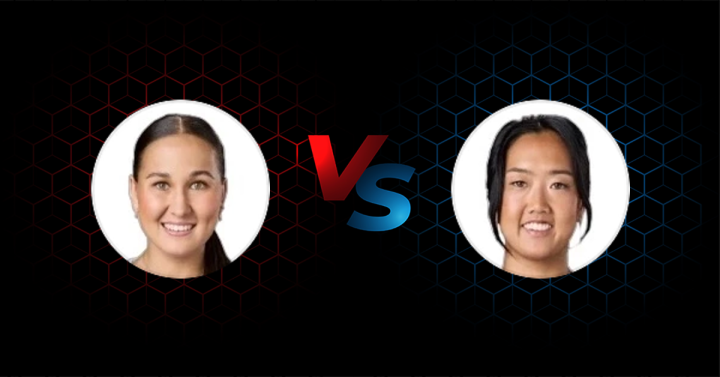
Match snapshot: Rouen Round of 16 betting preview
Kamilla Rakhimova and Ann Li meet in a high-interest Round of 16 matchup at the WTA 250 Open Capfinances Rouen Métropole in Rouen, France. The contest is scheduled for 2026-04-15 at 10:30:00 UTC and will be played on the indoor clay courts at the Kindarena Sports Complex—conditions that often reward players who can combine point construction with timely acceleration.
From a betting perspective, this is a classic “styles make fights” spot: Rakhimova’s grinding resilience and willingness to extend rallies versus Li’s more assertive, first-strike shot-making. With a quarterfinal place on the line, expect a match where momentum swings matter, and where the player who manages the slower indoor clay best—especially on serve plus first ball—should have the edge.
Odds, market context, and what they imply
The market has Ann Li installed as the favorite. You listed odds of 2.4 for a Kamilla Rakhimova win, and 1.6 for a “Kamilla Rakhimova victory” (which appears to be a typo, because it conflicts with the rest of the information and the AI pick). Interpreting the matchup consistently with the AI recommendation and the tip odds provided, the 1.6 price aligns with the second player (Ann Li) being favored.
In practical betting terms:
– Odds around 1.60 imply the favorite wins roughly 62–63% of the time (before margin).
– Odds around 2.40 imply the underdog wins roughly 41–42% of the time (before margin).
So the market is saying: Li is the more likely winner, but not in “lock” territory—there’s enough uncertainty to make game totals and in-play angles relevant.
Player form and momentum: what’s real and what’s noise
Ann Li: higher ceiling, searching for consistency
Ann Li arrives in Rouen with a profile that bettors should read carefully: the overall record isn’t pretty, but the level can spike. She’s been hovering around the Top 40 (noted as No. 36) and started the year with a 5–9 win-loss record, which signals inconsistency rather than a lack of ability.
Two recent data points stand out for handicapping:
– She reportedly pushed World No. 1 Aryna Sabalenka to a tight 7-6, 6-4 match in Miami. Even in defeat, that kind of scoreboard pressure against an elite opponent hints that Li’s baseline weight of shot and competitive intensity can translate on big stages.
– After an early loss to Dayana Yastremska in Linz, she responded in Rouen by beating Daria Kasatkina in the first round. That’s a meaningful bounce-back because Kasatkina is typically a difficult out on clay-adjacent conditions due to her variety and defensive skills. If Li was able to impose enough to get through that matchup, it’s a positive signal for her current confidence.
From a tactical standpoint, Li’s best tennis usually appears when she plays “forward”—taking time away, flattening out balls when she has court position, and using her serve patterns to open up the first aggressive strike. Indoor clay can reduce free points on serve compared to faster hard courts, but it also creates predictable bounces that can help a clean striker time the ball.
Kamilla Rakhimova: durable competitor, needs first-serve help
Kamilla Rakhimova (noted as No. 72) has also had a bumpy season, entering Rouen with a 9–12 record. The key betting takeaway is that she often makes matches uncomfortable—long exchanges, lots of balls back, and a willingness to keep competing even when she’s not dictating.
She comes in after a straight-sets loss to Marta Kostyuk in Miami, and Rouen represents a chance to reset. For bettors, the question is less “can she rally?” and more “can she win enough cheap points?” On indoor clay, if Rakhimova’s first serve percentage dips or her second serve sits up, Li is the type of returner who can step in and start controlling patterns early in the rally.
Rakhimova’s path to an upset typically requires:
1) a solid serving day (not necessarily aces—just well-located first serves),
2) depth through the middle to prevent Li from stepping in,
3) and converting break chances efficiently, because favorites at 1.60 often survive by escaping key games.
Head-to-head and matchup dynamics (how this could play out)
Even without leaning on head-to-head history, the matchup reads clearly in terms of “initiative.” Li wants to take it; Rakhimova wants to make Li hit one more ball and then punish impatience.
On indoor clay, the court slows the ball enough to extend rallies, but not always enough to fully neutralize a player who can strike cleanly off both wings. That’s why Li’s first-strike ability matters: if she can consistently win the “serve + 1” and “return + 1” exchanges, she can keep Rakhimova from settling into the kind of long, physical patterns that favor the underdog.
The danger for Li backers is the classic volatility factor: when aggressive players miss by small margins, games can flip quickly. If Li starts pressing—especially after missed break points—Rakhimova’s steadiness can turn into a real weapon.
Best bet (AI pick) and why it makes sense
TennisPredictions.ai flags the best bet as 2 (Ann Li to win) with a confidence level of 1.6/10, and the listed tip odds are 1.6.
That low confidence score is important ethically and practically: it signals uncertainty. In betting terms, this is not a “max stake” situation—it’s a lean where the model sees Li as the more probable winner, but with a wide error bar.
Why the pick is logical anyway:
– Li’s recent “ceiling” performance indicators (tight match with Sabalenka; confidence-restoring win over Kasatkina) suggest she can play at a level Rakhimova may struggle to match if Li stays composed.
– The market price (around 1.60) aligns with a modest favorite, not an overwhelming one—consistent with the idea that Li is better positioned to dictate, but still vulnerable if her error count rises.
– Indoor clay can reward controlled aggression. If Li chooses her moments well rather than forcing winners too early, she can win enough short points to avoid getting dragged into a marathon.
If you’re staking, treat this as a “small edge” play rather than a headline slam dunk.
For more matchup breakdowns in this style, you can also browse Tennis Analyses to compare model-driven picks with market movement.
Total games pick: Over 18.5 at 1.31
The AI total leans to O18.5 with odds of 1.31. That’s a short price, meaning the book expects a reasonably competitive match length.
Why Over 18.5 is plausible here:
– If Li wins in two sets, a score like 6-4 6-4 already lands on 20 games. Even 6-4 6-3 gets you to 19.
– Rakhimova’s resilience tends to create extended sets, and indoor clay can produce more breaks—but also more momentum swings, which often leads to 6-4 type sets rather than 6-1 runovers.
– If the match goes three sets, Over 18.5 is almost automatic unless there’s an extreme scoreline.
The caution: 1.31 doesn’t leave much margin for error. If Li comes out hot and Rakhimova’s serve collapses early, a 6-2 6-3 (17 games) is very live. So while Over 18.5 is the “safer-looking” bet on paper, it’s not risk-free—especially at that price.
Recommended betting approach (simple and practical)
– Main lean: 2 (Ann Li to win) at 1.6, but keep stakes conservative due to the low 1.6/10 confidence.
– Secondary angle: Over 18.5 at 1.31 fits the matchup profile, but the odds are short—consider it more as an accumulator piece or a lower-return safety play rather than a standalone “value” bet.
– Live betting note: If Li starts nervy and sprays errors early, that’s often when her price drifts. If the eye test shows she’s still striking cleanly (just missing by inches), a better in-play entry can appear.
Final word
This Rouen Round of 16 clash sets up as a battle between Li’s ability to control points and Rakhimova’s ability to absorb pressure. The market and the AI both lean toward Li, but not with high conviction—making discipline, stake sizing, and (if you can watch) in-play timing especially important for bettors.