
Arthur Rinderknech vs Clement Tabur Prediction
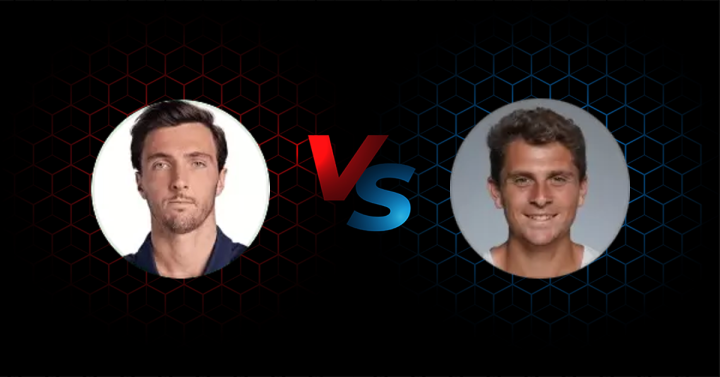
Arthur Rinderknech vs Clement Tabur Preview
The ATP Gstaad Round of 16 brings an all-French clash with plenty of betting intrigue, as Arthur Rinderknech faces Clement Tabur on 2026-07-15 at 09:30:00 UTC. On paper, this is a meeting between two players at very different stages of the ATP hierarchy. Rinderknech arrives as the higher-ranked, more established tour-level competitor, while Tabur enters as the dangerous underdog with clay-court rhythm, Challenger confidence, and nothing to lose.
The market currently prices Arthur Rinderknech to win at 1.5, with Clement Tabur available at 2.75. That makes Rinderknech the clear betting favorite, but not an unbeatable one. This is Gstaad, after all: altitude, clay, and conditions that can reward both first-strike tennis and patient defensive play. It is a venue where timing, adaptation, and serve management matter enormously.
According to TennisPredictions.ai, the top AI prediction for this match is 1, meaning Arthur Rinderknech to win, with a confidence score of 6.1/10 and odds of 1.5. The suggested total games angle is under 29.5 games at odds of 1.31. From a tactical betting perspective, both selections make sense, but they require context. Rinderknech has the bigger weapons, but Tabur has the kind of game that can frustrate him if rallies become too long.
Match Details and Betting Odds
Match: Arthur Rinderknech vs Clement Tabur
Tournament: ATP Gstaad, Switzerland
Round: Round of 16
Date and Time: 2026-07-15 at 09:30:00 UTC
Surface: Clay
Arthur Rinderknech odds: 1.5
Clement Tabur odds: 2.75
AI prediction: Arthur Rinderknech to win
AI confidence: 6.1/10
Total games prediction: Under 29.5 games
Under 29.5 odds: 1.31
Best tip: Arthur Rinderknech to win at 1.5
Why Arthur Rinderknech Is the Favorite
Arthur Rinderknech has become a familiar ATP-level name because of his physical presence, aggressive style, and ability to compete against elite opposition. Standing around 6’5”, he brings the kind of serve that can quickly take the racket out of an opponent’s hands. Even on clay, where the bounce gives returners a fraction more time, his first serve remains a major weapon.
The key point for bettors is that Rinderknech is used to the speed and pressure of main-tour tennis. He has faced players with top-tier returns, heavier forehands, and sharper transitions than Tabur typically sees on the Challenger circuit. That matters in a Round of 16 ATP match, especially if the contest tightens late in a set.
His recent form may not look perfect if judged only by win-loss numbers. A 4-6 stretch across his last 10 matches suggests some inconsistency. But that number needs to be read carefully. Rinderknech has been playing a stronger schedule and recently came off a grass-court run that included a third-round appearance at Wimbledon. Losing to Novak Djokovic in four sets is hardly a damaging result. In fact, competing well in that kind of match can sharpen a player’s belief and expose him to the highest level of problem-solving.
Now the challenge is the transition back to clay. Gstaad’s altitude can help Rinderknech because the ball travels quicker through the air, allowing his serve and forehand to penetrate more than they might on slower European clay. If he lands a high percentage of first serves, he can control the scoreboard and reduce the number of extended baseline exchanges.
Why Clement Tabur Is a Live Underdog
Clement Tabur may be the underdog, but he is not just a name filling the draw. The Frenchman has already shown match sharpness in Gstaad and comes into this contest with meaningful clay-court momentum. He has picked up strong wins in the tournament, including a notable result against Swiss player Marc-Andrea Huesler and a hard-fought three-set battle with Jurij Rodionov.
That matters because Tabur has already adjusted to the court speed, bounce, and rhythm of the event. Rinderknech, by contrast, must quickly rediscover his clay patterns after the grass season. In betting terms, Tabur has the advantage of “tournament rhythm,” while Rinderknech owns the advantage in class and weapons.
Tabur’s clay credentials also deserve respect. Winning the Tallahassee Challenger on clay earlier in the season suggests he is comfortable building points, defending with discipline, and turning neutral rallies into grinding physical exchanges. He also reached a career-high ranking around No. 165 in May 2026, a sign that his progress has not been accidental.
At 5’8”, Tabur is not going to dominate with raw power. His game is built around movement, consistency, and resistance. He covers the court well, uses a reliable two-handed backhand, and is comfortable absorbing pace. Against a bigger hitter like Rinderknech, that profile can be awkward. If Tabur can make the favorite hit one extra shot over and over, errors may appear.
Tactical Matchup: Big Serve vs Counterpuncher
This match can be simplified as a battle between first-strike aggression and defensive persistence. Rinderknech wants to serve big, step forward, and dictate with his forehand. Tabur wants to extend rallies, redirect pace, and make the match physical.
For Rinderknech, the tactical blueprint is clear. He must protect his service games, avoid loose early errors, and attack Tabur’s second serve whenever possible. If he can create quick holds, pressure transfers to Tabur. The underdog then has to serve under scoreboard stress, which can lead to shorter balls and predictable patterns.
Rinderknech’s forehand is likely to be the decisive shot. When he gets time to set his feet, he can hit through the clay and open the court. But his margin management will be important. Against a smaller, quicker defender, trying to hit clean winners too early can backfire. He does not need to paint lines from the first rally. He needs to use the weight of shot to push Tabur back, then finish into open space.
For Tabur, the tactical key is the return of serve. If he blocks back enough first serves and forces Rinderknech into neutral positions, the match becomes far more competitive. He also needs to vary height and depth, especially with looping balls to the backhand side and low, awkward slices when possible. The goal is to prevent Rinderknech from hitting from a comfortable strike zone.
Tabur should also target movement. Bigger players can be dangerous when the ball sits up in front of them, but repeated lateral movement can expose timing issues. If Tabur can drag Rinderknech wide, then redirect down the line, he may earn errors or short balls.
Betting Prediction: Arthur Rinderknech to Win
The main moneyline prediction is Arthur Rinderknech to win. The odds of 1.5 are not huge, but they reflect a reasonable favorite in a matchup where ranking, experience, serve power, and top-level exposure all lean his way.
Best tip: Arthur Rinderknech to win at 1.5
The confidence level of 6.1/10 feels fair rather than excessive. This is not a lock, because Tabur has already shown that he can compete well in Gstaad and is comfortable on clay. However, Rinderknech has more ways to win easy points. That is a major betting factor. In a close set, a player with a dominant serve often has a higher floor because he can escape trouble with aces, unreturned serves, and plus-one forehands.
Rinderknech should also have an edge if the match reaches tiebreak-style pressure. His first serve gives him the ability to control short sequences, while Tabur may need to work harder for every point. Over a full match, that difference can become decisive.
The risk is Rinderknech’s clay adjustment. If he starts slowly, misses too many first serves, or becomes impatient in rallies, Tabur is capable of turning this into a dogfight. Still, from a pre-match betting perspective, the favorite is the more logical selection.
Total Games Prediction: Under 29.5
The total games line of under 29.5 at odds of 1.31 points toward a match that is not expected to become a marathon. Under 29.5 gives bettors some flexibility. A straight-sets result such as 6-4, 6-4 or 7-5, 6-4 stays comfortably under. Even some three-set scores can remain below the number, depending on the structure.
The under is supported by the possibility that Rinderknech’s serve creates separation. If he wins in two sets, the under is very likely. Even if Tabur competes well, he may struggle to break often enough to stretch the match into a long, extended battle.
However, bettors should understand the main danger: if Tabur wins a set and at least one set goes to 7-5 or a tiebreak, the under can become fragile. Rinderknech’s serve can create tiebreaks, and Tabur’s defensive game can produce long holds if he settles into rhythm. That makes the under safer than many lower totals, but not risk-free.
From a tactical lens, under 29.5 aligns with the expected match script: Rinderknech controlling enough service games, Tabur fighting but eventually being outgunned, and the favorite avoiding a drawn-out three-set grind.
Key Factors for Bettors
First-Serve Percentage
Rinderknech’s first serve is the biggest single weapon in the match. If he lands it consistently, Tabur will struggle to build pressure. If the percentage drops, the underdog gets more looks at rallies.
Tabur’s Return Depth
Tabur does not need to crush returns. He needs depth. If he can neutralize the first shot after the serve, he can drag Rinderknech into the type of rallies he prefers.
Clay Adaptation
Tabur already has match rhythm in Gstaad. Rinderknech has the better overall level, but his transition from grass back to clay is a factor to monitor early.
Altitude Conditions
Gstaad’s altitude can make the ball fly faster. That generally helps the bigger server and hitter, which slightly favors Rinderknech. But it also demands control, because overhitting can become a problem.
Pressure Moments
Rinderknech has played bigger matches against stronger opponents. In break points and late-set situations, that experience could be valuable.
Correct Score Lean
A reasonable correct score lean would be Arthur Rinderknech to win 2-0. Tabur has enough quality and clay comfort to keep sets competitive, but Rinderknech’s serve and heavier baseline game should give him the edge in the most important moments.
A scoreline like 6-4, 7-5 or 6-3, 6-4 would fit the overall betting read. If Tabur starts fast or Rinderknech needs time to adjust, a three-set match is possible, but the most likely outcome remains a controlled victory for the favorite.
Final Verdict
Arthur Rinderknech vs Clement Tabur is a fascinating all-French matchup because it brings together power and persistence. Rinderknech has the ranking, serve, ATP experience, and offensive upside. Tabur has the clay rhythm, defensive legs, and underdog confidence. That contrast should make the match tactically engaging, especially in the early games as both players test patterns.
For bettors, the most reliable angle is the moneyline on Rinderknech. The price of 1.5 is short, but it is supported by matchup fundamentals. He can win more free points, dictate with the forehand, and use his serve to control pressure moments. Tabur can make him uncomfortable, but he likely needs an excellent returning day and a high unforced-error count from Rinderknech to pull the upset.
Best tip: Arthur Rinderknech to win at 1.5
The under 29.5 games at 1.31 is also logical, particularly if Rinderknech wins in straight sets. The most probable match script is competitive but not chaotic: Tabur fights, extends rallies, and forces the favorite to earn it, yet Rinderknech’s bigger weapons ultimately decide the outcome.
As always, odds can move before first serve, and betting should be approached responsibly. But based on tactical matchup, player profile, and current market pricing, Rinderknech is the side to trust in Gstaad.