
French Open AI Tips: Bublik vs Struff
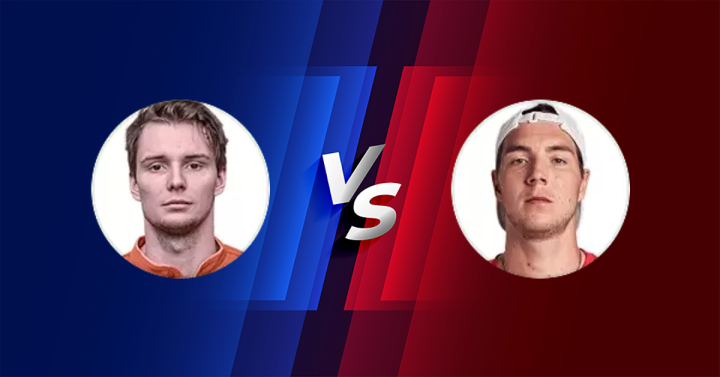
Match overview: Bublik vs Struff in Paris
The 2026 French Open opens with a compelling first-round matchup in Paris, France: Kazakhstan’s Alexander Bublik versus Germany’s Jan-Lennard Struff. The match is scheduled for 2026-05-25 at 10:00:00 UTC, and the betting market has installed Bublik as a clear favorite. Current odds list Alexander Bublik to win at 1.28, while Jan-Lennard Struff to win at 3.95—a gap that signals the books expect Bublik to control most of the key phases.
From a betting perspective, this is the type of contest where you balance two realities at once: Bublik’s higher ceiling and shot-making can run away with sets, but clay in Paris can also slow down big servers and extend matches if the underdog hangs tough in rallies and return games. That tension is exactly what makes this a useful match for tennis betting analysis rather than a simple “favorite wins” assumption.
What the odds say (and what they don’t)
Odds of 1.28 imply a strong win probability for Bublik, while 3.95 suggests Struff needs several things to go right—serve efficiency, short points, and strong conversion on break chances—to flip the script. In tennis betting terms, this is a classic favorite/underdog setup where the favorite is priced as the more reliable outcome, but the underdog may still offer situational value if you believe the matchup dynamics suit him.
However, odds alone don’t tell you whether the match is likely to be quick or grindy. That’s where totals markets—like total games—become relevant. The line provided is Under 45.5 games at 1.29, which leans toward a match that ends in three or four sets rather than a full five-set marathon with multiple tiebreaks.
Player profile: Alexander Bublik’s upside and volatility
Bublik is one of the tour’s most unconventional talents. He’s known for a huge serve, creative shot selection, and a willingness to change patterns mid-point—traits that can overwhelm opponents when he’s locked in. Bettors often associate him with high-variance tennis: he can produce stretches where he looks unplayable, then follow with a loose service game or a risky decision at a key moment.
On clay, the usual question is whether his first-strike style translates. Paris tends to reward patience, depth, and point construction, but it also rewards players who can earn cheap points on serve and finish at net when opportunities appear. If Bublik’s serve lands at a high rate and he keeps his unforced errors under control, he can shorten points and avoid the kind of extended baseline exchanges that can drag him into trouble.
Player profile: Jan-Lennard Struff’s power and pressure tennis
Struff is built for direct, physical tennis. He likes to play aggressively, hit through the court, and apply pressure with a heavy first serve and a forehand that can dictate. He’s also comfortable moving forward, which matters on clay when you want to finish points rather than endlessly trade from the baseline.
The challenge for Struff in a match like this is sustaining that aggression without donating errors—especially if Bublik mixes pace, spins, and surprise changes of direction. If Struff’s first-serve percentage dips, he can find himself stuck in longer rallies where Bublik’s variety becomes more disruptive. For Struff backers, the path to the upset often looks like: serve big, protect service games, steal a set, and force the favorite to play under scoreboard pressure.
Head-to-head and matchup dynamics to watch
Even without leaning on a single stat, the matchup themes are clear and very relevant for tennis betting:
Serve vs return: Both players can generate free points, but clay reduces the “automatic” nature of service holds. Whoever returns a little better and neutralizes second serves can swing the match.
Rally tolerance: If rallies consistently extend, that can test Bublik’s patience and shot selection. If points stay short, Struff may struggle to absorb Bublik’s variety and sudden acceleration.
Break-point moments: Matches between aggressive servers often come down to a handful of break points. Conversion rate and composure are key—especially in early rounds where nerves can appear.
AI predictions and confidence: how to use them responsibly
TennisPredictions.ai points to 1 (first player will win) as the top pick, with a confidence score of 2.6/10 and odds of 1.28. That low confidence score is important: it suggests the model sees Bublik as the most likely winner, but not with strong certainty relative to other matches. In practical betting terms, that can mean the favorite is the “correct side” more often than not, yet the game-to-game volatility (or stylistic clash) could still create swings—like a dropped set or a tight stretch.
The AI also leans to Under 45.5 games (1.29). That aligns with a scenario where Bublik wins without the match turning into a five-set epic. Still, totals can be tricky when both players serve well, because a couple of tiebreak sets can inflate the game count quickly.
Best betting tips (simple, market-focused)
Here are the most actionable angles based on the odds and the AI signals, written with straightforward betting logic:
Best tip: Alexander Bublik to win (1.28)
This is the market-aligned play and matches the AI’s top prediction. The price is short, so it’s more suitable for bettors who prefer lower-risk selections rather than chasing big underdog payouts.
Under 45.5 total games (1.29)
This bet is essentially saying: “We don’t expect a long five-set battle.” It can still cash in four sets, and even some three-set matches with one tiebreak. The risk is that if both players hold serve frequently and sets go deep, the total can climb fast.
Jan-Lennard Struff to win (3.95) as a high-risk upset punt
If you believe Bublik’s clay consistency will wobble or that Struff’s power will translate into sustained scoreboard pressure, the underdog price is the “lottery ticket” option. It’s not the most probable outcome, but it’s the one with the biggest payout.
Responsible betting note and a quick resource for other sports
Keep stake sizing sensible—especially with an AI confidence score as low as 2.6/10, which hints at uncertainty. If you’re also searching for AI football predictions, you can access NerdyTips via this link: football predictions.
Final word: what to expect in Paris
Expect a first-round contest shaped by serve patterns, short bursts of momentum, and a few high-leverage return games. Bublik’s creativity and first-strike potential explain why he’s favored, while Struff’s power and forward pressure give him a realistic route to making it uncomfortable. For tennis betting fans, the cleanest angle remains the favorite on the moneyline, with the total games under as a secondary, lower-ceiling option that fits a “Bublik in 3–4 sets” match script.