
French Open Qualifying AI Tips
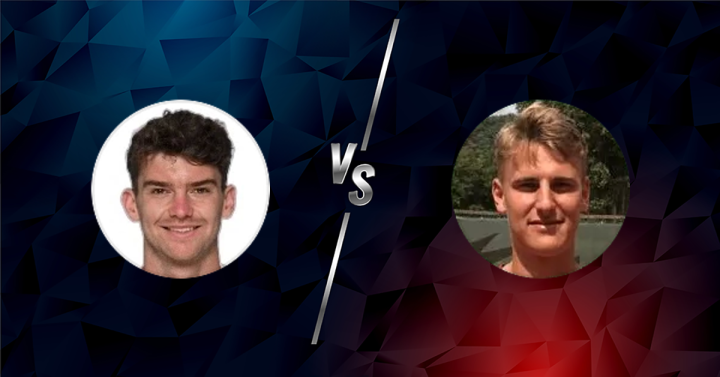
Jerome Kym vs Tom Gentzsch: market-tight showdown in Paris
Roland Garros qualifying has a habit of producing matches that feel like main-draw auditions, and this one fits the bill. On 2026-05-19 at 09:00:00 UTC, Switzerland’s Jerome Kym meets Germany’s Tom Gentzsch in the ATP French Open, Paris, France, Qualifying—an early-round clash between two European prospects born in 2003 who are trying to turn Challenger promise into Grand Slam presence.
The betting market is calling it almost a coin flip: Kym is priced at 1.87, Gentzsch at 1.86. When odds are this tight, the smallest edges—surface comfort, return patterns, and mental resilience in long clay exchanges—can decide everything.
Player snapshot: power vs patterns
Jerome Kym: Swiss horsepower with a point-ending mindset
Kym has been described as a “powerhouse” type—built around first-strike tennis, heavy ball-striking, and the willingness to finish points early when the opening appears. The internet chatter around him has often focused on his ability to accelerate off both wings and take time away, a profile that can look devastating on quicker courts. He’s also been framed as a player on the cusp of a bigger breakthrough, with a ranking in the high-100s range (around No. 187 in the material you shared), which is typically where qualifying draws become a weekly proving ground.
Clay, though, asks different questions. It doesn’t remove power, but it taxes impatience. If Kym’s forehand is landing deep and he’s serving accurately into the body, he can still dictate. But if his first-ball aggression leaks into low-percentage errors, Parisian clay can turn into a slow grind.
Tom Gentzsch: German baseline discipline and tactical clarity
Gentzsch is painted as the steadier, more methodical operator—someone who builds points with shape and depth rather than trying to end them in two shots. That “tactical baseline” label matters at Roland Garros qualifying, where many matches are decided by who can repeat the right patterns for longer: heavy cross-court exchanges, patient height over the net, and the ability to defend without donating cheap points.
In a match priced almost dead even, the player with the more repeatable clay template often has a marginal advantage—especially early in the day when conditions can be heavier and the ball sits up.
Odds, value, and what the AI is (and isn’t) saying
NerdyTips’ data-led angle aligns with the external model from TennisPredictions.ai, which makes Gentzsch the top pick (prediction: second player to win) at odds of 1.86. The key caveat: the confidence score is only 1.6/10, which is a loud warning that this is not a “max stake” situation. In betting terms, this is a thin-edge spot—more about price discipline and staking control than certainty.
When the market is 1.87 vs 1.86, you’re essentially paying for a 50/50 with a tiny lean. That’s where bettors should think in terms of: “Do I trust the clay-reliable profile?” rather than “Who is the better player in general?”
NerdyTips betting tips (argued clearly)
Tip 1: Match Winner
Best tip: Tom Gentzsch to win (1.86)
Why this is the top play:
– Clay repeatability: Gentzsch’s steadier baseline identity is typically easier to reproduce on clay, where points extend and discipline is rewarded.
– Close-price leverage: With odds essentially level, you’re not paying a premium to side with the player whose style is naturally suited to longer rallies and pattern tennis.
– Qualifying dynamics: In Slam qualifying, nerves can spike early. The player who can “play the same point ten times” often settles faster—particularly in the opening set where momentum swings are sharp.
How it can lose:
– If Kym lands a high percentage of first serves and steps inside the baseline to shorten exchanges, Gentzsch may not get enough neutral rallies to impose his structure.
– If Gentzsch’s second serve sits up, Kym’s power can turn return games into immediate pressure.
Suggested staking approach:
Given the low AI confidence (1.6/10), this fits a small-stake category—more “value nibble” than “bet of the day hammer.”
Tip 2 (lean): Live-betting angle for disciplined bettors
If you’re watching, consider a situational approach rather than pre-match overexposure:
– If Kym starts hot but his error count climbs as rallies lengthen, Gentzsch can become attractive live—especially if he’s holding serve comfortably and extending points beyond 6–7 shots.
– Conversely, if Gentzsch is repeatedly pushed back and Kym is finishing behind the first serve + forehand, the pre-match edge evaporates quickly.
Match narrative: what to expect at 09:00 UTC
Expect a chess match disguised as a slugfest. Kym will look to strike early—serve plus first forehand, step in on short balls, and keep the points on his terms. Gentzsch will try to make the court feel bigger: higher net clearance, heavier cross-courts, and a steady drip of depth that forces Kym to hit one more ball than he wants.
With odds split by a hair, the match may hinge on two classic clay indicators: who protects their second serve better, and who wins the long rallies when legs and patience start to matter. If Gentzsch turns this into a physical, pattern-based contest, the narrow pick makes sense. If Kym keeps it short and clean, the Swiss can blow the doors off any model.
Either way, for bettors, the message is simple: it’s a tight line, a thin edge, and a match where discipline—on court and in staking—should be the real winner.