
Mayar Sherif vs Kaitlin Quevedo Prediction
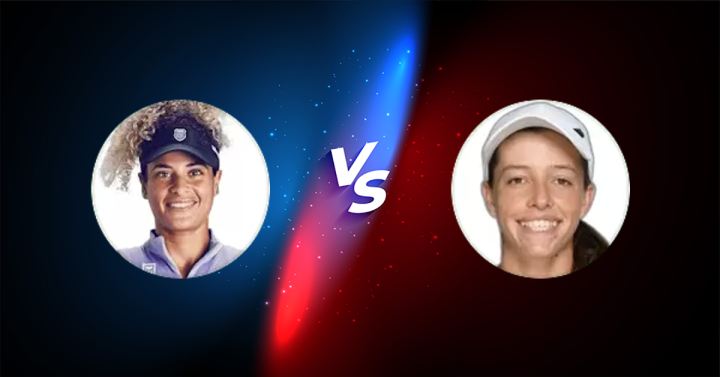
Mayar Sherif vs Kaitlin Quevedo Preview
The WTA Iasi, Romania event is set to deliver an intriguing Round of 16 clash as Mayar Sherif takes on Kaitlin Quevedo at the UniCredit Iasi Open. The match is scheduled for 2026-07-16 at 10:00:00 UTC, and while the betting market appears to lean toward Sherif, the AI-driven prediction angle adds a very interesting twist for bettors.
On paper, Mayar Sherif is the more established name. She has been a consistent presence on the WTA Tour, especially on clay, and her game is built around patience, heavy topspin, physical strength, and the ability to grind opponents down in long rallies. Kaitlin Quevedo, meanwhile, represents the less proven but potentially dangerous side of the matchup. She may not have the same elite-level profile as Sherif, but that can sometimes make a player harder to price correctly, especially in a tournament where momentum, surface comfort, and match rhythm matter so much.
The available odds list Mayar Sherif at 1.60 to win, while the second player, Kaitlin Quevedo, is priced at 2.55. That suggests Sherif is the market favorite, but not an overwhelming one. In tennis betting terms, this is the type of match where the favorite is respected but still seen as vulnerable enough for the underdog price to attract attention.
TennisPredictions.ai’s AI model has selected 2, meaning the second player, Kaitlin Quevedo, to win as the top prediction. However, the confidence score is only 2.3 out of 10, which is important. This is not a strong AI lean. It is more of a value-based or risk-friendly position than a clear, high-confidence betting signal. The same AI data points toward U26.5 total games at odds of 1.30, which looks like the safer and more conservative betting option.
For readers comparing different tennis betting markets, it may also be useful to follow daily picks and broader angles such as the bet of the day matches for today, especially when looking for stronger confidence levels across the schedule.
Match Context: UniCredit Iasi Open Round of 16
This Round of 16 meeting at the 2026 UniCredit Iasi Open comes at a stage of the tournament where players usually begin to settle into the conditions. The first round often tells bettors a lot about form, timing, court speed, physical condition, and tactical sharpness. By the last 16, players have had at least one competitive match to adapt to the environment, which makes performance trends more meaningful.
Iasi is a clay-court event, and that is extremely relevant when assessing Mayar Sherif. Clay is the surface where she has traditionally looked most comfortable. Her movement patterns, point construction, and ability to use heavy forehand spin all suit slower conditions. Sherif is not typically at her best when rushed, but on clay she has more time to set her feet, work the angles, and use her physical game to build pressure.
For Kaitlin Quevedo, the key question is whether she can disrupt Sherif’s rhythm. Against a player like Sherif, simply rallying from neutral positions may not be enough. Quevedo will likely need to be proactive, take calculated risks, and avoid getting trapped in extended baseline exchanges where Sherif’s clay-court experience could become decisive.
The Round of 16 stage also carries psychological weight. A win here puts a player into the quarterfinals, where ranking points, prize money, and confidence become more significant. For Sherif, this is the kind of match she will expect to win if she wants to make a deep run. For Quevedo, it is a chance to make a statement and potentially upset a more recognized opponent.
Mayar Sherif: Clay-Court Authority and Tour Experience
Mayar Sherif is a player with a clear identity. She is not a one-dimensional hitter who relies only on power. Her strength lies in building points, extending rallies, and making opponents uncomfortable over time. That makes her particularly dangerous on clay, where patience and endurance are often rewarded.
One of Sherif’s most important qualities is her competitive resilience. She has built a reputation as a player who does not disappear easily from matches. Even when she drops serve or loses momentum, she often finds a way to reset and return to her tactical structure. That matters in betting because some players can be unreliable favorites, especially if they become emotional or lose focus. Sherif is generally more stable than that, although she can still have streaky patches in service games.
Her serve is functional rather than dominant. On faster courts, that can sometimes be an issue because opponents can attack her second serve and pressure her early. On clay, however, the serve is less frequently the sole deciding factor. Sherif can use placement, kick, and follow-up forehands to begin rallies on her own terms.
The biggest advantage for Sherif in this matchup is her experience. She has played many matches against WTA-level opponents, handled pressure moments, and faced different playing styles. That matters when facing a younger or less established player because Sherif is less likely to panic if the match becomes tactical.
However, as a 1.60 favorite, she still needs to justify the price. If she starts slowly or allows Quevedo to dictate rallies, the match could become more complicated than the odds suggest. Sherif’s backers will want to see a strong first set, consistent depth, and a high percentage of first serves in play.
Kaitlin Quevedo: Underdog With Upside
Kaitlin Quevedo comes into this matchup as the betting underdog, but her price of 2.55 is not so high that the market sees her as a major outsider. That is important. In tennis betting, an underdog priced around this range is often considered live, particularly if there are questions around the favorite’s recent form, physical condition, or matchup dynamics.
Quevedo’s biggest opportunity is unpredictability. Sherif is the more known quantity, while Quevedo may be harder to assess. If she is serving well, stepping inside the baseline, and taking time away from Sherif, she can make the match uncomfortable. The challenge is maintaining that level over a full match on clay, where errors are often punished and the more experienced player can gradually turn rallies in her favor.
For Quevedo to win, she likely needs to do several things well. First, she must avoid passive rallying. If she simply exchanges crosscourt balls with Sherif, the Egyptian player’s weight of shot and patience could take over. Second, Quevedo must protect her second serve. Sherif can be aggressive on returns when she gets a look at weaker deliveries. Third, Quevedo needs to stay mentally composed if the match swings. Against a player with Sherif’s clay-court credentials, there will almost certainly be difficult service games and long rallies.
The AI prediction favoring Quevedo is interesting because it goes against the market favorite. But the confidence score of 2.3/10 tells us this is not a strong conviction upset call. Bettors should treat the Quevedo moneyline as a speculative value bet rather than a lock.
Betting Odds Analysis
The moneyline odds show Mayar Sherif at 1.60 and Kaitlin Quevedo at 2.55. These numbers imply Sherif has the better chance of winning, but the gap is not huge. A 1.60 tennis favorite is expected to win more often than not, yet there is still plenty of room for an upset, especially in WTA matches where momentum can shift quickly.
From a betting perspective, Sherif at 1.60 may appeal to those who prioritize experience, surface suitability, and proven tour level. She is the safer name and probably the more logical pick based on reputation and clay-court profile.
Quevedo at 2.55 appeals to value hunters. If you believe the AI has spotted a market inefficiency, or if you expect Sherif to struggle physically or tactically, the underdog price is tempting. Still, the low confidence score must be respected. A prediction with 2.3/10 confidence should not be treated like a premium play.
The total games market offers Under 26.5 at 1.30. This suggests the market expects the match to finish without going extremely deep. In women’s tennis, a total of 26.5 games is relatively high, because even a three-set match can sometimes stay under that number depending on the scoreline. For example, 6-4, 3-6, 6-3 totals 28 games and goes over, but 6-3, 6-4 totals only 19, while 6-2, 4-6, 6-3 totals 27. The line leaves some room, but the odds show that bookmakers view the under as likely.
Best tip: Under 26.5 total games at odds of 1.30
This is the most sensible betting angle because it does not require choosing between the favorite and the underdog. Given the low confidence on the AI moneyline pick, the under games market looks more practical for cautious bettors.
AI Prediction: Why Quevedo Is the Suggested Winner
TennisPredictions.ai has selected 2 as the top prediction, meaning Kaitlin Quevedo is projected as the winner. The listed odds for this outcome are 2.55, which means the AI is pointing toward the underdog side.
That kind of prediction always catches attention. AI models can sometimes identify value that the public market overlooks, especially when a less famous player is being priced against a more recognizable opponent. Factors such as recent performance patterns, service hold rates, return efficiency, fatigue, match location, and surface trends can all influence model outputs.
However, the confidence rating is only 2.3/10. This is the most important part of the prediction. It means the model’s top pick is not necessarily strong; it may simply be the best available option among uncertain outcomes. In betting terms, this is a low-confidence upset selection. It might be playable for small stakes, but it should not be treated as the main bet unless a bettor is comfortable with higher variance.
The AI’s total games prediction of U26.5 at 1.30 feels more aligned with a safer betting approach. If Sherif wins efficiently, the under likely lands. If Quevedo wins in two tight sets, the under can still land. Even some three-set scorelines could stay close to the line, though that would create more risk.
The key takeaway is simple: the AI likes Quevedo as the winner, but not strongly. The stronger practical betting angle appears to be the under total games market.
Tactical Matchup: Where the Match Could Be Won
This match is likely to revolve around rhythm. Sherif wants structure. She wants to use her forehand, extend points, and gradually pull Quevedo out of position. Quevedo wants disruption. She needs to shorten points at the right moments and avoid letting Sherif settle into predictable clay-court patterns.
Sherif’s forehand will be one of the most important shots in the match. When she can hit it with height and depth, she becomes very difficult to attack. Her heavy topspin can push opponents behind the baseline, opening space for the next shot. If Quevedo cannot handle that weight of ball, Sherif could control the match comfortably.
Quevedo’s best route is to attack early in rallies. That does not mean reckless ball-striking, but it does mean she cannot allow every point to become a long physical exchange. Taking the ball early, changing direction, and using drop shots or angles could help her keep Sherif guessing.
Return games will also matter. Sherif is not unbeatable on serve, so Quevedo should have chances to break. But she must be efficient. Missing early return opportunities against a favorite can be costly because experienced players often grow stronger once they survive danger.
For Sherif, the danger is becoming too passive. If she waits for Quevedo to miss and the underdog is timing the ball well, Sherif may suddenly find herself under pressure. She needs to combine patience with controlled aggression.
Total Games Prediction: Under 26.5
The under 26.5 total games market at 1.30 is short-priced, but it makes sense. A total this high generally requires either a very tight two-set match or a competitive three-set battle. If one player takes control early, the under is in a strong position.
Several possible scorelines support the under: 6-4, 6-3; 6-3, 6-4; 6-2, 6-4; or even 7-5, 6-3. These are realistic outcomes if Sherif’s experience shows or if Quevedo’s underdog momentum carries her through efficiently.
The risk is a three-set match with multiple long sets. A score like 6-4, 4-6, 6-4 would go over. So would 7-6, 4-6, 6-3. Because WTA matches can feature breaks of serve and momentum swings, over bettors may see some appeal if they expect a scrappy contest.
Still, the combination of AI support and bookmaker pricing makes the under the more attractive main betting selection. It is not a huge payout, but it is the cleaner angle compared with choosing a side in a match where the favorite has the name value but the AI points to the underdog.
Best tip: Under 26.5 total games at odds of 1.30
Value Bet: Kaitlin Quevedo to Win
For bettors looking beyond the safest option, Kaitlin Quevedo to win at 2.55 is the value angle. This aligns with the AI’s top prediction, and the price offers a better return than Sherif’s 1.60.
The logic behind this bet is that Sherif may be slightly overvalued due to reputation and surface history. If Quevedo is in good form, confident, and able to execute an aggressive clay-court plan, she has a chance to upset the favorite. The Round of 16 stage is also a place where underdogs can become dangerous because they have already adjusted to the tournament conditions.
That said, this is not a bet for everyone. The confidence score of 2.3/10 is low, so the Quevedo moneyline should be considered a smaller-stake option. It is better suited to bettors who like underdog value rather than those searching for the most reliable selection.
Sherif at 1.60 is still perfectly reasonable for bettors who trust the more established player. She has the clearer clay-court profile and more recognizable WTA experience. If she performs near her normal level, she should have a strong chance to win.
Final Prediction and Betting Verdict
Mayar Sherif vs Kaitlin Quevedo is a fascinating WTA Iasi Round of 16 matchup because the market and AI prediction are not fully aligned. The odds make Sherif the favorite at 1.60, which reflects her greater experience, clay-court strength, and proven ability to compete at WTA level. Quevedo, priced at 2.55, is the underdog but not dismissed by the market.
The AI prediction selects Quevedo to win, but the confidence score of 2.3/10 keeps expectations realistic. This is not a strong signal; it is more of a value-based underdog lean. Bettors should be careful not to overstate it.
The most reliable betting angle is the total games market. Under 26.5 at 1.30 looks like the best pick because it covers several realistic match scenarios. Sherif could win in straight sets, Quevedo could spring the upset without needing a marathon, or the match could remain competitive without becoming extended enough to clear the total.
Best tip: Under 26.5 total games at odds of 1.30
For higher-risk bettors, Kaitlin Quevedo to win at 2.55 is the interesting value play. For conservative bettors, the under total games market is the smarter route. Sherif remains the more logical winner based on reputation and clay experience, but the AI’s underdog call makes this match one to watch closely from the first service game.